
Reviewed · FOOD & DRINK
Tbilisi Food Tour in a Local Family
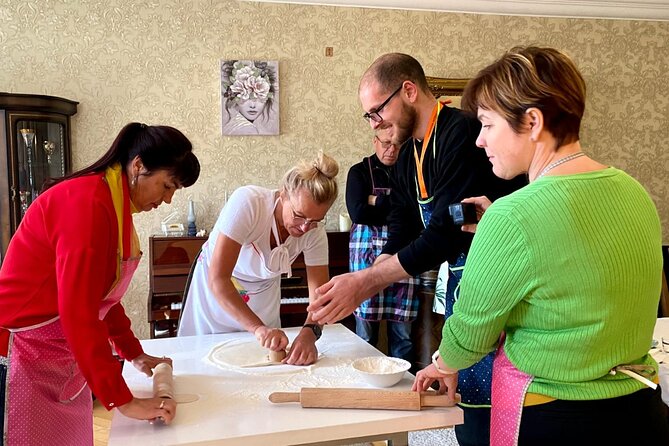
The best part of this Tbilisi food tour is simple: you do not just eat Georgian food, you make it in a local family home. You shape khinkali dumplings, fold cheese bread, prepare eggplant with walnuts, and then sit down to eat what your own hands have made.
I like the generous meal and the chance to talk about everyday Georgian life around a family table. I also like the practical touch of cooking several classic dishes, since you can take the recipes home and make them again. The main consideration is timing: the evening can run longer than three hours, and the final ride back is not included.
Key points to know before booking
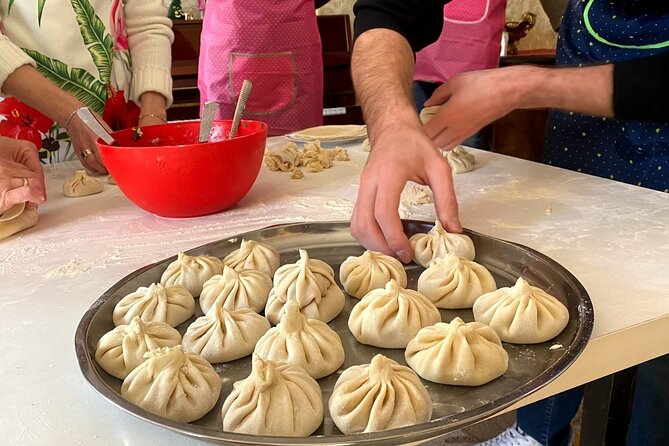
- You cook six Georgian favorites: Khinkali, khachapuri, mchadi, Sulguni cheese, salad, and eggplant rolls with walnuts form the heart of the meal.
- The class takes place in a local home: This is a personal family setting, not a restaurant kitchen or a formal culinary school.
- Wine and chacha are part of the experience: You sample homemade dry white wine and Georgian chacha, a strong grape spirit.
- The evening begins at 6 pm: You first meet at Traveler’s Meeting Point in Avlabari before heading to the family home.
- Vegetarian khinkali is available: Ask for it when booking if you do not eat meat.
- The group may be as large as 30: The experience can feel intimate in a small group, but a full departure will be less personal.
Cooking Georgian food in a local family home
Food is one of the best ways to understand Georgia, and this class gives you more than a plate of finished dishes. You see how the food is prepared, work beside a local cook, and learn why these recipes matter at a Georgian table.
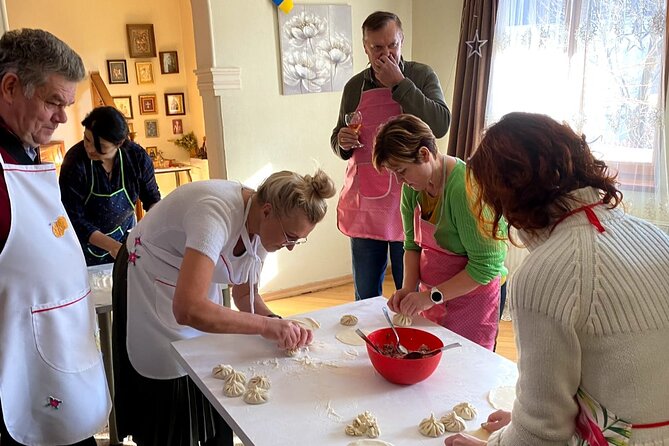
The family-home setting is the real draw. You are not watching a chef perform behind a counter. You take part in the work, from preparing fillings to shaping dough and assembling the final dishes. That makes the meal feel earned, in the nicest possible way.
The family host is described as a local cook who teaches the class in her own kitchen. Guides may vary, but several named guides connected with the experience include Beka, Buta, Helen, Nina, Tornike, and Toko. Beka and Buta have been especially noted for explaining both the recipes and Georgian customs, while Tornike is known for keeping the mood easy and social. Your guide may be different, so treat those names as examples rather than a guarantee.
The cooking itself is hands-on, but you should not expect a professional chef-training course. The value lies in learning familiar home methods and enjoying time with the family, not in mastering restaurant-level technique in one evening.
More food tours in Tbilisi:
- Day Trip to Kakheti Wine Region Including 9 Wine Tastings
★ 5.0 · 2,774 reviews - Kakheti Wine Region: Signagi and Bodbe Tour with 10 Wine Tastings
★ 5.0 · 1,019 reviews - Tbilisi:Mtskheta,Jvari,Bazaar,wine tasting,Chronicles of Georgia
★ 5.0 · 730 reviews
Starting at Traveler’s Meeting Point in Avlabari
The tour starts at 6 pm in Avlabari at Traveler’s Meeting Point. This is a casual space where you can meet the guide and other members of the group, listen to music, play board games, or have a glass of wine.
The planned stop lasts about 30 minutes. That makes it more than a simple street corner meeting point, but it also means you should arrive ready for a social start rather than a quick departure.
This first stop can be useful if you are new to Tbilisi. It gives you a place to get your bearings before leaving the center, and it sets the tone for an evening built around conversation and food. If you prefer a tightly timed class with no extra gathering, this part may feel less essential.
Transportation from the meeting point to the family home is included. The home is at 45 Gigo Zaziashvili Street, and the tour finishes there. The supplied details do not include return transport, so plan to arrange your own taxi or other ride back into Tbilisi.
What you prepare: six Georgian staples
The class covers a broad spread of Georgian food. You are not limited to one signature dish, so the meal shows several sides of the country’s cooking.
Khinkali, the dumplings that require technique
Khinkali are large Georgian dumplings, usually filled with meat and broth. The proper way to eat them involves holding the top knot, taking a bite, drinking the hot juices, and then eating the rest.
Making them is one of the most useful parts of the class. Folding the dough neatly takes practice, and the result may not look perfect on your first attempt. That is part of the fun. The cooking lesson gives you a better sense of why khinkali are such a central Georgian food.
Vegetarian khinkali can be arranged on request. If you avoid pork, specify your needs ahead of time. One guest was accommodated with beef khinkali and cheese khinkali, which shows that the host can make practical adjustments, but you should still ask before arrival.
A completely different sort of day out of Tbilisi:
- Highlights of Caucasus Mountains-Jinvali,Ananuri,Gudauri,Kazbegi(Group tour)
★ 5.0 · 2,682 reviews - Day Trip to Kazbegi and Gudauri
★ 5.0 · 2,009 reviews - Day Trip to Mtskheta Gori and Uplistsikhe
★ 5.0 · 1,801 reviews - Tbilisi Walking Tour Including Cable Car and Traditional Bakery
★ 5.0 · 1,310 reviews
Khachapuri, Georgia’s cheese bread
Khachapuri is cheese-filled bread, and every region of Georgia has its own style. The version prepared here is described simply as traditional cheese bread rather than a specific regional variety.
You learn to work with the dough and cheese, then eat the bread while it is fresh. Sulguni, Georgia’s mild, semi-firm cheese, is included as part of the meal. The cheese brings a salty, soft center to the table and helps explain why khachapuri is such a beloved comfort food.
If you are hungry, this is one of the dishes that can quickly fill you up. Pace yourself, since several more courses follow.
Eggplant with walnuts
Georgian eggplant rolls with walnut filling are a lighter, plant-based starter. The eggplant is paired with a seasoned walnut mixture, creating a dish that is creamy, savory, and distinct from the bread and dumplings.
This is an especially useful recipe for home cooks. It does not require specialist equipment, and it gives you a vegetarian Georgian dish to recreate after your trip.
Cucumber and tomato salad
The salad is made with cucumber and tomato, a common Georgian combination. It offers a fresh break from the richer dishes and gives the meal some balance.
Do not expect the salad to be the main attraction, but it matters in the overall rhythm of the meal. Georgian food is not only cheese, dough, and meat. Fresh vegetables and walnuts play an important part too.
Mchadi and Sulguni
Mchadi is Georgian cornbread, traditionally served with beans and cheese. Here it is paired with Sulguni, giving you a simple, hearty combination.
Mchadi is a good example of Georgian home cooking because it is plain, filling, and built around familiar ingredients. It also broadens the class beyond the better-known khinkali and khachapuri.
Homemade wine and chacha at the family table
The included drinks are homemade dry white wine, Georgian chacha, and water. Wine is closely tied to Georgian meals, and sharing it in a private home makes the drink feel connected to the food rather than added as a separate tasting.
Chacha is a strong Georgian grape spirit. It is not a mild liqueur, so take a small taste and go slowly, especially since the meal already includes wine. Water is provided, which is welcome during a long evening of eating and cooking.
The tour description mentions sampling both wine and chacha. It does not promise a formal winery presentation or a detailed tasting lesson. Think of these drinks as part of the family meal and Georgian hospitality.
A three-hour tour that may feel longer
The advertised duration is about three hours, with roughly 30 minutes at the meeting point and two and a half hours at the cooking class. In practice, the evening may stretch beyond that schedule. The cooking, eating, and conversation are not the kind of activities that always end exactly on time.
That extra time can be a strength. You have room to ask about recipes, talk about life in Georgia, and eat without rushing. Some accounts of the experience also include added city sightseeing, such as seeing a cathedral and riding the funicular, but those details are not part of the stated core itinerary and may depend on the particular guide or booking.
You should avoid scheduling a fixed evening event immediately afterward. The tour begins at 6 pm, and the journey to the home, cooking, meal, and return planning can take most of your evening.
How much value do you get for $49?
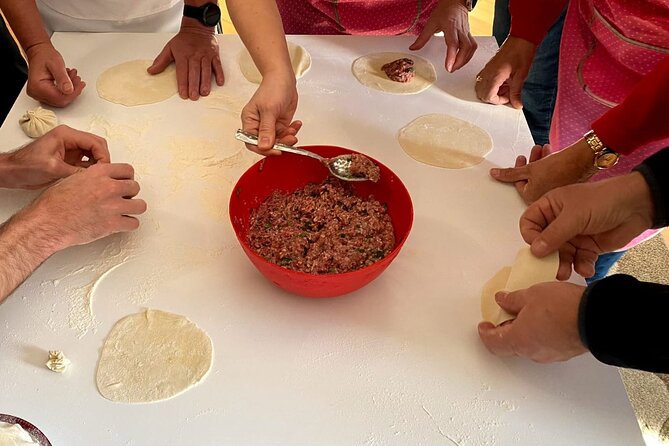
At $49 per person, this is good value if you want a meal, a cooking lesson, drinks, transport to the home, and local contact in one booking. You are not paying only for dinner. The price also covers guide service, ingredients for six foods, the class, wine, chacha, water, and the ride from the meeting point.
The strongest value comes from the amount of food and the personal setting. You prepare a full Georgian spread rather than one small dish, and you eat everything afterward. The meal may be more than you can finish, so arrive hungry but do not eat nothing all day in expectation of a light snack.
The value is less clear if you mainly want a polished culinary school lesson. A private family kitchen may be less structured than a commercial studio, and a group of up to 30 could reduce one-on-one attention. For many people, though, the informal setting is exactly why the experience works.
The social side of the evening
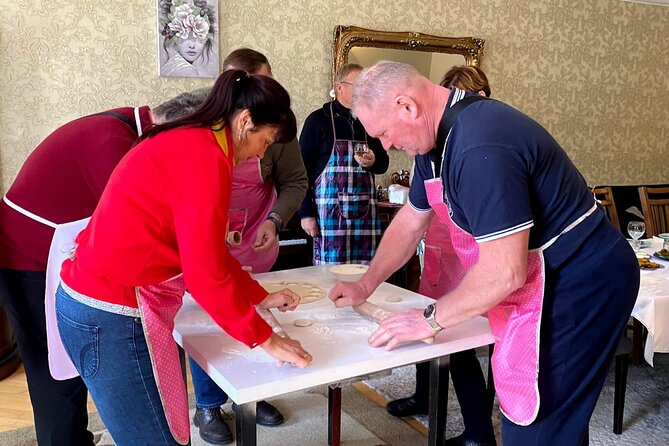
This is a good choice if you are traveling alone or want an easy way to meet people. The group setting gives you company during the class, and the meal naturally encourages conversation.
Solo visitors can fit in well, especially when the guide makes an effort to include everyone. One account describes a group made up of one solo person and a couple, with the solo participant feeling included throughout the evening.
The atmosphere depends partly on the group size and guide. A small group can feel like a dinner with new friends. A full group of 30 will be louder and less personal. If quiet conversation matters to you, ask about the expected group size before booking.
The guides also shape the experience. Beka has been praised for explaining Georgian history and food while offering cooking tips. Tornike is associated with a warm, humorous style, and Nina with a hospitable, informed approach. These are useful signs of the tone to expect, but guide assignments can change.
Practical details that matter
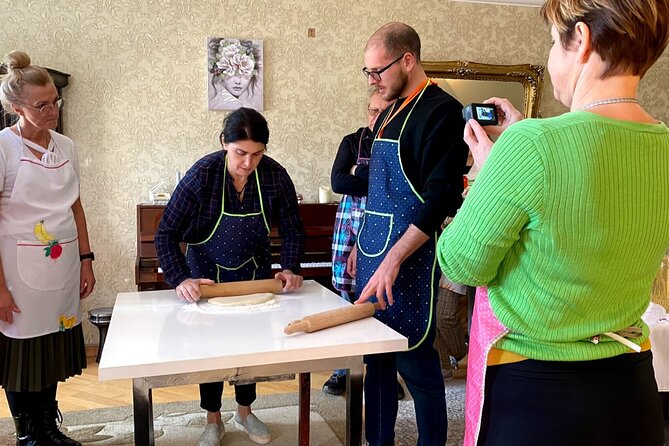
The meeting point is near public transportation, and confirmation is provided at booking. The tour runs in all weather, so dress for the conditions, especially because you need to reach the meeting point and may be outside during transfers.
The start time is fixed at 6 pm. The end point is the family home, not the original meeting place. Since transportation from the home is not included, set aside money for a taxi or arrange another ride before the class ends.
Most people can take part, but the cooking involves standing, moving around a kitchen, handling dough, and sharing a meal. The supplied information does not give specific accessibility details, so contact the provider if you need adaptations.
The experience is offered in English. Vegetarian khinkali are available on request. Other dietary needs are not specified, so ask before booking rather than relying on a last-minute change.
Free cancellation is available if you cancel at least 24 hours before the 6 pm start time. Changes or cancellations made later are not refunded.
Who should book this Tbilisi food tour?
I would recommend it to you if you enjoy food as a way to meet local people. It suits curious eaters, solo visitors, couples, and anyone who wants more than a restaurant meal.
It is also a strong choice for home cooks. You learn several recipes in one evening, and recipes can be provided afterward, making it easier to recreate the dishes at home.
Families with older children may enjoy the dough work and shared meal, though the details do not specify a minimum age. Anyone who dislikes group activities, strong spirits, or long shared meals may prefer a shorter food tasting instead.
You should also consider your appetite. This is a substantial evening with bread, dumplings, cheese, cornbread, vegetables, and drinks. If you are looking for a small tasting menu, this is not the right format.
Should you book it?
Book this tour if you want to cook in a real family home, eat a generous Georgian meal, and spend an evening talking with a local guide. The strongest reasons to go are the hands-on khinkali and khachapuri preparation, the broad menu, and the chance to take recipes home.
Skip it if you need a tightly timed activity, guaranteed private attention, or a return transfer to central Tbilisi. For most food-focused visitors, though, $49 buys a full evening rather than a simple meal, and that makes it one of the more useful ways to get acquainted with Georgian cooking.
FAQ
Where does the Tbilisi food tour begin?
The tour begins at Traveler’s Meeting Point in Avlabari, Tbilisi.
What time does the tour start?
The tour starts at 6 pm.
How long does the experience last?
The stated duration is approximately three hours, including about 30 minutes at the meeting point and two and a half hours at the local family home.
Where does the tour finish?
The tour finishes at the local family home at 45 Gigo Zaziashvili Street, Tbilisi 0102.
Is transportation included?
Transportation from the meeting point to the local family home is included. Transportation from the family home afterward is not included.
What foods do you prepare?
You prepare khinkali, khachapuri, eggplant with walnuts, Georgian salad, mchadi, and Sulguni cheese as part of the meal.
Are drinks included?
Yes. Homemade dry white wine, homemade chacha, and water are included.
Can vegetarians join the class?
Yes. Vegetarian khinkali are available on request.
Is the tour offered in English?
Yes. The experience is offered in English.
What happens if you need to cancel?
You can receive a full refund if you cancel at least 24 hours before the experience start time. Cancellations or changes made less than 24 hours before the start are not refunded or accepted.
Just added around Tbilisi
- Old tbilisi walking tour & wine tasting★ 5.0 · 9 reviews
- Tbilisi Airport to Gudauri, Bakuriani, Batumi, Tbilisi★ 5.0 · 3 reviews
- Private Adorable City Tour of Tbilisi★ 5.0 · 3 reviews
- Vardzia. Lake Paravani, Khertvisi & Lomisa castle, Rabati★ 4.5 · 12 reviews
- full day Kazbegi-Gudauri-jvari -from Tbilisi★ 5.0 · 6 reviews
- Private Wine Tour In Kakheti Region with 7 Wines and Lunch★ 5.0 · 3 reviews
- Wine promenade in hospitable Tbilisi★ 5.0 · 17 reviews
- Your unique photo session in Tblisi, Georgia★ 3.5 · 4 reviews
Food & Drink, compared.
Day Trip to Kakheti Wine Region Including 9 Wine Tastings
Read our review →
Kakheti Wine Region: Signagi and Bodbe Tour with 10 Wine Tastings
Read our review →
Mtskheta,Jvari,Bazaar,wine tasting,Chronicles of Georgia
Read our review →
Old Tbilisi Highlights walking tour with wine & 10 tastings
Read our review →
Old Tbilisi Tour: Private Walking Tour With Wine Tasting
Read our review →
Private Tbilisi Food Tour: 9 Tastings Walk in Bohemian District
Read our review →
Full Day Private Wine Tour in Kakheti Region with Lunch and 3 Wine Tastings
Read our review →
Private Wine Tasting in Prince Karalashvili Wine Cellar. Tbilisi
Read our review →Browse the lists this tour appears in