

Reviewed · CITY TOURS
Private Walking Tbilisi City Tour (Day Trip)
Tbilisi reveals itself best on foot, and this long city walk takes you from Narikala Fortress and the sulfur baths to grand Rustaveli Avenue, old churches, a synagogue, a mosque, and the Bridge of Peace. It is not just a photo stop tour. The route shows how several faiths and eras share one compact capital.
I like the wide historical sweep and the chance to connect famous sights with smaller details, such as the fig-lined Leghvtakhevi waterfall and the old balconies of Tbilisi. I also like the value: for $59, you get six to seven hours with an English-speaking guide and bottled water.
The main consideration is the amount of walking. Transportation is not included, the route covers many stops, and the advertised group size can reach 100 people, so confirm the exact format if you expect a small private outing.
Key points to know before booking
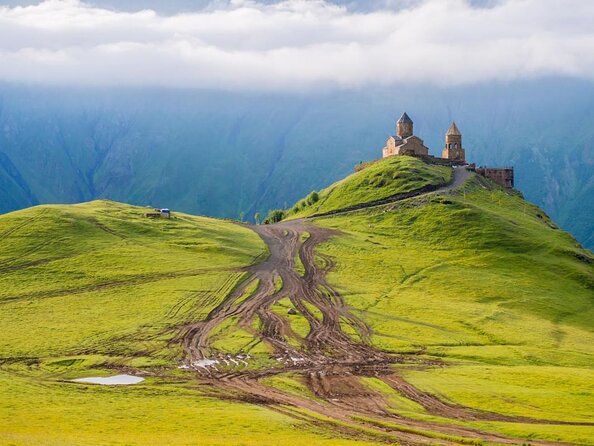
- Fourteen stops cover the city’s main story: You move from the fortress and old churches to theaters, parks, bridges, and sulfur springs.
- Multi-faith Tbilisi is the focus: The route includes the Great Synagogue, Jumah Mosque, Catholic and Gregorian churches, Orthodox cathedrals, and Ateshga.
- Guides include Temo and Teimuraz: Both are associated with strong comments about clear explanations, helpful service, and lively storytelling.
- You pay for guiding, not transport: The tour is on foot, starts and ends at the meeting point, and includes bottled water.
- The pace is full but flexible: Listed stop times total several hours, while the full experience runs about six to seven hours.
- Weather and minimum numbers matter: Poor weather or too few bookings can lead to a new date or a full refund.
Why this walking tour works for a first day in Tbilisi
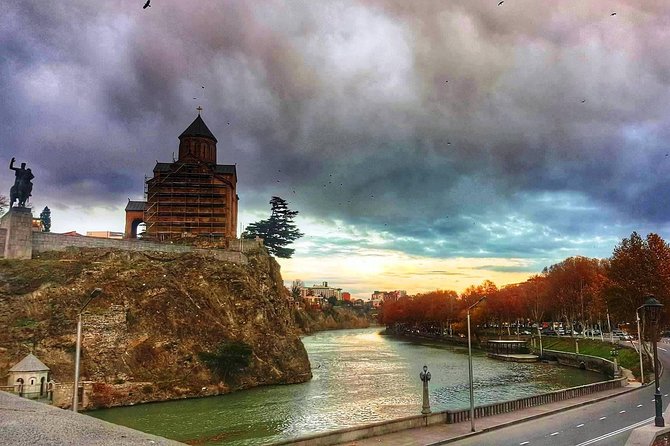
Tbilisi can feel confusing at first. The old city climbs steep hills, the river cuts through the center, and centuries of rebuilding have placed a church, bathhouse, theater, or fortress around nearly every corner. This tour gives you a useful map in your head.
The route joins the main sights rather than treating them as isolated monuments. At Narikala, you get the old defensive ridge and a view toward the city. Down below, Abanotubani explains the name Tbilisi through its warm sulfur springs. Later, Rustaveli Avenue shifts the mood to theaters, public buildings, and the newer part of the capital.
I especially like the religious variety. You are not seeing a city reduced to one tradition. The route includes Georgian Orthodox churches, Catholic and Gregorian churches, the Great Synagogue, the Muslim mosque, and Ateshga, identified as a pagan temple. That mix gives the walk more meaning than a standard checklist of monuments.
The tour is described as private, but the supplied details also call it shared and allow up to 100 participants. That is an important point. If you want personal conversation and a quiet pace, ask the operator to confirm the group size and whether your booking is private before paying.
More walking tours in Tbilisi:
- Tbilisi Walking Tour Including Cable Car and Traditional Bakery
★ 5.0 · 1,310 reviews - Tbilisi:Evening Walking & Talking Tour with Wine & Boat Ride
★ 5.0 · 572 reviews - Old Tbilisi Highlights walking tour with wine & 10 tastings
★ 5.0 · 276 reviews
Narikala Fortress begins the historical climb
Narikala Fortress is a strong place to begin because it gives you both a landmark and a sense of direction. From this high point, you can look across the old city and understand how Tbilisi grew around the river, the baths, and the steep hills.
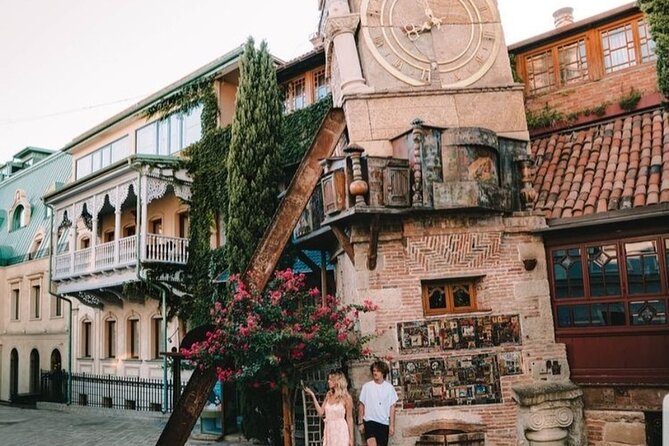
The surrounding area contains typical Tbilisi houses with wooden balconies, an architectural detail that gives the old city much of its character. The route also brings together several religious buildings in and around the old walls, including Anchiskhati Basilica, Orthodox churches, Catholic and Gregorian churches, the mosque, the synagogue, and Ateshga.
The listed time here is 50 minutes, with admission included. That is enough for an introduction and photographs, but not a long archaeological visit. I would wear shoes with a firm sole, since a fortress and hillside walking route are more demanding than a flat avenue.
Sulfur baths and the origin of Tbilisi
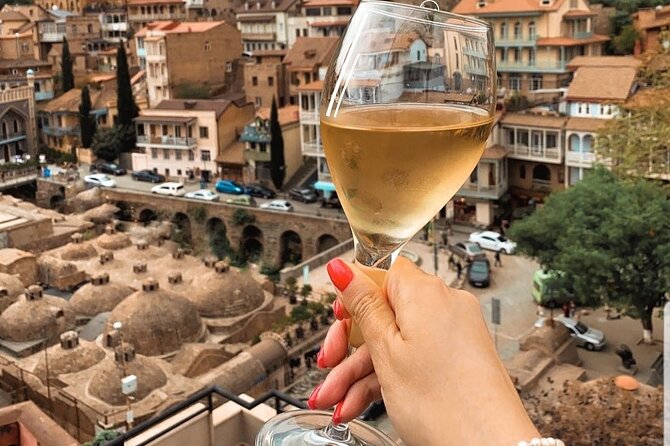
The sulfur bath district is one of the city’s most distinctive areas. The name Tbilisi comes from tbili, meaning warm, and the local founding story links the city to King Vakhtang Gorgasali and the hot springs.
At the Sulfur Bath 5 stop, your guide can connect the legend, the royal story, and the city’s name. The nearby Abanotubani district adds another version of the same origin tale. According to that story, the king’s falcon fell near the hot springs, leading to the discovery of the site and the creation of a new capital.
You get 30 minutes around the sulfur bath area and 15 minutes in Abanotubani. That is enough to understand the setting, but this is not a bathing experience. No bath session is included, so you should not book this tour expecting time inside the pools.
The brief pause at the old baths is valuable because it explains why Tbilisi developed here. It also gives the day a welcome change from churches and viewpoints. The domed bath roofs, narrow streets, and warm-water story make this one of the most memorable parts of the route.
Rustaveli Avenue brings in modern Tbilisi
After the old town, the tour spends about an hour on Rustaveli Avenue. This is the city’s grand public boulevard, with the Rustaveli Drama Theater, the State Academic Theater of Opera and Ballet named for Zakaria Paliashvili, the First Gymnasium, and art salons.
This stop helps prevent a common mistake: treating Tbilisi as only a medieval or early historic city. Rustaveli Avenue belongs to the newer part of the capital, with a different scale and civic character. You see where theater, education, and public culture fit into the city’s story.
An hour is a substantial portion of the tour, so this section matters if you care about architecture and city life. If your only goal is the old town, you may find the time here less exciting than the fortress and baths. If you want a fuller picture of Tbilisi, it is a sensible inclusion.
More day trips from Tbilisi:
- Day Trip to Kakheti Wine Region Including 9 Wine Tastings
★ 5.0 · 2,774 reviews - Day Trip to Kazbegi and Gudauri
★ 5.0 · 2,009 reviews - Day Trip to Mtskheta Gori and Uplistsikhe
★ 5.0 · 1,801 reviews - Day Trip to Armenia Including Homemade Lunch
★ 5.0 · 1,162 reviews
The Great Synagogue and Tbilisi’s faiths
The Great Synagogue of Tbilisi receives a short 15-minute stop. The building was constructed from 1895 to 1903 in an eclectic style by Georgian Jews from Akhaltsikhe who moved to Tbilisi in the late 19th century. It is also known as the synagogue of the people of Akhaltsikhe.
That detail gives the building a human story. You are not simply looking at a religious facade. You are seeing evidence of movement within Georgia and of the Jewish community’s place in the capital.
The route’s wider religious picture includes the Jumah Mosque, Catholic and Gregorian churches, and the pagan temple known as Ateshga. The tour does not treat these places as unrelated stops. Taken together, they show why Tbilisi is often best understood through its shared neighborhoods and layered beliefs.
Because the synagogue stop is brief, check with your guide about access and time for viewing. The listed information confirms the stop but does not promise an interior visit.
Metekhi Cathedral and the river crossing
Metekhi Cathedral sits on a prominent part of the old city and carries both religious and royal associations. King Vakhtang I Gorgasali is said to have established a church and fort here, with the site also serving as a royal residence. The name Metekhi refers to the area around the palace.
The stop lasts about 15 minutes. That is enough to hear the basic story and take in the position above the river, though you should not expect a long church visit. Metekhi works particularly well in a walking tour because its setting connects architecture, power, and the shape of the city.
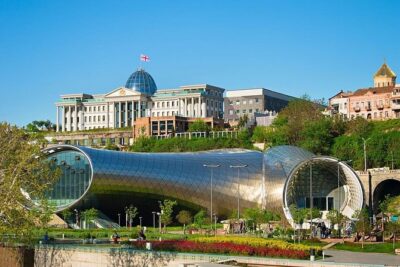
From there, the Bridge of Peace brings you into a much newer chapter. Built in 2009 and 2010, it was designed by Italian architect Michele De Lucchi, with lighting by French designer Philippe Martinaud. Its curved modern form contrasts sharply with the old churches and fortress nearby.
That contrast is part of the point. Tbilisi does not preserve its past in isolation. New structures sit directly beside old ones, sometimes gracefully and sometimes provocatively. The Bridge of Peace makes that conversation easy to see.
Rike Park, Kartlis Deda, and the city symbol
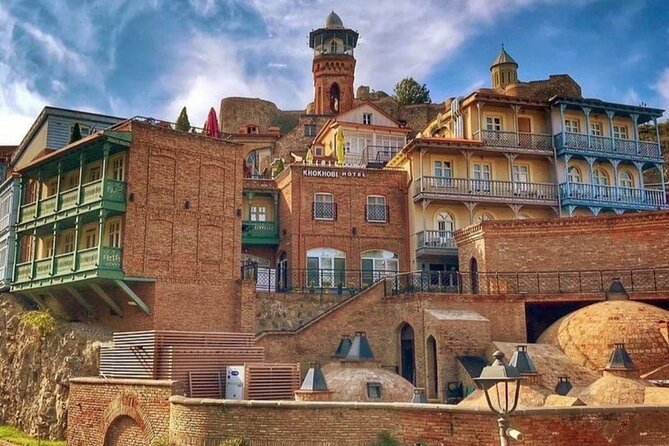
Rike Park is a public park in the old town where festivals such as Tbilisoba are held. The stop is listed at 15 minutes, so think of it as a pause and orientation point rather than a full park visit.
Kartlis Deda, or Mother of Georgia, is one of the city’s best-known symbols. She welcomes friends with wine and meets enemies with a sword. That simple image captures a Georgian idea of hospitality paired with self-defense.
The statue also gives you another elevated viewpoint over Tbilisi. The route does not list transportation, so reaching this part on foot may add effort, especially after several hours. Ask your guide how much uphill walking is planned on your date if mobility or stamina is a concern.
Anchiskhati, Sioni, and the old streets
Anchiskhati Basilica is identified as the oldest surviving church in Georgia and dates to the sixth century. It also has an artistic connection: the studio of Georgian sculptor Elguja Amashukeli was located here. Amashukeli created Kartlis Deda, linking the old basilica to one of the modern symbols seen earlier.
Sioni Cathedral has a more complicated building story. It was built in the sixth and seventh centuries, destroyed by foreign invaders, and rebuilt several times. The current form follows a 13th-century version, with later changes from the 17th through 19th centuries.
Sioni was the main Georgian Orthodox cathedral and the seat of the Catholicos-Patriarch of All Georgia until Holy Trinity Cathedral was consecrated. That context makes the 15-minute visit worthwhile, even if you have already seen several churches.
Leselidze Street adds an everyday urban layer. It combines old and new parts of the city, so you get a transition from monuments to shops, facades, and ordinary street life. The route gives this area 15 minutes, which should be enough for a short walk and explanation.
Rezo Gabriadze and the waterfall finale
The Rezo Gabriadze Marionette Theater is one of Tbilisi’s most recognizable cultural sights. The theater is known for performances with depth and feeling, and many people wait for shows to begin. The tour only allows about 10 minutes here, so this is an exterior stop rather than a theater performance.
You should not expect a ticket to a show. Still, the stop introduces one of the city’s most individual artistic institutions and gives the day a break from royal, religious, and political history.
The final listed stop is the Dzveli Tbilisi Sulphur Waterfall in Leghvtakhevi. The waterfall is 22 meters tall, and the name Leghvtakhevi comes from the Georgian word leghvi, meaning fig. The area once had many fig trees.
A waterfall in the middle of the old city is a fine ending because it changes the mood again. After fortresses, cathedrals, and avenues, you finish beside water and rock. The stop lasts about 20 minutes, enough to see the falls and hear how the place got its name.
The $59 price and what you receive
At $59 per person, this tour offers fair value if you want a guide for most of a day. You receive professional guiding in English and bottled water, while admission is included at Narikala Fortress. The long route would be costly to recreate with several separate guided visits.
The price does not include transportation, meals, bath entry, theater tickets, or other admissions not specifically listed. That keeps the base price clear, but you should budget for your own food and any optional activities you add later.
The six to seven hour length is another part of the value. You cover the city’s best-known sights in one outing instead of spending your first day working out the geography yourself. The tradeoff is that many stops last only 15 minutes, so this is a survey tour rather than a slow study of each building.
The tour is booked an average of 26 days ahead, so advance planning may be wise during busy periods. Confirmation arrives at booking. Free cancellation is available until 24 hours before the local start time. Poor weather or failure to reach the minimum number of participants can lead to another date or a full refund.
Who will enjoy this Tbilisi walk
I would choose this tour for a first visit, especially if you want a broad introduction before exploring individual districts on your own. It suits you if churches, city stories, architecture, and cultural context matter as much as photographs.
It also fits a mixed-interest group. One person can focus on the fortress and royal legends, another on the synagogue and churches, and another on theaters, bridges, and public art. The route has enough variety to keep the day from feeling like fourteen versions of the same monument.
You may want a different plan if you dislike long walks, steep streets, or short stops. The absence of included transport also matters. And if you are specifically seeking a quiet, private guide conversation, confirm the group arrangement because the stated maximum is 100 people.
The guide is a major part of the experience. Temo and Teimuraz are named in connection with this tour, with strong praise for detailed explanations, helpful service, punctuality, and energetic storytelling. Ask who will lead your date and whether the full route can be adjusted to your interests.
Should you book it?
Book it if you want one well-filled day that explains Tbilisi through its fortress, baths, faiths, theaters, river, and old streets. The $59 price is reasonable for six to seven hours of English guiding, and the route includes several places you might otherwise miss.
Skip it if you prefer a small, slow-paced private walk or want to spend serious time inside each church and cultural site. Before booking, confirm the group size, walking demands, and exact guide. For most first-time visitors who want context and a clear start in the city, this is a practical choice.
FAQ
How long does the Tbilisi walking tour last?
The experience lasts approximately six to seven hours.
What language is the tour offered in?
The tour is offered in English.
What is included in the price?
Professional guide service and bottled water are included. Admission to Narikala Fortress is also listed as included.
Is transportation included?
No. Transportation is not included, so you should expect to walk between the listed areas.
Where does the tour start and finish?
It starts in Tbilisi, Georgia, at the stated meeting point, and ends back at the meeting point.
How many people can join the tour?
The activity can have a maximum of 100 participants. Confirm the exact group arrangement if you are expecting a private tour.
Can I cancel for a full refund?
Yes. You can cancel for a full refund up to 24 hours before the experience start time. Cancellations or changes made less than 24 hours in advance are not accepted for a refund.
What happens if the weather is poor or the minimum number is not reached?
If poor weather cancels the tour, or if the minimum number of participants is not reached, you will be offered a different date or experience, or a full refund.
Just added around Tbilisi
- Old tbilisi walking tour & wine tasting★ 5.0 · 9 reviews
- Tbilisi Airport to Gudauri, Bakuriani, Batumi, Tbilisi★ 5.0 · 3 reviews
- Private Adorable City Tour of Tbilisi★ 5.0 · 3 reviews
- Vardzia. Lake Paravani, Khertvisi & Lomisa castle, Rabati★ 4.5 · 12 reviews
- full day Kazbegi-Gudauri-jvari -from Tbilisi★ 5.0 · 6 reviews
- Private Wine Tour In Kakheti Region with 7 Wines and Lunch★ 5.0 · 3 reviews
- Wine promenade in hospitable Tbilisi★ 5.0 · 17 reviews
- Your unique photo session in Tblisi, Georgia★ 3.5 · 4 reviews
City Tours, compared.
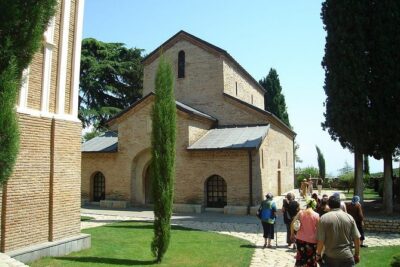
Kakheti;City of Love Sighnaghi, Bodbe. KTW. Wine House Group tour
Read our review →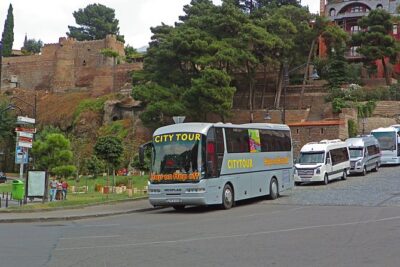
Mtskheta – Jvari. Full City Tour on Hop On Hop Off Bus
Read our review →
Day tour to Chronicles of Georgia, Gori city, Uplistsikhe cave
Read our review →
Tbilisi city tour PRIVATE excursion Airport and hotel pickup INCL
Read our review →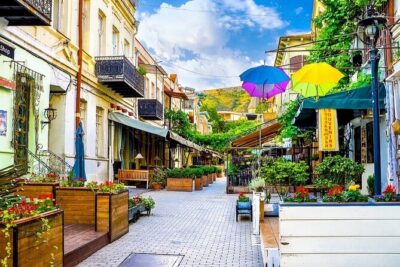
Tbilisi City Tour, Most Popular Tourists Destinations In The Capital Of Georgia
Read our review →
Browse the lists this tour appears in