
Reviewed · WALKING TOURS
Discover Tbilisi: Hidden Gems and Iconic Sights Walking Tour
Tbilisi reveals itself in layers on this walk: imperial squares, Orthodox churches, Armenian and Jewish landmarks, a mosque where Shia and Sunni Muslims pray together, and old lanes climbing toward Kartlis Deda and Narikala. For $9, you get a remarkably full introduction to the city, guided by locals such as Jonah, Salome, Nini, Oksana, Tamara, and Koba.
I like the wide sweep of the route, which covers both famous sights and easy-to-miss courtyards, sculptures, and old walls. I also like the practical touch: guides often suggest restaurants, help with local orientation, and may take photos or point out details you would otherwise walk past. The main drawback is the pace. Twenty stops over three hours means plenty of standing and walking, with limited time inside any one place.
What makes this Tbilisi walk worth $9
- A city history lesson on foot: Move from Freedom Square and Soviet-era memories to sixth-century Anchiskhati Basilica and the modern Bridge of Peace.
- Many faiths in one compact area: See Georgian Orthodox, Armenian, Jewish, and Muslim landmarks within the Old Town.
- Excellent first-day orientation: The route gives you a useful map of central Tbilisi before you explore on your own.
- Local food advice: Guides such as Gio and Koba are known for pointing visitors toward Georgian restaurants and good khinkali stops.
- Strong guide support: Past guide names include Jonah, Salomea, Oksana, Tamara, Nini, Sofia, Koba, and Giorgi.
- One extra cost to plan for: The aerial tramway is not included, so bring money for the ride if your guide uses it.
Starting at Freedom Square and Pushkin Street
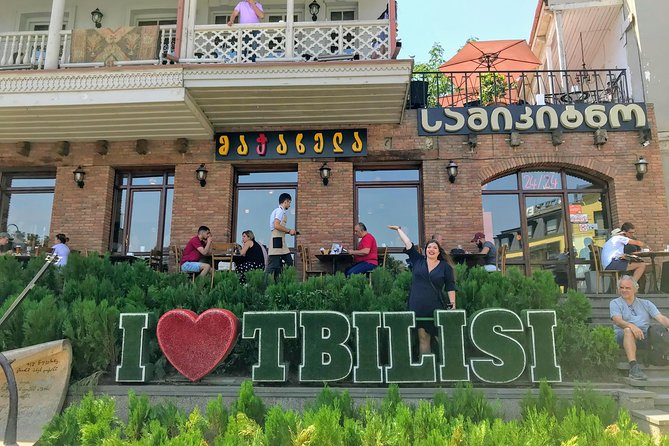
The tour begins near Freedom Square, at the eastern end of Rustaveli Avenue. This is a useful place to start because the square gives you a quick lesson in Tbilisi’s changing political past. Its name and monuments have shifted through imperial Russian, Soviet, and modern Georgian periods.
Your guide uses the square as a starting point before leading you toward Pushkin Street and the Old Town. Pushkin Street is one of the roads radiating from Freedom Square, and it helps connect the formal center of modern Tbilisi with the older quarter.
I like this opening because it gets you oriented without wasting time on a long transfer. You are already in the center, and the rest of the walk unfolds on foot. Meet on time, though. The operator allows only 10 minutes of waiting, and late arrivals may need to book again.
More walking tours in Tbilisi:
- Tbilisi Walking Tour Including Cable Car and Traditional Bakery
★ 5.0 · 1,310 reviews - Tbilisi:Evening Walking & Talking Tour with Wine & Boat Ride
★ 5.0 · 572 reviews - Old Tbilisi Highlights walking tour with wine & 10 tastings
★ 5.0 · 276 reviews
Old walls and Anchiskhati Basilica
The remains of Tbilisi’s old wall offer a quick look at the defensive city that once occupied this area. The stop is brief, but it helps explain why the Old Town feels enclosed and irregular rather than planned on a neat grid.
Anchiskhati Basilica is a more substantial historical pause. Dating from the sixth century, it is the oldest surviving church in Tbilisi. Its Georgian Orthodox identity is important to the city, and it gives the walk an early connection to Georgia’s long Christian tradition.
You may enter places of worship only if dressed suitably. Men and women must cover their knees and shoulders, so shorts and sleeveless tops can prevent entry. This is one of the most useful things to know before you leave your hotel.
The Bridge of Peace and the Mtkvari River
The Bridge of Peace is the modern counterpoint to the old basilica. Opened in 2010 over the Mtkvari River, also called the Kura, its glass and steel form links the Old Town with Rike Park.
This is one of the walk’s best photo stops. From the bridge, you can look toward the older streets, the river, Rike Park, and the hills above the city. The contrast is very Tbilisi: old stone, newer architecture, steep slopes, and a river cutting through the center.
Do not expect a long architectural talk here unless your guide chooses to linger. The stated stop is about 15 minutes, enough for photos and a short explanation before moving on.
Shardeni Street and the Old Town lanes
Jan Shardeni Street is a pedestrian lane lined with restaurants and places to stop for food or a drink. It is popular and polished, so it feels different from the quieter side streets nearby.
The walk spends about an hour in Old Town Tbilisi, the longest single part of the route. That is where the experience earns its low price. Instead of simply checking off major landmarks, you get time to see old buildings, restaurant lanes, theater spaces, courtyards, and the uneven character of the district.
The Old Town is not a museum district frozen in place. It is a working part of the city, and that means patched walls, mixed building conditions, businesses, and tourist-oriented streets. I prefer this honest mix to a perfectly restored quarter. Keep your eyes up and to the side, since guides such as Nini and Oksana are praised for showing small architectural details and courtyards that are easy to miss alone.
More days out of Tbilisi:
- Day Trip to Kakheti Wine Region Including 9 Wine Tastings
★ 5.0 · 2,774 reviews - Highlights of Caucasus Mountains-Jinvali,Ananuri,Gudauri,Kazbegi(Group tour)
★ 5.0 · 2,682 reviews - Day Trip to Kazbegi and Gudauri
★ 5.0 · 2,009 reviews - Day Trip to Mtskheta Gori and Uplistsikhe
★ 5.0 · 1,801 reviews
Gabriadze, Parajanov, and Tbilisi’s creative side
The Rezo Gabriadze Marionette Theater adds a touch of theater and local character. Opened in 1981, it has become an important part of Tbilisi’s cultural life. The stop is short, but the building and its story give the walk a break from churches and monuments.
Nearby, the Sergey Paradzhanov Monument honors the Armenian-Georgian filmmaker known for visually poetic films such as The Colour of Pomegranates and Shadows of Forgotten Ancestors. You do not need to know his work in advance to appreciate why he matters. The monument introduces Tbilisi’s broader cultural world and its connections across the Caucasus.
The nearby Sayat-Nova Monument brings another layer. Sayat-Nova was an Armenian poet and musician who lived in the region and died near St. Kevork Armenian Church during the 1795 attack on Tbilisi. His monument and burial place point to the Armenian presence in the city, a part of Tbilisi that can be overlooked if you focus only on Georgian landmarks.
These stops are particularly useful if you want more than a list of postcard views. The guide can connect buildings, artists, faiths, and political events in a way that makes the Old Town feel like a meeting place rather than a single cultural story.
Up to Narikala by aerial tramway
The aerial tramway links Rike Park with Narikala Fortress above the city. The ride is not included in the $9 tour price, so check with your guide about the plan and carry extra money if you want to go up.
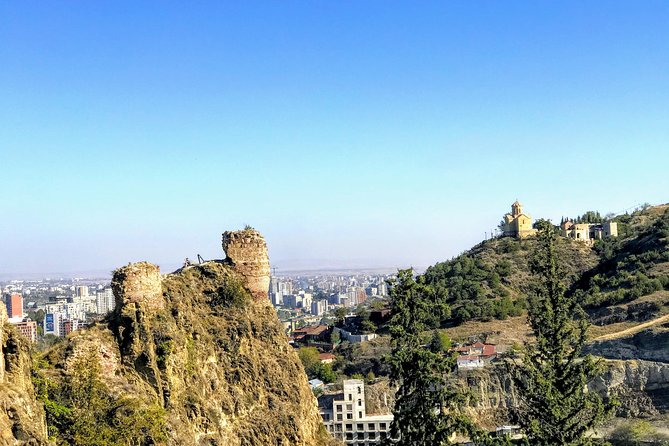
This is the route’s major viewpoint. From the hill, you can see Tbilisi spread along the Mtkvari, with the Old Town below and the city’s hills around it. Kartlis Deda, the Mother of Georgia, stands nearby on Sololaki Hill. The 20-meter aluminum statue, created in 1958 for Tbilisi’s 1,500th anniversary, represents a woman in Georgian national dress.
The tramway is listed as a 30-minute stop, but the total duration can vary. The experience is advertised at roughly two and a half to three and a half hours, and the long list of stops makes that range understandable.
There is a small inconsistency worth noting: the highlights describe a maximum of 12 people, while the additional booking information allows up to 15. Either way, this is intended to be a small group, not a large coach outing. Ask at booking if the exact group limit matters to you.
Sioni Cathedral and the city’s religious mix
Sioni Cathedral is named after Mount Zion in Jerusalem, following a Georgian tradition of naming churches after important places in the Holy Land. The cathedral is one of the key Georgian Orthodox buildings in central Tbilisi.
The route then moves through a striking mix of religious sites. The Jumah Mosque is especially unusual because Shia and Sunni Muslims pray there together. It is open to people of all religions and beliefs, but you still need to follow appropriate clothing rules and any instructions given at the entrance.
The Great Synagogue of Tbilisi was built between 1895 and 1903 by Georgian Jews from Akhaltsikhe who moved to Tbilisi in the late nineteenth century. It is also known as the Akhaltsikhe synagogue. Seeing it alongside the cathedral, mosque, and Armenian church gives you a compact lesson in the city’s long religious and cultural variety.
The stops are not long enough for a full architectural study. Think of them as a guided introduction, with time to return later if one building catches your interest.
Tamada, Sofiko Chiaureli, and Meidan Bazaar
The sculpture of the Toaster shows a man holding a drinking horn. It represents the tamada, the traditional toastmaster at a Georgian feast. This is a small but memorable stop because it connects public art with one of Georgia’s best-known social customs.
The monument to Sofiko Chiaureli honors the Soviet Georgian actress. Like the Paradzhanov and Sayat-Nova monuments, it reminds you that Tbilisi’s cultural identity is not limited to medieval churches and fortress walls.
Meidan Bazaar is the practical shopping stop. If you want souvenirs but do not want to search the city, this is the place the guide is likely to point out. The route gives you about 20 minutes here, enough to browse without turning the whole walk into a shopping trip.
The Falcon and Pheasant legend
The Monument Fountain Falcon and Pheasant refers to the traditional story of Tbilisi’s founding in the fifth century by King Vakhtang Gorgasali. The tale connects a hunting scene with the city’s sulfur springs.
This is a good example of how the tour mixes fact, legend, and place. You get a story tied to a visible monument, then continue toward the actual sulfur water area. I find this more useful than hearing a detached founding date because the legend stays attached to a physical corner of the city.
The sulfur waterfall and the final stretch
The Dzveli Tbilisi Sulphur Waterfall is one of the route’s most surprising sights. It is a real waterfall in the city center, tucked into the Old Town near the sulfur bath district.
The waterfall is not a grand natural attraction, but that is exactly why it works. You have been walking through dense streets and monuments, then suddenly encounter running water and a small pocket of nature. It makes a fine final photo stop.
The activity ends back at the meeting point near Freedom Square. Since no hotel pickup is included, you need to make your own way to the start and arrange your onward route afterward. One useful detail from past tours is that a guide named Giorgi once accompanied a participant to the correct Metro station, but you should not assume that extra help is guaranteed.
What the guides add
The guide can make or break a city walk, and this experience has a long list of named guides with strong feedback: Jonah, Salomea, Oksana, Tamara, Nini, Sofia, Koba, Gio, Giorgi, Khato, Liza, and others.
The most consistent strengths are clear explanations, patience, local stories, and practical recommendations. Jonah is praised for setting a useful tone for the rest of a Georgia trip. Oksana is noted for accommodating slow walkers and answering many questions. Nini is known for pointing out details in the Old Town and suggesting things to do later.
Koba grew up in Tbilisi and is especially associated with local food advice, including places for khinkali. Gio also recommends restaurants serving Georgian cuisine. Some walks have included wine tasting, but it is not listed as an included feature, so treat that as guide or departure-specific rather than guaranteed.
For families, the experience can work well if children manage several hours on foot. Sofia has been praised for checking that children were comfortable, while other guides have adapted their pace for slower walkers. Still, this is not a stroller-focused sightseeing ride, and the hills and uneven streets require a moderate fitness level.
Price, pace, and practical limits
At $9 per person, the value is unusually strong if you want an overview rather than private guiding. The local guide, broad route, and small-group format cost less than many short city walks, though the cable car is extra and food, drinks, hotel pickup, and personal purchases are not included.
The route is long for its price. You cover roughly 20 listed points in two and a half to three and a half hours, with most stops lasting 15 to 20 minutes and the Old Town section lasting about an hour. That means you should wear comfortable shoes and bring water, especially in warm weather.
The tour is offered in English. In exceptional cases, it may be operated in English and Russian at the same time, so ask ahead if language format is important to you.
You receive confirmation when booking, and free cancellation is available up to 24 hours before the start. Poor weather or too few bookings can lead to a new date, an alternative experience, or a full refund. The walk requires good weather, so keep that flexibility in mind.
Who should book this walk
I would choose this tour early in a Tbilisi stay. It gives you a working map of the center, explains the main sights, and leaves you with restaurant and follow-up ideas. Afterward, you can return to the synagogue, cathedral, bazaar, sulfur baths, or Old Town lanes that deserve more time.
It suits solo visitors because the small group provides easy company without the cost of a private tour. It also suits couples and families who want a guide able to explain the city while keeping the walk relaxed.
You may want something else if you dislike hills, uneven paving, short stops, or group pacing. Art, architecture, and local history receive more attention than long interior visits, and the cable car fare is separate. If your main goal is Narikala Fortress alone, arrange more time there independently.
Should you book it?
Book this walk if you want a low-cost, well-rounded first look at Tbilisi, especially if you value local stories over a simple list of sights. The religious mix, creative monuments, Old Town courtyards, bridge views, and sulfur waterfall give the route real variety.
Skip it only if you prefer a slow private tour with long visits inside each landmark. For most first-time visitors, $9 is a small price for a useful city orientation, provided you arrive on time, dress for worship sites, wear good shoes, and budget separately for the tramway.
FAQ
How much does the Tbilisi walking tour cost?
The tour costs $9 per person. The aerial tramway is not included, and hotel pickup is also not included.
How long does the tour last?
The expected duration is approximately two hours and 30 minutes to three hours and 30 minutes.
Where does the tour start?
It starts near Freedom Square, at BurberryFreedom Square on Shalva Dadiani Street in Tbilisi.
Where does the tour end?
The activity ends back at the meeting point.
Is the tour offered in English?
Yes. It is offered in English. In exceptional cases, a multilingual guide may conduct the tour in English and Russian at the same time.
How large is the group?
The tour is described as a small-group experience. The highlights state a maximum of 12 people, while the additional information allows up to 15 travelers, so confirm the exact limit when booking.
Is the cable car included?
No. The aerial tramway ticket is not included in the tour price.
What should I wear for churches, mosques, and other worship sites?
You must cover your knees and shoulders. Shorts and sleeveless tops are not allowed for men or women at places requiring this dress code, and entry may be refused if you are not dressed appropriately.
Just added around Tbilisi
- Old tbilisi walking tour & wine tasting★ 5.0 · 9 reviews
- Tbilisi Airport to Gudauri, Bakuriani, Batumi, Tbilisi★ 5.0 · 3 reviews
- Private Adorable City Tour of Tbilisi★ 5.0 · 3 reviews
- Vardzia. Lake Paravani, Khertvisi & Lomisa castle, Rabati★ 4.5 · 12 reviews
- full day Kazbegi-Gudauri-jvari -from Tbilisi★ 5.0 · 6 reviews
- Private Wine Tour In Kakheti Region with 7 Wines and Lunch★ 5.0 · 3 reviews
- Wine promenade in hospitable Tbilisi★ 5.0 · 17 reviews
- Your unique photo session in Tblisi, Georgia★ 3.5 · 4 reviews
Walking Tours, compared.
Tbilisi Walking Tour Including Cable Car and Traditional Bakery
Read our review →
Evening Walking & Talking Tour with Wine & Boat Ride
Read our review →
Old Tbilisi Highlights walking tour with wine & 10 tastings
Read our review →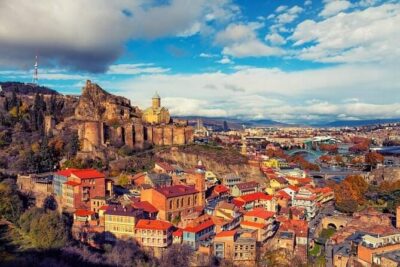
Old Tbilisi Tour: Private Walking Tour With Wine Tasting
Read our review →
Private Tbilisi Food Tour: 9 Tastings Walk in Bohemian District
Read our review →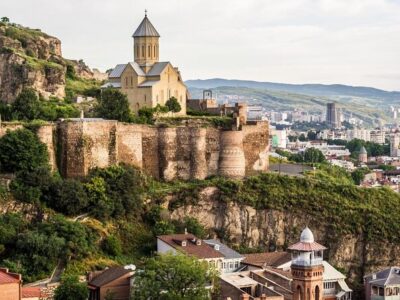
Tbilisi Old Town Walking Tour with a Local Guide
Read our review →
Browse the lists this tour appears in