
Reviewed · MUSEUMS
Museum of illusions,Digital Space and Ethnography in Tbilisi
The best thing about this Tbilisi outing is the sharp change of mood from one stop to the next. You begin among old Georgian houses and regional artifacts, then move into projected art and underwater-style films before ending with spinning tunnels, warped mirrors, and gravity tricks. It covers three very different museums in one day, with a private vehicle and hotel pickup.
I like the chance to see Georgian building traditions from across the country without leaving Tbilisi. I also like the family appeal: the Digital Space and Museum of Illusions offer easy, playful fun, while the ethnography museum gives the day some cultural weight. The main drawback is value. At $194.88 per group, admission tickets are extra, so a small group may find the total cost high for museums that can be fairly brief.
Key points at a glance
- Fourteen regional zones in one open-air setting: See traditional buildings and more than 8,000 artifacts from across Georgia.
- A modern stop at Tbilisi Mall: The Digital Space uses projections, films, and virtual installations across 500 square meters.
- Hands-on illusion rooms: Try the Vortex Tunnel, Mirror Room, Infinity Room, and other photo-friendly displays.
- Private transport for up to six people: Hotel pickup and an air-conditioned vehicle make the six-hour route simple.
- Tickets are not included: Budget separately for admission to all three museums and for dinner.
- Best for mixed-age groups: Families and friends get playful indoor attractions, while the ethnography museum adds a more serious cultural stop.
From Georgian village houses to digital projections
The route works because it gives you three distinct ways to look at Georgia. The first stop is rooted in local life and architecture. The second turns art into a room-sized visual show. The third is built around physical tricks and photographs.
That mix is useful if your group does not agree on museums. One person can enjoy traditional houses, another can focus on projected art, and children can look forward to optical illusions. You are not spending six hours in one formal gallery, which keeps the day moving.
The tour begins at 9:30 am, when the guide and driver meet you at your hotel. Since this is a private activity, only your group takes part. That matters if you want to adjust the pace within the set route, though the supplied schedule gives roughly one hour at the ethnography museum, two hours at Digital Space, and one hour at the Museum of Illusions. The remaining time covers driving and transitions.
No guide names are provided, so you should not book this expecting a specific named expert. The main practical strength is the private transport rather than a promised specialist-led lecture.
More museums in Tbilisi:
- Private Tour to Mtskheta Stalin Museum Uplistsikhe Caves
★ 5.0 · 16 reviews - Soviet Story – Private day trip to Chiatura, Stalin’s museum and Katskhi pillar
★ 4.5 · 15 reviews - Day Tour to Mtskheta, Gori (Stalin museum) and Uplistsikhe
★ 4.5 · 8 reviews
Open Air Museum of Ethnography: Georgia in 52 hectares
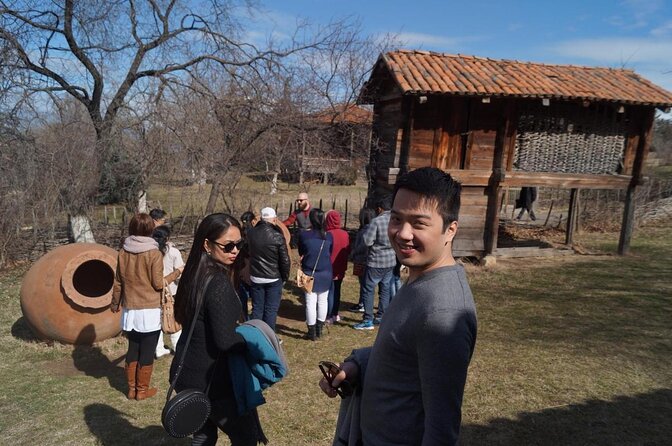
The Open Air Museum of Ethnography sits in Tbilisi’s Vake district, west of Turtle Lake. Founded in 1966 by Georgian ethnographer Giorgi Chitaia, it spreads across 52 hectares and contains more than 8,000 artifacts collected from different parts of Georgia.
This is the most culturally important stop on the route. Instead of viewing household objects behind glass alone, you see traditional structures arranged by regional origin. The museum has 14 ethnographic zones, including Kartli, Samegrelo, Adjara, Abkhazia, Svaneti, Khevsureti, Kakheti, Meskheti, Javakheti, Guria, Imereti, Racha, Lechkhumi, and Ossetia.
For you, the value is comparison. Georgian culture is not one single style. A house associated with Svaneti tells a different story from one connected with Kakheti or Adjara. The collection lets you notice differences in construction, domestic life, and regional identity in one visit.
The listed time here is about one hour. That is enough for an introduction and a focused walk, but not enough to examine every building and artifact in detail. If old houses and rural traditions are your main interest, you may wish the schedule allowed longer. I would treat this as a strong overview rather than a full museum study.
The open-air setting also means your comfort may depend on the conditions on the day. The tour vehicle is air-conditioned, but the museum itself is spread over a large area. Wear practical shoes and plan for walking between exhibits. That advice follows from the museum’s size, not from any promised special access arrangement.
The museum gives the overall day balance. Without it, the tour would be mostly indoor entertainment. With it, you get a clearer sense of how people lived in different Georgian regions before moving on to digital spectacle.
Tbilisi Digital Space at the mall
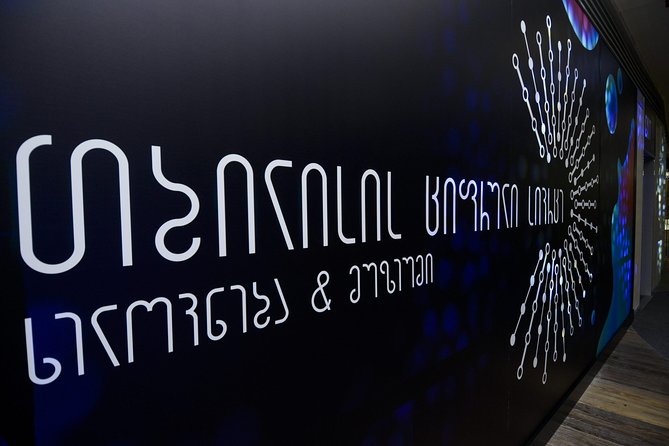
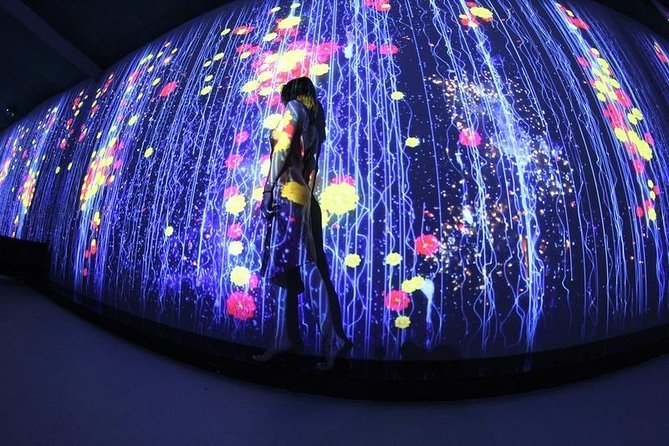
The second stop takes you to Tbilisi Mall, where Georgia’s first digital art museum occupies about 500 square meters. This is not a traditional collection of paintings or historical objects. It is a room-based show built from visual effects, projections, films, and virtual installations.
You can expect surreal scenes that change the feel of the room around you. One especially appealing feature is the visual presentation of Van Gogh’s work. Another part uses underwater-world imagery, although the value of that kind of program depends on what you want from a museum. If you expect original works, detailed labels, or a large collection of physical objects, this stop may feel thin.
That distinction is important when you judge the price. Digital Space is closer to an audiovisual attraction than a standard art museum. Some people will find the projected images magical, especially with children. Others may feel that large screens and films do not justify a separate museum ticket.
The schedule allows about two hours here, making it the longest stop. That gives you time to watch the visual programs without racing through them. It may also feel generous if the current presentation is compact or if your group is not especially interested in projection art.
I like this part of the route for its accessibility. You do not need a background in art history to understand what is happening. You watch color, movement, scale, and sound create a changing room. That makes it an easy shared activity for a family group with different ages.
At the same time, the digital format can be repetitive. One direct assessment of the attraction found too much reliance on large LCD screens and an underwater film. That is a fair warning for anyone seeking unusual technology or a hands-on exhibition. Before booking, ask yourself if you enjoy visual shows for their mood and spectacle. If you want interactive exhibits at every turn, expectations should stay modest.
Museum of Illusions: playful tricks in a compact visit
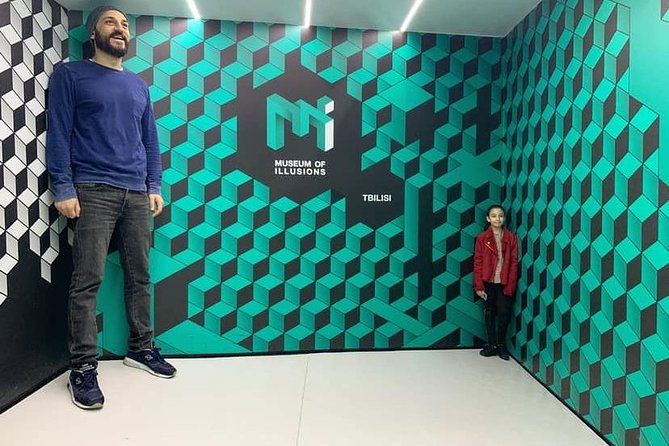
The final museum is designed for social fun. Its rooms challenge your sense of balance, size, reflection, and space. You can walk through the Vortex Tunnel, where a rotating cylinder creates the feeling that you are struggling to move across a stable floor.
The Mirror Room distorts your reflection, while the Infinity Room uses repeated images to make the space appear much larger than it is. Other displays play with gravity and size ratios. The attraction is built for photographs, so your group can take turns posing and watching each other try to understand what the eyes are seeing.
This stop usually works best with children, teenagers, and friends who enjoy silly pictures. It is less about learning a long history of optical science and more about testing your senses for a few minutes at a time. One hour is a sensible estimate for a small attraction of this kind.
Keep your expectations measured. The museum is compact, and not every exhibit will feel extraordinary. Some illusions are clever and interactive, but you may finish quickly if you have visited similar attractions elsewhere. A useful reason to include it is convenience: it adds a light ending after the more serious ethnography museum and the screen-based Digital Space.
The staff experience may vary. At least one assessment found the service less attentive than expected. I would not choose this tour for personal hosting or extensive explanations at every exhibit. Choose it for the rooms themselves and the chance to play with perspective.
More days out of Tbilisi:
- Day Trip to Kakheti Wine Region Including 9 Wine Tastings
★ 5.0 · 2,774 reviews - Highlights of Caucasus Mountains-Jinvali,Ananuri,Gudauri,Kazbegi(Group tour)
★ 5.0 · 2,682 reviews - Day Trip to Kazbegi and Gudauri
★ 5.0 · 2,009 reviews - Day Trip to Mtskheta Gori and Uplistsikhe
★ 5.0 · 1,801 reviews
What the private vehicle adds
The tour includes an air-conditioned vehicle and private transportation. Pickup is offered, and the guide and driver meet you at your hotel at 9:30 am. You do not need to work out the sequence of three museums on your own or arrange separate rides between them.
For a group of up to six, the $194.88 price works differently depending on how many people join. Six people can share the base cost, making it more reasonable per person. Two people pay far more per person before museum admissions, so the same tour becomes a premium private outing for a couple.
The six-hour estimate is also useful for planning. This is not a quick two-hour museum visit. It takes a substantial part of your day, and dinner is not included. You will need to arrange your evening meal separately, so consider this when planning other Tbilisi activities.
The private format gives you a quieter day than a large coach group would. You travel only with your own party, which can make the photo stops and family pacing easier. Still, private does not mean every museum is private or that a specialist curator will accompany you. The provided details promise transport and a guide-driver arrangement, not a personal art lecture.
The real value at $194.88 per group

The price is easiest to defend when six people share it. You are paying for private transport, hotel pickup, and a full route that joins three attractions that would otherwise require separate planning. The vehicle also saves time between the Vake district, Tbilisi Mall, and the illusion museum.
The cost is harder to justify for one or two people because entrance fees are extra. You should add the admission prices for each museum before deciding. Dinner is also excluded, and no food stop is promised during the six-hour outing.
I would compare the tour with the cost and effort of arranging taxis and museum tickets independently. If you are comfortable managing transport and want to spend longer at the ethnography museum, an independent plan may give you more control. If you value a single vehicle, hotel pickup, and a private schedule, the package has a clearer advantage.
The quality of the day also depends on your taste. The strongest part for culture is the Open Air Museum of Ethnography. The strongest parts for family fun are Digital Space and the Museum of Illusions. The weakest match is for someone expecting major collections, original artworks, or advanced interactive technology.
Who should book this Tbilisi museum day?
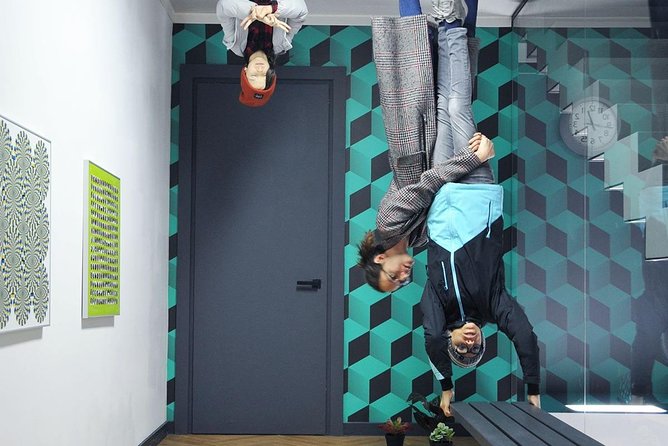
I would recommend this outing to families with children, groups of friends, and first-time visitors who want several different activities without arranging transport themselves. The visual shows and illusion rooms provide easy entertainment, while the ethnography museum keeps the day tied to Georgia rather than making it only an indoor amusement trip.
It also suits a group that likes taking photos and sharing playful activities. The Mirror Room, Infinity Room, and Vortex Tunnel give you clear moments to participate instead of simply walking past displays.
I would think twice if your priority is serious art. Digital Space uses projected images and films, not a large collection of original works. I would also hesitate if traditional architecture is your main interest, because the ethnography stop receives only about an hour in the suggested schedule.
Book at least 24 hours before the 9:30 am start if you want the option of a full refund. Cancellation later than that is not refundable, and changes within 24 hours are not accepted. Confirmation is provided at booking, and most people can take part according to the supplied information.
FAQ
How long does the tour last?
The tour lasts about six hours, including the visits and transport between stops.
What time does the tour start?
The start time is 9:30 am.
Does the tour offer hotel pickup?
Yes. The guide and driver meet you at your hotel, and pickup is offered.
Is this a private tour?
Yes. Only your group takes part in the private activity.
How many people can join?
The price covers a group of up to six people.
Are museum admission tickets included?
No. Admission tickets for the museums are not included in the tour price.
Is dinner included?
No. Dinner is not included.
What transportation is provided?
The tour includes private transportation in an air-conditioned vehicle.
Can I cancel for a full refund?
Yes, if you cancel at least 24 hours before the experience start time. Cancellations made less than 24 hours before the start are not refunded, and changes within that period are not accepted.
Just added around Tbilisi
- Old tbilisi walking tour & wine tasting★ 5.0 · 9 reviews
- Tbilisi Airport to Gudauri, Bakuriani, Batumi, Tbilisi★ 5.0 · 3 reviews
- Private Adorable City Tour of Tbilisi★ 5.0 · 3 reviews
- Vardzia. Lake Paravani, Khertvisi & Lomisa castle, Rabati★ 4.5 · 12 reviews
- full day Kazbegi-Gudauri-jvari -from Tbilisi★ 5.0 · 6 reviews
- Private Wine Tour In Kakheti Region with 7 Wines and Lunch★ 5.0 · 3 reviews
- Wine promenade in hospitable Tbilisi★ 5.0 · 17 reviews
- Your unique photo session in Tblisi, Georgia★ 3.5 · 4 reviews
Museums, compared.
Private Tour to Mtskheta Stalin Museum Uplistsikhe Caves
Read our review →
Soviet Story – Private day trip to Chiatura, Stalin’s museum and Katskhi pillar
Read our review →
Day Tour to Mtskheta, Gori (Stalin museum) and Uplistsikhe
Read our review →
Jvari-Gori-Uplistsikhe-Stalins Museum All inclusive tour
Read our review →Browse the lists this tour appears in