Reviewed · TBILISI TOURS
Tbilisi ‘Dive into the Past’
Tbilisi’s old town reveals itself best on foot, and this private tour packs several of its most striking corners into four hours. You’ll move from ancient sulfur baths to Narikala Fortress, then climb through steep lanes and stairways where the city feels less polished and more personal.
I like the small private format, since your group can keep a natural pace instead of following a large crowd. I also like the mix of major sights and lesser-seen details, including the Betlemi Street stairs and fifth-century wall ruins. The main catch is simple: this is a demanding walking route with a lot of steps.
Key points at a glance
- Seven old-town stops: The route links sulfur baths, a fortress, a waterfall, a basilica, a theater, and ancient wall ruins.
- A genuinely private outing: Only your group participates, with an English-speaking guide.
- Betlemi Street is the workout: One hour of the tour is devoted to walking up and down the old town stairs.
- Narikala gives the route its big historic anchor: The fortress was Tbilisi’s main defensive stronghold for many centuries.
- Good value at $25 per person: Admission is included, and the four-hour length gives you more than a quick photo stop.
- Best for active sightseers: Most people can take part, but the stairs make this a poor fit for anyone seeking an easy stroll.
A four-hour introduction to old Tbilisi
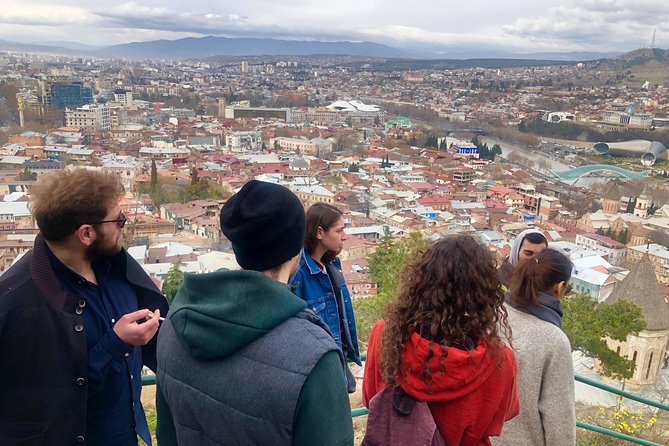
This tour is built around the oldest part of Tbilisi, where narrow streets, religious buildings, defensive walls, bathhouses, and steep hills sit close together. You are not being driven between widely separated sights. You are walking through a compact but uneven section of the city.
That matters because Tbilisi’s character is in the transitions. One minute you are near a famous fortress, and soon you are climbing a residential stairway or passing an old stone wall. The route gives you a useful first look at how the city’s religious, civic, and defensive layers sit side by side.
The tour begins at 10:00 am by the Sayat Nova Sculpture, listed at MRQ5+WHF in Tbilisi. It returns to that same meeting point at the end. You receive a mobile ticket, and the tour is offered in English.
No guide names are provided, so you should not book this expecting a particular named escort. What you can count on is a private English-language experience with your own group, rather than a shared coach or large walking party.
More days out of Tbilisi:
- Day Trip to Kakheti Wine Region Including 9 Wine Tastings
★ 5.0 · 2,774 reviews - Highlights of Caucasus Mountains-Jinvali,Ananuri,Gudauri,Kazbegi(Group tour)
★ 5.0 · 2,682 reviews - Day Trip to Kazbegi and Gudauri
★ 5.0 · 2,009 reviews
Starting with Tbilisi’s sulfur baths
The first stop is the Tbilisi Antique Archaeological Museum, where you will see the oldest sulfur baths discovered in the center of the old town. The visit is scheduled for about 30 minutes, with admission included.
The baths are not just another old building on a sightseeing list. They help explain Tbilisi’s identity. The city’s name is closely tied to warm water, and these bath sites connect the modern capital to the natural springs beneath the old town.
I like beginning here because it gives the rest of the walk a clear setting. You understand why this part of Tbilisi developed where it did, and why bathhouses remain such a strong part of the city’s image. The museum stop also gives you a more focused look at the archaeological side of the area before the tour turns toward streets and viewpoints.
Allow yourself to pay attention to the guide’s explanation rather than treating this as a quick picture stop. The supplied schedule allows half an hour, which is enough for an introduction but not a long museum visit.
Reaching Narikala Fortress

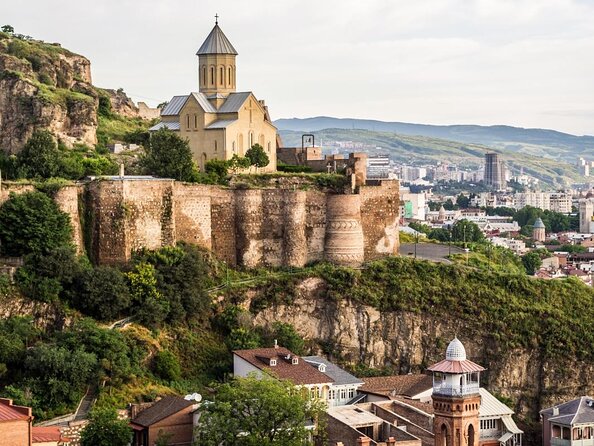
Narikala Fortress receives another 30-minute stop, with admission included. Its role was defensive: for many centuries, Narikala served as the main fortress protecting Tbilisi.
This is the route’s strongest high point in both a physical and historical sense. The fortress helps you read the city below. From its elevated position, you can see how tightly the old town is arranged and why control of the hill mattered.
I would keep your expectations practical. Thirty minutes is enough to look around and hear the main story, but not enough for a slow, exhaustive visit to every part of the fortress. The schedule is designed to give you a solid introduction, then keep you moving.
Narikala also sets up the walking section that follows. The tour is not simply a sequence of flat sites. Tbilisi’s hills are part of the experience, and the next stop makes that especially clear.
Taking on the Betlemi Street stairs
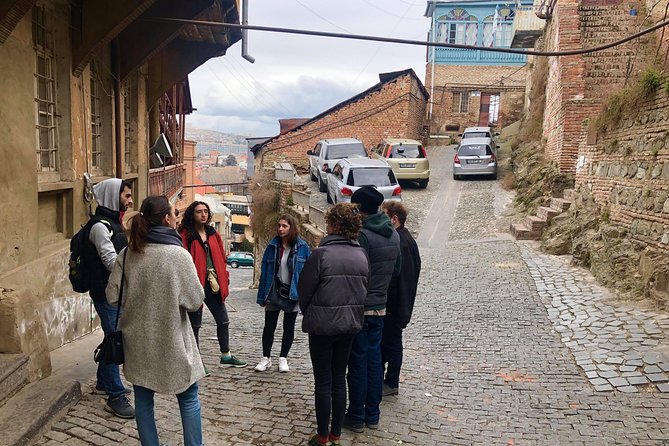
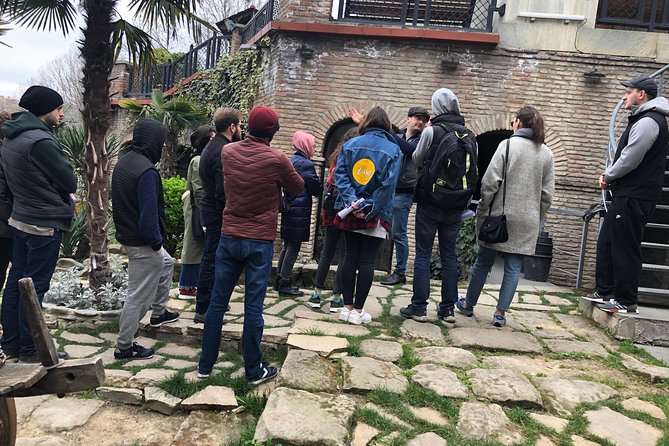
Betlemi Street is allotted a full hour, making it the longest portion of the tour. The description is direct: you will walk up and down through the old town, using a route with many stairs.
This is where the private format has the greatest value. If your group needs a short pause, wants more time at a certain corner, or prefers to keep moving, a private guide can handle the pace more easily than a large scheduled group. The exact level of difficulty will depend on your fitness and the day’s conditions, but you should plan for a proper uphill and downhill walk.
I like this part because it gets you away from a simple checklist of famous landmarks. Stair streets show the shape of old Tbilisi in a way that a vehicle cannot. At the same time, this is the main drawback for anyone with limited mobility, sore knees, or a preference for gentle walking.
Wear comfortable shoes and bring water. Those are sensible choices for any four-hour walking tour, and especially important here because one quarter of the outing is built around climbing and descending.
A completely different sort of day out of Tbilisi:
- Day Trip to Mtskheta Gori and Uplistsikhe
★ 5.0 · 1,801 reviews - Tbilisi Walking Tour Including Cable Car and Traditional Bakery
★ 5.0 · 1,310 reviews - Day Trip to Armenia Including Homemade Lunch
★ 5.0 · 1,162 reviews - Kakheti Wine Region: Signagi and Bodbe Tour with 10 Wine Tastings
★ 5.0 · 1,019 reviews
Stopping at the Dzveli Tbilisi sulfur waterfall
The Dzveli Tbilisi Sulphur Waterfall is a brief 15-minute stop. It is described as a place where people can feel fresh and clean simply by stopping nearby, a playful reference to the water and the atmosphere around it.
The short visit works as a pause in the route. After the stairs, you get a change of pace and a natural feature linked to Tbilisi’s sulfur-water identity. Do not expect a long nature walk or a separate excursion. This is a compact old-town stop that fits into the wider walk.
Because only 15 minutes is assigned, this is best treated as a quick look and photo opportunity, with the guide providing context. The waterfall adds variety to a route otherwise centered on buildings, streets, and stonework.
Catching the Rezo Gabriadze theater clock
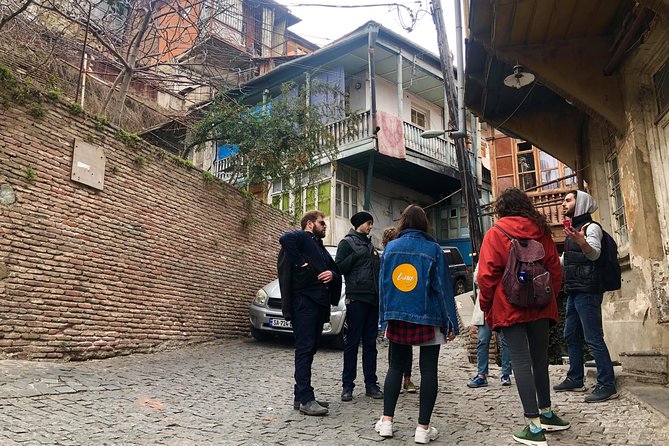
The Rezo Gabriadze Marionette Theater receives a 10-minute stop. If timing works in your favor, Georgian marionettes may appear from the theater’s tiny windows.
That possibility gives the stop its charm. You are not being promised a full performance, and the short timing confirms that this is an exterior moment rather than a theater show. Still, the building and its small windows offer a memorable change from fortresses and religious sites.
I would keep this stop flexible. Watch the windows, listen to the guide, and enjoy the unusual detail. If the marionettes do not appear during your visit, the theater still adds a touch of local art to a route dominated by old stone buildings.
Visiting Anchiskhati Basilica
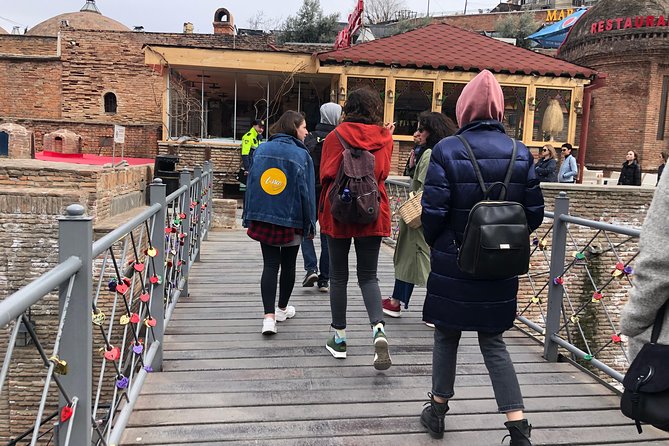
Anchiskhati Basilica is another 10-minute stop and is identified as the oldest basilica in Tbilisi. This is a compact visit, but it gives the tour a clear religious landmark within the old town.
The basilica matters because it shows that Tbilisi’s oldest quarter is not only about military power and sulfur water. Religious buildings are part of the city’s oldest fabric, and a short stop here gives you another way to understand the area.
Ten minutes will not support a long service, extended interior visit, or detailed architectural study. Think of it as a brief introduction. Dress and behave respectfully at the site, and follow any instructions given by your guide.
Seeing the fifth-century wall ruins
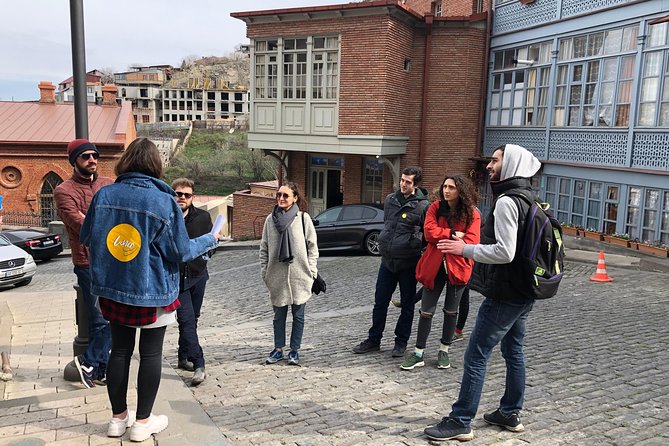
The final listed sightseeing stop is the Tbilisi Wall Ruins, identified as fifth-century wall remains. The scheduled visit is 10 minutes.
A surviving wall fragment can look modest beside a major fortress, but it helps complete the story. Narikala shows defense from above, while these ruins put the city’s earlier defenses directly into the old-town streets. The stop also reminds you that Tbilisi has been rebuilt and reshaped many times.
This is another place where the guide’s explanation adds value. Without context, a section of old masonry can be easy to overlook. With a short explanation, you can understand why the remains matter and how they fit into the city’s past.
What $25 per person really gets you
At $25 per person, this is priced as an accessible private introduction rather than a luxury tour. You get about four hours, an English-speaking guide, a private group, and admission included at the listed stops.
The value is strongest if you want structure on your first day in Tbilisi. Instead of finding each site separately, you get one connected route through the old town. You also avoid the usual tradeoff between a cheap large group and an expensive private guide. The price is modest for a private activity, though the final value depends on how much you enjoy walking and how well the guide explains the places.
The included admissions are useful, but the bigger benefit is time and orientation. You are paying for someone to connect the sulfur baths, fortress, stairs, waterfall, theater, basilica, and wall ruins into one readable visit.
If you already know Tbilisi well, the tour can still work. One person who grew up in the city found new corners through this route, which suggests that the Betlemi Street section and smaller old-town details may offer something beyond the standard postcard view. Still, repeat visitors should choose it for the walking route and local context, not because every stop will be new.
Who should book this walk
I would recommend it to a first-time visitor who wants a strong introduction to old Tbilisi in half a day. It also suits an active couple, family, or small group that prefers a private guide and does not want to share the outing with strangers.
The tour may be especially appealing if you want to feel the city at street level rather than simply view it from a vehicle. The reviews describe friendly guiding and a local feel, including strong reactions from people from Georgia and from a visitor from Turkey who considered the tour worth the price.
I would be cautious if you need step-free access or want a relaxed, flat route. The activity says most people can participate, and service animals are allowed, but it also clearly warns that there are many stairs. It is near public transportation, though the supplied information does not specify a particular bus, metro stop, or transfer plan.
The weather matters, too. The experience requires good weather. If poor conditions force a cancellation, you will be offered another date or a full refund.
Booking and cancellation details
You should receive confirmation within 48 hours, subject to availability. The activity begins at 10:00 am and ends back at the Sayat Nova Sculpture meeting point.
Free cancellation is available if you cancel at least 24 hours before the local start time. A cancellation made less than 24 hours in advance is not refundable, and changes inside that same period are not accepted.
That policy is worth noting because the route is outdoors and weather dependent. Check the forecast before your final day, and do not leave a change of plans until the last minute.
Should you book Tbilisi Dive into the Past?
Book it if you want a reasonably priced, private walking tour that connects Tbilisi’s oldest sights in one morning. The strongest reasons are the small-group format, the included admissions, and the mix of major landmarks with stairways and smaller old-town corners.
Skip it if you want a short, easy stroll or a detailed visit inside each site. The schedule moves quickly at several stops, and the Betlemi Street section requires real effort.
For most active visitors, this is a sensible first look at Tbilisi. Bring good shoes, accept the hills, and use the private format to ask questions and set a comfortable pace.
FAQ
How long does the Tbilisi tour last?
The tour lasts approximately four hours.
What time does the tour begin?
The tour starts at 10:00 am.
Where does the tour meet?
The meeting point is the Sayat Nova Sculpture at MRQ5+WHF, Tbilisi, Georgia.
Does the tour return to the starting point?
Yes. The activity ends back at the meeting point.
Is the tour private?
Yes. Only your group participates in the activity.
Is the tour suitable for people who do not walk easily?
The tour is described as suitable for most people, but it includes a lot of stairs and extended walking up and down the old town. Service animals are allowed.
Just added around Tbilisi
- Old tbilisi walking tour & wine tasting★ 5.0 · 9 reviews
- Tbilisi Airport to Gudauri, Bakuriani, Batumi, Tbilisi★ 5.0 · 3 reviews
- Private Adorable City Tour of Tbilisi★ 5.0 · 3 reviews
- full day Kazbegi-Gudauri-jvari -from Tbilisi★ 5.0 · 6 reviews
- Vardzia. Lake Paravani, Khertvisi & Lomisa castle, Rabati★ 4.5 · 12 reviews
- Private Wine Tour In Kakheti Region with 7 Wines and Lunch★ 5.0 · 3 reviews
- Wine promenade in hospitable Tbilisi★ 5.0 · 17 reviews
- Your unique photo session in Tblisi, Georgia★ 3.5 · 4 reviews
Tbilisi Tours, compared.

Day Trip to Kakheti Wine Region Including 9 Wine Tastings
Read our review →
Highlights of Caucasus Mountains-Jinvali,Ananuri,Gudauri,Kazbegi(Group tour)
Read our review →

Tbilisi Walking Tour Including Cable Car and Traditional Bakery
Read our review →
Kakheti Wine Region: Signagi and Bodbe Tour with 10 Wine Tastings
Read our review →