
Reviewed · HIKING & TREKKING
Trekking Tour from Tusheti to Khevsureti via Atsunta Pass
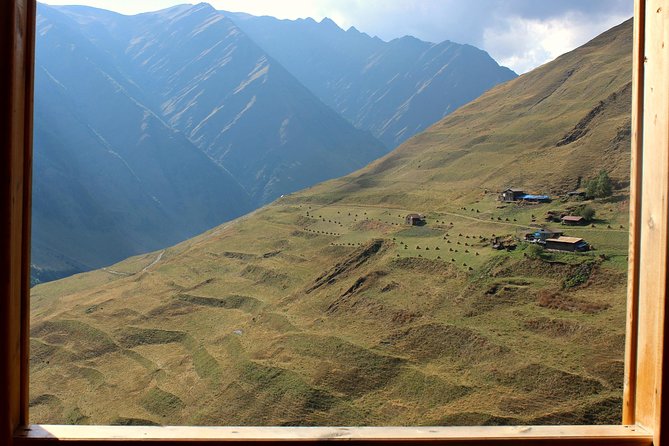
Tusheti to Khevsureti is not a gentle mountain outing. It is a 72-kilometer crossing through Georgia’s Greater Caucasus, with medieval stone villages at either end and three demanding days in open mountain country. The high point is Atsunta Pass at 3,431 meters, where the trail leaves roads and settlements behind.
I like two things right away: the route links several of Georgia’s finest old mountain villages, and the tour removes much of the hard planning through 4WD transfers, horses for luggage, meals, tents, and local guesthouses. The main consideration is simple: you need strong fitness. Long walking days, steep climbs, river crossings, high altitude, and basic facilities are part of the deal.
Key points to know before booking
- Omalo begins the adventure: Reach Tusheti by 4WD over a 2,850-meter mountain pass, then explore Omalo and the Keselo Towers.
- Dartlo and Kvavlo offer the best village walking: You’ll see restored stone homes, defensive towers, ruins, and wide views over the Alazani valley.
- Atsunta Pass is the physical test: The route reaches 3,431 meters after a hard climb from the Girevi area.
- Three nights are spent in remote mountain country: Expect tents, cooking gear, sleeping bags, mats, and no huts or settled communities along the wildest section.
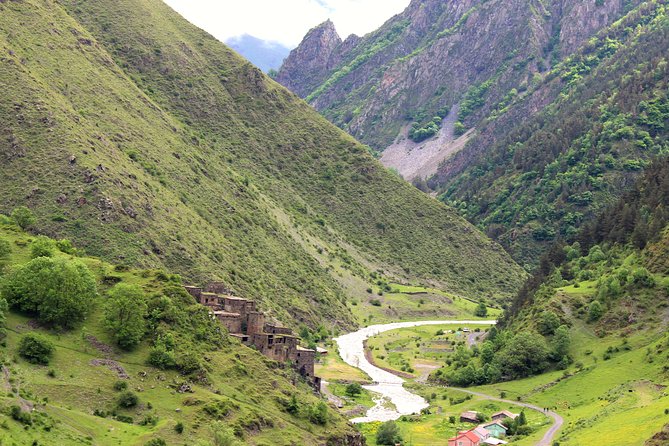
- Mutso and Shatili provide a memorable finish: Their stone towers and defensive buildings rise above narrow gorges in Khevsureti.
- The $1,620 price covers much of the hard work: Transport, five nights of lodging or camping, horses, meals, fuel, and guiding are included, but your backpack, trekking poles, drinks, and final Tbilisi night are not.
Why this crossing is special
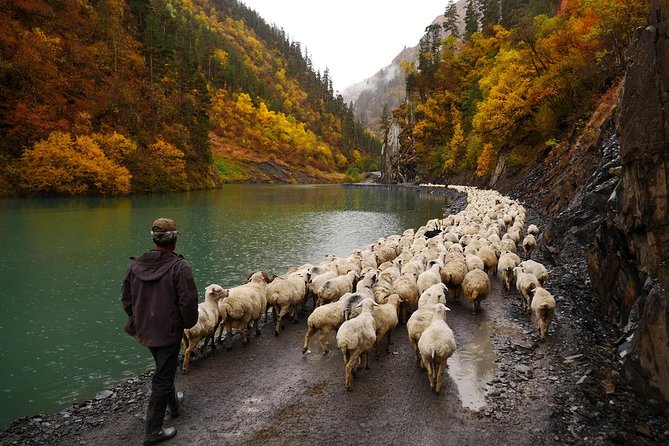
Many mountain tours give you a fine walk and a scenic drive. This one has a stronger sense of movement. You start in Tusheti, where villages sit along the Pirikiti Alazani valley, then cross a high ridge and finish in a different mountain region, Khevsureti.
That change matters. Tusheti brings stone houses, old towers, meadows, and river valleys. The central section feels much wilder, with no huts and few signs of settlement. Khevsureti then brings you back to monumental fortified villages, especially Mutso and Shatili.
The route also gives you a useful look at rural Georgian life. Meals are included, and overnight stops use local guesthouses in Omalo, Dartlo, Girevi, and Shatili. Facilities are not uniform. Omalo has a private bathroom at the guesthouse, while Dartlo, Girevi, and Shatili use shared facilities. That is a fair trade for spending time in remote mountain communities.
The group is limited to 15 people, which should make coordination easier on a route where weather and walking speed matter. The guide may be multilingual. TrekGeorgia has worked with guides including Dito, Tato, Dimitri, Nutsa, and Misha, though you should confirm your assigned guide before departure.
More Hiking Tours in Tbilisi
- David Gareji and Real Rainbow Mountains Off-Road adventure + hike
★ 5.0 · 129 reviews - 8-Day Trekking Group Tour in Svaneti
★ 5.0 · 21 reviews - Kazbegi Tour with Gergeti Church, Waterfall Hike & Hidden Gems
★ 5.0 · 19 reviews
Day 1: the rough road to Omalo
The tour starts at 9:00 a.m. near the Giant Bicycle monument on Tbilisi’s Rose Revolution Square. From there, you drive toward Kakheti before taking the mountain route into Tusheti.
The 4WD transfer is not a minor detail. The road climbs across a pass at about 2,850 meters, and the journey to Omalo takes around six hours. You should think of this as part of the adventure, not just a transfer between two walking days. The remote access helps explain why Tusheti feels so far removed from Tbilisi.
Once in Omalo, you explore the village and Keselo Towers. The towers are among the first signs that Tusheti’s old settlements were built for protection as well as daily life. Omalo is also your first chance to settle into the slower rhythm of the high country.
You sleep one night in a guesthouse with private facilities. Dinner is included, so you can focus on the next day rather than arranging a meal after the long drive. Pack snacks for the road if you prefer to eat between scheduled meals, since drinks and personal snacks are not included.
Day 2: Dartlo, Kvavlo, and Tusheti’s stone villages
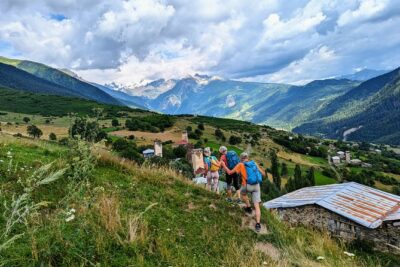
The second day brings you to Dartlo in the Pirikiti Tusheti valley. Dartlo has been renovated, and its stone homes and defensive buildings give you a clear sense of the local building style. This is not a polished museum setting. The village remains part of the mountain route, with paths leading through old settlements and along the valley.
The walk from Dartlo to Kvavlo is about 3.2 kilometers one way. You climb roughly 400 meters, from 1,833 to 2,182 meters, and the ascent takes about two hours in one direction. The numbers look modest on paper, but the slope and the full day matter. You will be walking again after reaching Kvavlo, so do not judge this day by distance alone.
Kvavlo is largely made up of ruined towers and houses above the Alazani River. The reward is the view across the valley and toward the surrounding mountains. I like this section because it combines a manageable village walk with the remains of a settlement that has not been rebuilt into a tourist display.
You spend the night in Dartlo at a guesthouse with shared facilities. That arrangement is basic, but it keeps you close to the trail and to the old village itself. The day is listed as roughly 10 hours, so you should expect a full schedule, not a short sightseeing stop.
Day 3: Parsma, Chesho, and the road toward Girevi
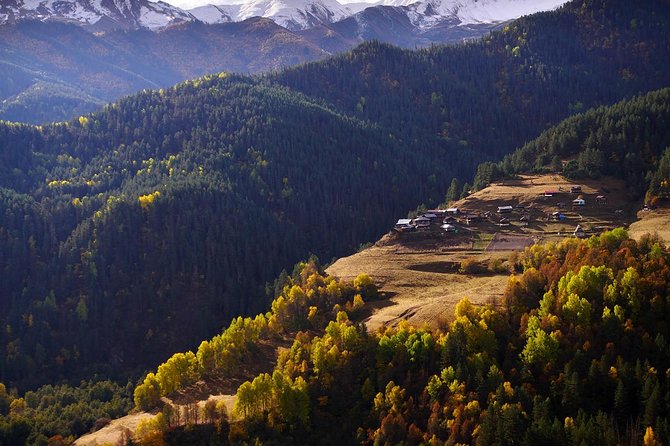
The route continues upstream along the Pirikiti Alazani River. The river narrows into a gorge, and the walking becomes more about following the valley than making a single dramatic climb.
You pass through Chesho and Parsma, both known for stone houses and towers. These villages help break up the long approach to Girevi, and they give you more chances to see how Tusheti’s settlements were placed beside difficult terrain.
After Parsma, the route uses a narrower walking path to reach Girevi. This is the last guesthouse stop before the hardest mountain section. You sleep at a guesthouse with shared facilities, and dinner is included.
The value of this day is its gradual change in mood. At first, you are still moving through inhabited Tusheti. By the end, you are preparing to leave the settled valleys and walk into open country. If you prefer a trip with frequent cafés, paved roads, or flexible independent timing, this is where the tour will begin to feel demanding.
More hikes around Tbilisi:
- Five days tour to Khevsureti (Abudelauri lakes) & Kazbegi with hikes.
★ 5.0 · 14 reviews - 3-Day Hiking Group Tour in Kazbegi
★ 5.0 · 14 reviews - Kazbegi Adventure Day Trip – Hike to Gveleti waterfall plus Gergeti, Ananuri
★ 5.0 · 7 reviews - Three day hiking tour to Kakheti region with two overnight stays in Sighnaghi
★ 5.0 · 4 reviews
Day 4: leaving Girevi for the high country
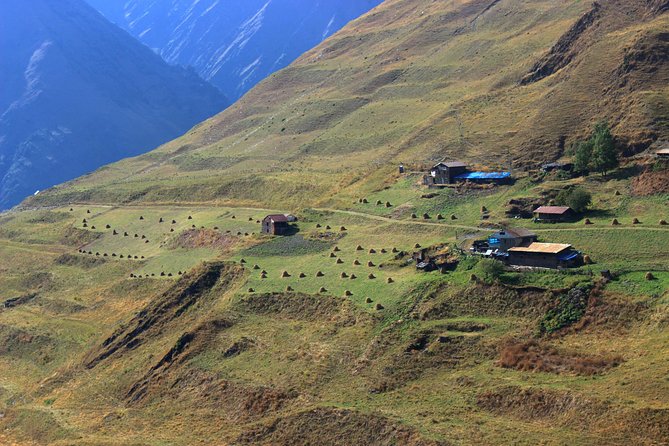
After breakfast, you begin the toughest part of the crossing. From Girevi, the trail follows a narrow gorge and passes small mountain rivers. You also pass the ruined village of Chontio before reaching the area near Kvakhidi.
The day ends in open green fields, alpine meadows, and rocky ground, where the group sets up tents. This is the first camping night, and it marks the route’s most remote section. There are no huts and no settled communities along the wilderness stretch, apart from other hikers on the trail.
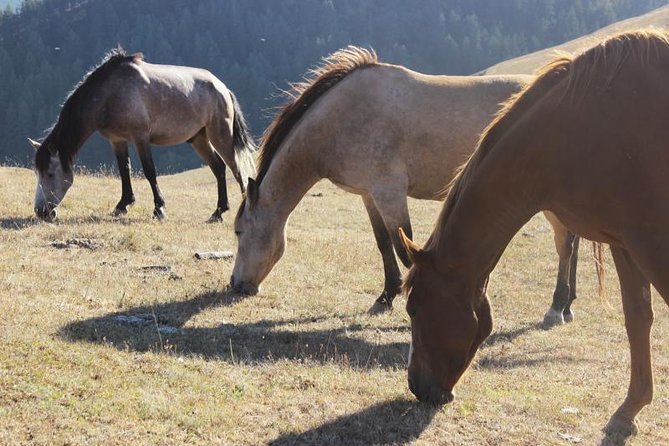
The included camping equipment covers tents, sleeping bags, sleeping mats, and cooking gear. Horses carry luggage, which is a major practical benefit. You still need a day pack with water, warm layers, rain protection, personal items, and anything you need while walking.
The tour lists this day at about 10 hours. River crossings and uneven paths can slow progress, so a strong pace and steady footing matter more than speed. Ask the guide about the day’s water and weather conditions, and keep your waterproof layers easy to reach.
Day 5: crossing Atsunta Pass at 3,431 meters
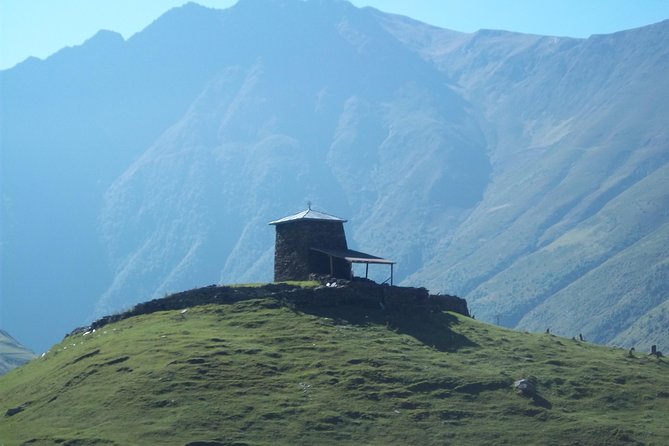
Day five is the high point of the route in both senses. You leave camp early and climb toward Atsunta Pass, reaching 3,431 meters above sea level.
The pass is the place for a snack and a long look at the surrounding alpine meadows and mountain ridges. The views are the payoff, but the climb can be tiring. High altitude affects people differently, and the route description is clear that this is the hardest part of the trip. You should be comfortable with sustained uphill walking before booking.
From the pass, the trail descends toward the Khidotani ridge. You then camp in an open alpine meadow. The descent does not make the day easy. Tired legs, loose ground, and a long walking schedule can be as challenging as the climb itself.
This is the section where the luggage horses earn their keep. Even so, your own pack should be kept light. The operator specifically excludes a trekking backpack and trekking poles, so you must bring or arrange those yourself.
Day 6: Mutso, Shatili, and the drive back to Tbilisi
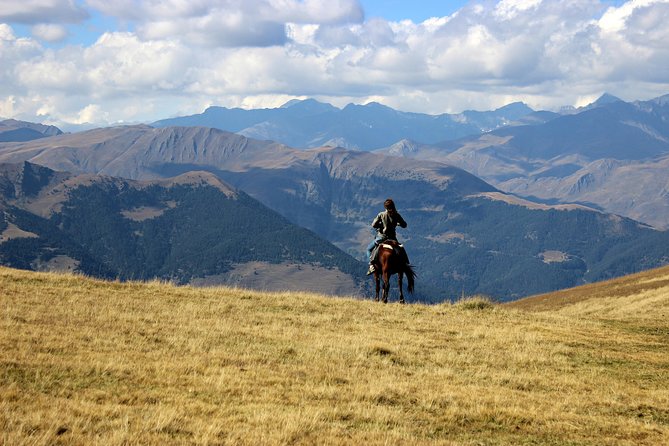
After breakfast in the mountains, you walk down toward the first inhabited place in Khevsureti. Passing Khone, you continue to Mutso, a largely abandoned fortified village surrounded by steep mountain scenery.
Mutso is one of the trip’s strongest historical and visual stops. Its stone towers and houses rise on rocky ground above a narrow gorge, and the fortress complex has been renovated. The route includes a 2-kilometer detour to the Mutso fortress, so allow energy for one more walking section before the vehicle arrives.
Near Mutso, a driver meets the group. You then ride to Shatili and continue to Tbilisi by comfortable transport. Shatili is another striking defensive settlement, with towers and stone homes packed into the mountain setting.
This final day is long, listed at about 10 hours, because it combines walking, sightseeing, and a substantial drive. The official end point is back at the Tbilisi meeting point. You will need to arrange your own overnight stay in Tbilisi if your onward plans do not leave the same day.
What the $1,620 price really covers
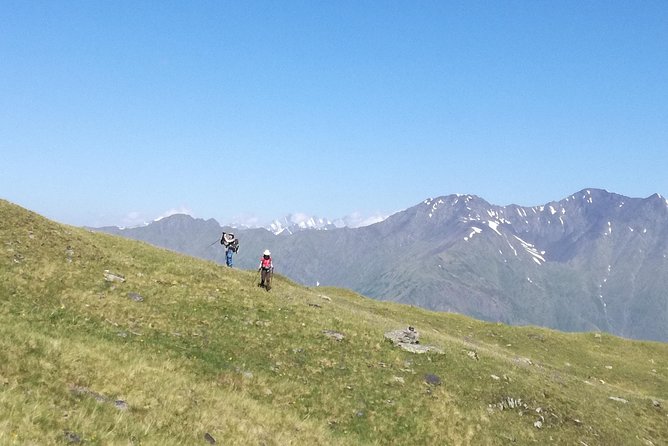
At $1,620 per person, this is not a low-cost walking holiday. The price makes more sense when you count what is included: expert leadership for six days, the 4WD transfer from Tbilisi to Alavani and Omalo, transport from Mutso through Shatili to Tbilisi, fuel surcharge, four guesthouse nights, camping equipment, horses for luggage, and all listed breakfasts, lunches, and dinners.
That removes several costly and difficult arrangements in a remote area. You do not need to find a driver for the Tusheti road, organize pack animals, carry all group camping equipment, or work out where to eat each night.
Still, bring money for drinks and personal purchases. A backpack and trekking poles are not included, and the final Tbilisi night is your responsibility. Group discounts may improve the value for a small party, and a maximum of 15 people keeps the group from becoming unwieldy.
Who should book this trek
You should consider this route if you want a serious mountain crossing rather than a series of easy day walks. It suits people who enjoy old stone villages, remote camping, long days on foot, and scenery that changes from one valley to the next.
The minimum age is 14, but age alone says little about readiness. The operator requires a strong physical fitness level, and that is sensible. You should be prepared for 72 kilometers of walking, roughly 10-hour days, high altitude, river crossings, steep trails, and limited facilities.
Solo travelers can benefit from the group format, especially on a remote route where the guide, meals, horses, and camp equipment are already organized. Couples and small groups also get a good mix of shared adventure and local stays.
This is not the best choice if you dislike camping, shared bathrooms, rough mountain roads, or fixed daily schedules. It is also a poor fit if you want a relaxed introduction to Georgia with plenty of time in Tbilisi, wine country, or lowland towns.
Practical details to settle before departure
You meet at 9:00 a.m. at the Giant Bicycle monument on Rose Revolution Square in Tbilisi. A mobile ticket is available, and confirmation normally arrives at booking, though reservations made within seven days of departure may take up to 48 hours to confirm.
Provide each participant’s passport name, number, expiry date, and country when booking. You must carry a valid passport on the day of the tour. The stated luggage allowance is one suitcase and one carry-on per person, with restrictions possible for oversized items.
Tell the operator about dietary requirements when you book. Breakfast, lunch, and dinner are included, but drinks are not. Cancellation terms are strict close to departure: a full refund requires cancellation at least six full days ahead, a 50 percent refund applies two to six days before departure, and cancellations within two days receive no refund.
Should you book it?
Book this trek if you want Georgia’s high Caucasus at walking pace, with old towers, local guesthouses, remote camps, and a genuine pass crossing. The strongest reasons are the route design and the logistics: you see Omalo, Dartlo, Parsma, Girevi, Mutso, and Shatili without having to arrange the difficult transport and luggage support yourself.
Think twice if you are not used to long mountain days or if you expect hotel comfort throughout. For fit hikers who accept basic conditions, the price buys a well-supported crossing through two of Georgia’s most compelling mountain regions. Bring proper footwear, a light backpack, trekking poles, and patience for the road to Omalo.
FAQ
How long is the trek?
The tour lasts approximately six days and involves about 72 kilometers of walking.
Where does the tour start?
It starts at 9:00 a.m. at the Giant Bicycle monument on Rose Revolution Square in Tbilisi, Georgia.
Where does the tour finish?
The activity finishes back at the Tbilisi meeting point after transport from Shatili.
How high is Atsunta Pass?
Atsunta Pass reaches 3,431 meters above sea level.
Are meals included?
Yes. Six lunches, five breakfasts, and six dinners are included. Drinks are not included.
Where do you sleep during the tour?
You spend nights in guesthouses in Omalo, Dartlo, Girevi, and Shatili, plus camping nights in the mountains. Omalo has private facilities, while the other listed guesthouses use shared facilities.
Is camping equipment provided?
Basic camping equipment is provided, including tents, sleeping bags, sleeping mats, and cooking gear. A trekking backpack and trekking poles are not included.
What fitness level is required?
A strong physical fitness level is required. The route includes long walking days, steep mountain sections, river crossings, high altitude, and a demanding climb over Atsunta Pass.
Just added around Tbilisi
- Old tbilisi walking tour & wine tasting★ 5.0 · 9 reviews
- Tbilisi Airport to Gudauri, Bakuriani, Batumi, Tbilisi★ 5.0 · 3 reviews
- Private Adorable City Tour of Tbilisi★ 5.0 · 3 reviews
- Vardzia. Lake Paravani, Khertvisi & Lomisa castle, Rabati★ 4.5 · 12 reviews
- full day Kazbegi-Gudauri-jvari -from Tbilisi★ 5.0 · 6 reviews
- Your unique photo session in Tblisi, Georgia★ 3.5 · 4 reviews
- Private Wine Tour In Kakheti Region with 7 Wines and Lunch★ 5.0 · 3 reviews
- Wine promenade in hospitable Tbilisi★ 5.0 · 17 reviews
Hiking & Trekking, compared.
David Gareji and Real Rainbow Mountains Off-Road adventure + hike
Read our review →
Kazbegi Tour with Gergeti Church, Waterfall Hike & Hidden Gems
Read our review →
Five days tour to Khevsureti (Abudelauri lakes) & Kazbegi with hikes.
Read our review →
Private Hiking Tour to Mtirala National Park from Batumi
Read our review →Browse the lists this tour appears in