
Reviewed · HIKING & TREKKING
7-day hiking expedition to Tusheti through the Atsunta pass
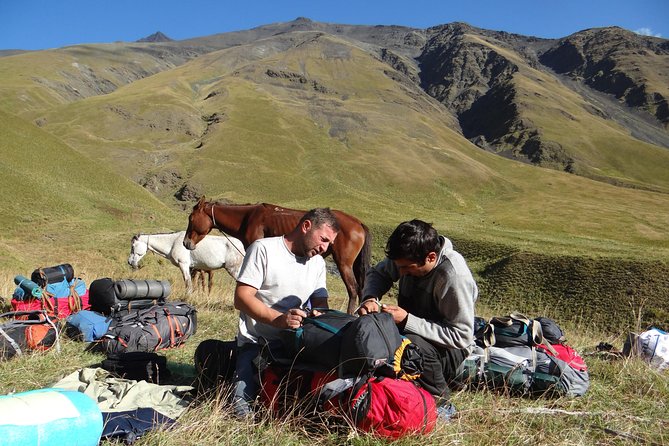
The remarkable part of this trip is the two-day stretch with no villages and no mobile signal, right in the middle of a seven-day route through the Caucasus. I like the real mountain access, with horses carrying equipment and 4×4 vehicles handling roads that would be exhausting in a normal car. I also like the mix of camping, family-run guesthouses, abandoned stone settlements, and local food.
The catch is simple: this is not a casual sightseeing tour. The Atsunta Pass reaches 3,431 meters, Day 4 covers about 20 kilometers, and some days involve long drives on rough roads. You need moderate fitness, patience with basic conditions, and a willingness to sleep in a tent.
Key points to know before you book
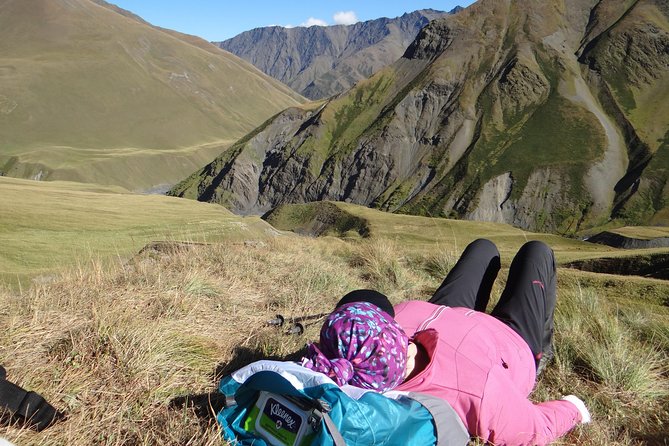
- Atsunta Pass reaches 3,431 meters: This is the hardest and most demanding hiking day.
- Two nights have no villages or mobile communication: Pack for genuine separation from daily services.
- Horses carry equipment: You hike with less weight, while tents, sleeping gear, and supplies move ahead.
- The route links Shatili and Tusheti: You see medieval stone villages, abandoned settlements, river valleys, and high passes in one trip.
- The group is limited to 10 people: That keeps the logistics more manageable on narrow roads and at small guesthouses.
- The price includes the major trip costs: Food, drinks, camping equipment, 4×4 transfers, guesthouse stays, and luggage horses are covered.
Why this Tusheti trek feels different
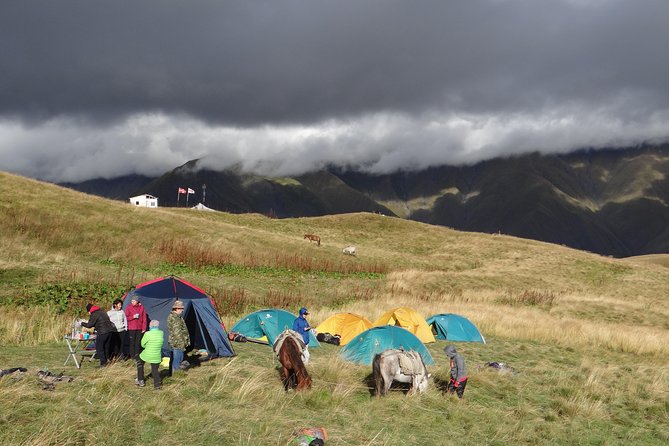
Georgia offers plenty of mountain trips, but this one asks you to give up the easy parts of modern travel for a few days. There are no shops or phone messages during part of the route. Instead, you move on foot between high valleys, shepherd shelters, old stone villages, and small guesthouses.
I like that the route is not built around one viewpoint. You begin in Shatili, cross into Tusheti over Atsunta Pass, and finish with villages such as Dartlo, Shenako, Diklo, and Omalo. The scenery keeps changing, and the route has a clear sense of movement rather than a series of disconnected stops.
The trip also combines several kinds of support. ExpedBuro supplies tents, sleeping bags, sleeping pads, waterproof duffel bags, meals, transfers, and horses for carrying equipment. That matters here. Carrying a full load over a 3,431-meter pass would change the character of the hike for most people.
Guide Stanislav is named in the feedback and is praised for careful support from start to finish. The useful takeaway is not simply that there is a guide, but that the trip depends on someone managing border formalities, vehicles, food, horse support, camps, and guesthouse changes. In a remote area, that planning has real value.
More Hiking Tours in Tbilisi
- David Gareji and Real Rainbow Mountains Off-Road adventure + hike
★ 5.0 · 129 reviews - 8-Day Trekking Group Tour in Svaneti
★ 5.0 · 21 reviews - Kazbegi Tour with Gergeti Church, Waterfall Hike & Hidden Gems
★ 5.0 · 19 reviews
Day 1: Shatili and the road through Bear Cross Pass
The tour begins with pickup at the operator’s office in Tbilisi at 9 a.m. You drive roughly five hours toward Shatili, covering about 150 kilometers. That may sound short on paper, but mountain roads make the journey part of the day, not just a transfer.
A picnic stop comes at Bear Cross Pass, at 2,676 meters. This gives you an early taste of the altitude and wide-open mountain country before the main hiking begins. Pack a small item you can reach easily during the drive, since the full duffel setup is meant for the expedition rather than quick roadside access.
Shatili is one of the trip’s first big rewards. The medieval settlement is built from tightly grouped stone towers and homes, giving it a fortified look that feels very different from the villages around Tbilisi. You have time to walk around before dinner, take photographs, and get used to the pace of the mountains.
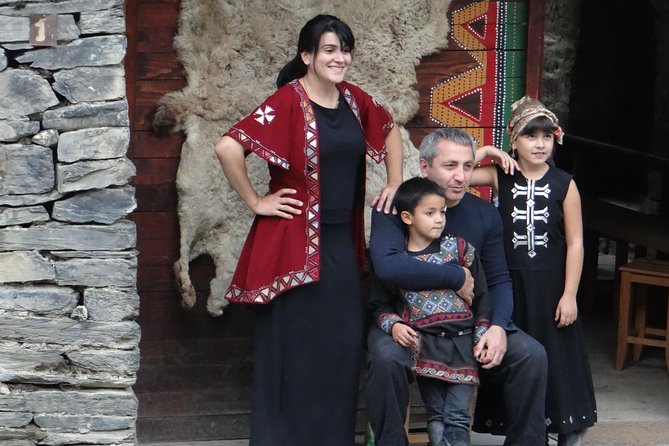
That evening, the guesthouse owners prepare a traditional meal. Food is included throughout the tour, including breakfast, lunch, dinner, snacks, and drinks. Beer, wine, and chacha cost extra at guesthouses, so budget a little more if you want local drinks with dinner.
Day 2: Mutso, Ardoti, and the first camp
After breakfast, you leave by jeep for Ardoti, where the road ends. This is the point when the trip shifts from mountain touring to a proper trek.
The route includes a stop at Anatori and a visit to Mutso, an abandoned stone settlement. You also pass through a border-controlled area and must show your passports to Georgian border guards. The formalities are expected to take about 20 minutes, but keep your passport accessible rather than buried in luggage.
After a picnic, you begin hiking for about four hours to camp. The horses carry the expedition equipment, including the waterproof duffel bags, tents, sleeping pads, and sleeping bags supplied by the operator. You still need your own day-hiking essentials, such as water, a jacket, personal medication, and anything you want during the walk.
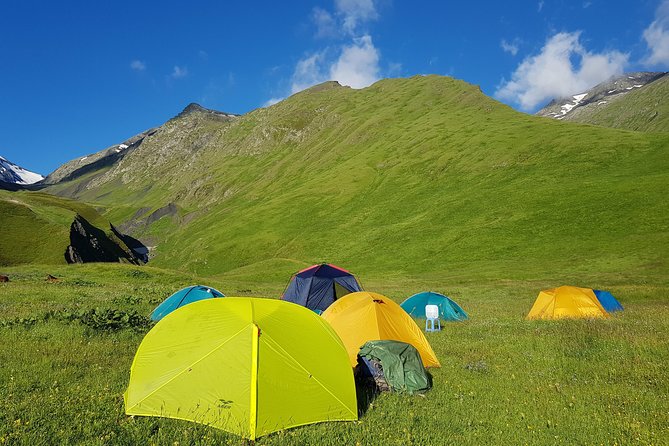
This is one of the most useful parts of the setup. You are not asked to haul every item you will need for seven days, but the route is still remote and the evening is spent in a tent. The trip is more comfortable than carrying full camping loads, yet it remains a real outdoor expedition.
Day 3: Crossing Atsunta Pass at 3,431 meters
Day 3 is the physical center of the trip. The trail climbs to Atsunta Pass, one of Georgia’s highest mountain passes, separating Khevsureti from Tusheti.
The supplied schedule labels this a difficult day, and you should take that seriously. The altitude is high, the trail is remote, and conditions can make the pass feel harder than the distance alone suggests. You need to be comfortable hiking at a steady pace and coping with a long day away from road access.
This is also the point where the tour’s organization matters most. Horses carry the main equipment, while the guide manages the group and route. You spend the night camping, and this is part of the two-day period without mobile communication or villages.
Do not book this day as a test of your fitness if you have no recent hiking experience. The stated requirement is moderate physical fitness, but a high pass and remote camping demand more preparation than a city walking tour. The operator does not present this as an easy route, and the itinerary is better suited to someone who accepts physical effort as part of the reward.
More hikes around Tbilisi:
- 3-Day Hiking Group Tour in Kazbegi
★ 5.0 · 14 reviews - Five days tour to Khevsureti (Abudelauri lakes) & Kazbegi with hikes.
★ 5.0 · 14 reviews - Kazbegi Adventure Day Trip – Hike to Gveleti waterfall plus Gergeti, Ananuri
★ 5.0 · 7 reviews - Trekking Tour from Tusheti to Khevsureti via Atsunta Pass
★ 5.0 · 6 reviews
Day 4: A long descent to Girevi
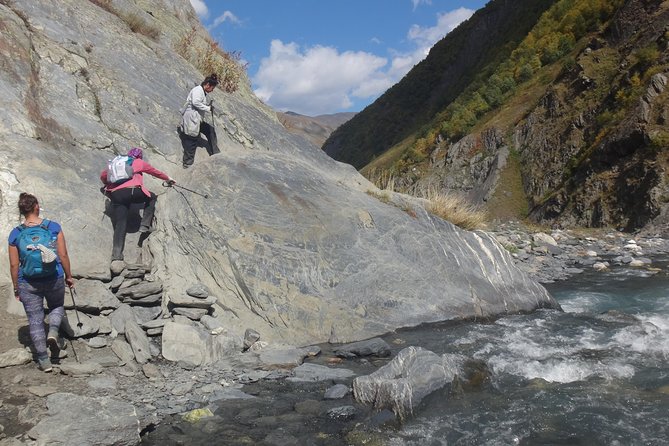
After the pass, the trail gradually follows the Pirikiti Alazani River toward Girevi. The route is described as simpler than the pass day, but it covers about 20 kilometers, making it long rather than easy.
This is a good example of why the tour needs a balanced view. A downhill route can be less demanding in terms of altitude, yet 20 kilometers still puts pressure on your feet and legs. Good footwear matters, and you should not assume that a gentler trail means a short day.
Along the way, you pass shepherd houses and Chontio, another abandoned stone settlement. These places give the route a strong sense of distance from ordinary life. You are not moving between developed resorts. You are following a river through old settlements and working mountain country before reaching Girevi.
Girevi marks the return to a lived-in village and a guesthouse. After two nights in remote camping conditions, a bed and a prepared meal will feel useful, not luxurious. The change also helps break up the trip so that every night is not spent under canvas.
Day 5: Dartlo and the stone houses of Kvavlo
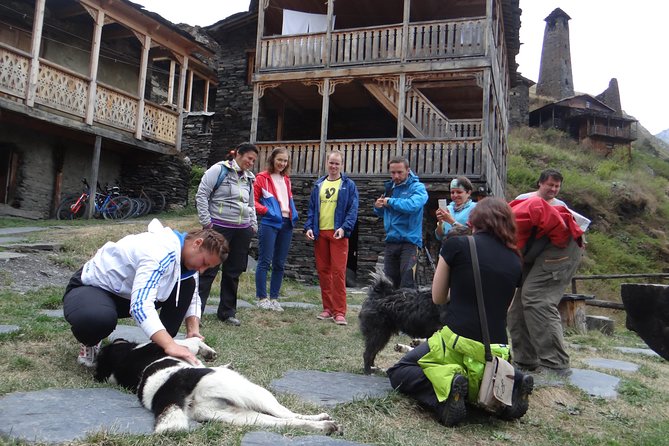
Day 5 is lighter. You walk for about four hours along a jeep road and reach Dartlo around lunchtime.
Dartlo is one of Tusheti’s best-known villages, with stone homes and traditional mountain architecture. It is also proposed for World Heritage recognition, which reflects the importance of its setting and built character. Here, the village itself is the attraction, not a museum display arranged for visitors.
After lunch, you have time to hike uphill to Kvavlo. The extra walk gives you a different view of the surrounding area and adds a useful bit of activity to an otherwise easier day. You spend the night in a stone house built according to local traditions.
I like this change in accommodation. The tour does not keep you in tents for the sake of a purist image. It uses camping where the route requires it, then moves into village homes and guesthouses when that makes sense. You get a better idea of how people live in Tusheti, although you should still expect basic mountain lodging rather than hotel comforts.
Day 6: Horse riding from Omalo to Shenako and Diklo
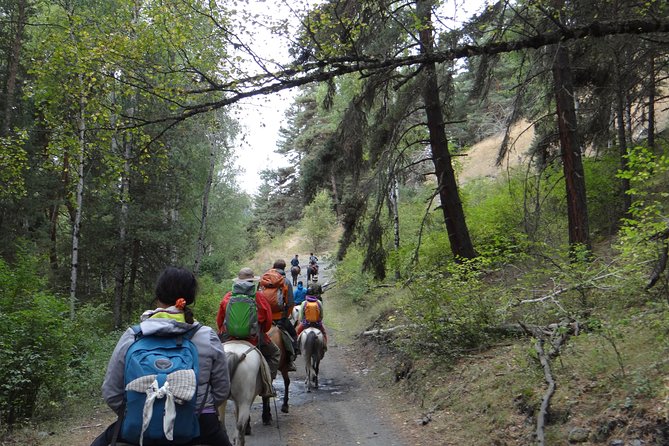
The route first continues by vehicle to Omalo, the largest village in Tusheti. You leave your belongings at a guesthouse, then go horse riding to Shenako and Diklo before returning to Omalo for dinner.
This day gives your legs a break from sustained hiking, but it is not simply a rest day. Horse riding is included as part of the route, and the villages add more cultural interest. Shenako is known for the Church of the Holy Trinity, a detail worth keeping in mind if you enjoy older religious buildings and village architecture.
Diklo provides another change of setting before the return to Omalo. Since the schedule does not give a riding duration, you should ask the operator for current timing if you need to plan around other commitments. The same applies to the exact guesthouse arrangements, which can vary with availability.
Omalo is the largest settlement on the Tusheti side of the route, but do not picture a large town with full urban services. The attraction is its position as a center for this remote region, along with its guesthouses and traditional setting.
Day 7: Leaving Tusheti over Abano Pass
The final day begins with the long road out of Tusheti. You cover about 60 kilometers of unpaved road and cross Abano Pass, described as the highest automobile pass in Europe.
The road trip is a major part of the day. You first use 4×4 jeeps, then change to a comfortable bus in Alvani. From there, the group continues to a winery in Kakheti for a festive lunch before arriving in Tbilisi at about 5 p.m.
This arrangement works well because the vehicles match the roads. Jeeps handle the rough Tusheti section, while the bus provides a more comfortable finish once you reach Alvani. Still, the drive can be long and tiring. Do not schedule a flight or an important evening appointment in Tbilisi without a generous buffer.
The winery stop also gives the final day a pleasant change of pace. After high passes, tents, and village roads, a meal in Georgia’s wine region offers a clear ending rather than an abrupt drop-off at a city office.
Food, camping, and equipment
Meals are one of the stronger practical features of this tour. Breakfast, lunch, dinner, snacks, and drinks are included, with seven lunches, six dinners, and six breakfasts listed in the package. That removes the need to shop for a week of remote hiking food.
The trip emphasizes tasty and healthy meals, but no menu is provided. If you have dietary needs, ask before booking rather than assuming a village kitchen can meet them. Beer, wine, and chacha are not included, so those purchases remain your responsibility.
Camping equipment includes:
- Waterproof duffel bag
- Tent
- Sleeping pad
- Sleeping bag
- Horses for carrying equipment
This is a useful package for someone who wants a supported trek without buying or transporting a full camping kit to Georgia. You should still confirm what personal items are expected, since the included equipment does not cover clothing, hiking boots, toiletries, or medical supplies.
What the $1,190 price covers
At $1,190 per person, the price is not low, but it covers a lot of costly logistics. You get transfers from Tbilisi, 4×4 vehicles, a bus transfer after Alvani, food and drinks, camping equipment, horses for luggage, guesthouse stays, guided hiking, and the Kakheti winery lunch.
The value is strongest if you would otherwise need to arrange several separate services. Reaching Shatili, handling the border checkpoint, finding vehicles for Ardoti and Tusheti, arranging horses, securing guesthouses, and exiting over Abano Pass would be a complicated project on your own.
The price is less attractive if you want a short, comfortable holiday with flexible daily plans. Much of the cost supports remote transport and logistics rather than polished facilities. You are paying to reach difficult places safely and efficiently, not for luxury accommodation.
The maximum group size is 10 people. That is small enough to keep the group manageable on the trail and in limited village lodging, though the exact number on your departure depends on bookings.
Who should book this route
You are a good match if you enjoy long days outside, old mountain settlements, simple lodging, and a route with limited communication. You should be comfortable changing between hiking, horse riding, tent camping, guesthouses, jeeps, and a long bus transfer.
The trip may suit a family with older children and suitable fitness, but the pass, 20-kilometer day, and remote camps deserve careful thought. It is not aimed at people seeking gentle walks or constant access to shops and phone service.
Service animals are allowed, and the meeting point is near public transportation. The tour requires a minimum number of people to operate. Confirmation is sent within 48 hours of booking, subject to availability. The listed departure dates are June 7, July 20, August 3, and August 17, 2025.
Cancellation terms are strict close to departure. You can receive a full refund by canceling at least six full days before the start time, while cancellations two to six days ahead receive 50 percent. Cancellations less than two days before departure are not refunded.
Should you book the seven-day Tusheti expedition?
Book it if you want remote mountain travel with strong logistical support, and if the idea of two nights without phone service sounds refreshing rather than worrying. The combination of Atsunta Pass, Shatili, Mutso, Dartlo, Shenako, Diklo, and Omalo gives you far more than a single scenic hike.
Think twice if you dislike rough roads, basic guesthouses, high passes, or long walking days. The route is demanding, even though horses carry the main equipment and the food and transfers are arranged.
For the right person, the $1,190 price is sensible because it covers the hard-to-arrange parts of reaching Tusheti. You trade comfort and independence for access to one of Georgia’s most remote mountain regions, with enough village time and local meals to keep the journey connected to daily life.
FAQ
Where does the tour begin?
The tour begins in Tbilisi, with pickup at the operator’s office at 9 a.m. on Day 1.
How long does the experience last?
The expedition lasts approximately seven days and returns to Tbilisi around 5 p.m. on the final day.
What is the highest point on the route?
The route crosses Atsunta Pass at 3,431 meters.
How difficult is the hiking?
A moderate level of physical fitness is required. Day 3 is described as difficult, and Day 4 includes about 20 kilometers of hiking.
Will I have mobile phone service throughout the trip?
No. There are two days with no mobile communication and no villages.
How many nights are spent in tents?
You spend two nights in a tent. Other nights are in guesthouses or a traditional stone house.
Are food and camping equipment included?
Yes. Breakfast, lunch, dinner, snacks, and drinks are included, along with a waterproof duffel bag, tent, sleeping pad, and sleeping bag. Beer, wine, and chacha at guesthouses are extra.
How is luggage carried during the hike?
Horses carry the expedition equipment. The tour also includes all transfers by 4×4 jeep, with a bus transfer after reaching Alvani.
More 7-Day Experiences in Tbilisi
- Private 7-Day Tours & Transfers from Tbilisi to Top Georgia Spots
★ 5.0 · 23 reviews - The Best of Georgia 7 Days Private Jeep Tour from Tbilisi
★ 5.0 · 19 reviews - Amazing All inclusive Tour for 7 Days From Tbilisi
★ 5.0 · 16 reviews - Georgia in 7 Days: A Haven for Nature and Sea Lovers
★ 5.0 · 15 reviews
Just added around Tbilisi
- Old tbilisi walking tour & wine tasting★ 5.0 · 9 reviews
- Tbilisi Airport to Gudauri, Bakuriani, Batumi, Tbilisi★ 5.0 · 3 reviews
- Private Adorable City Tour of Tbilisi★ 5.0 · 3 reviews
- full day Kazbegi-Gudauri-jvari -from Tbilisi★ 5.0 · 6 reviews
- Vardzia. Lake Paravani, Khertvisi & Lomisa castle, Rabati★ 4.5 · 12 reviews
- Private Wine Tour In Kakheti Region with 7 Wines and Lunch★ 5.0 · 3 reviews
- Wine promenade in hospitable Tbilisi★ 5.0 · 17 reviews
- Your unique photo session in Tblisi, Georgia★ 3.5 · 4 reviews
Hiking & Trekking, compared.
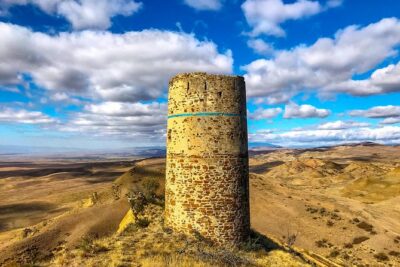
David Gareji and Real Rainbow Mountains Off-Road adventure + hike
Read our review →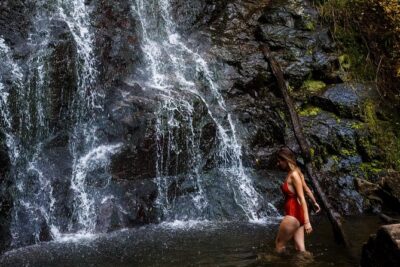
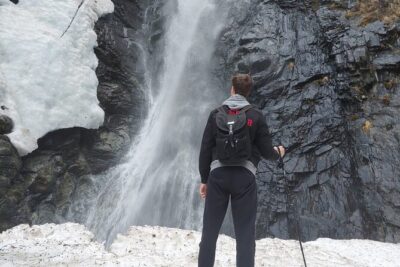
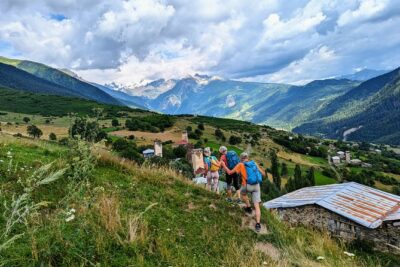
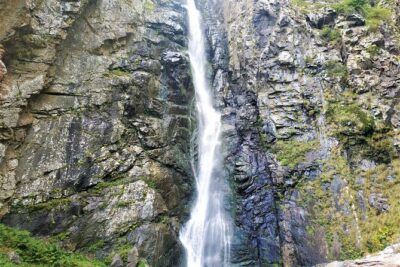
Kazbegi Tour with Gergeti Church, Waterfall Hike & Hidden Gems
Read our review →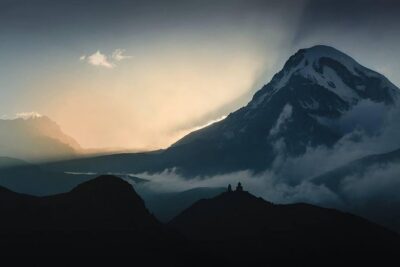
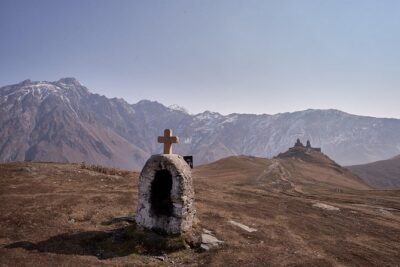
Five days tour to Khevsureti (Abudelauri lakes) & Kazbegi with hikes.
Read our review →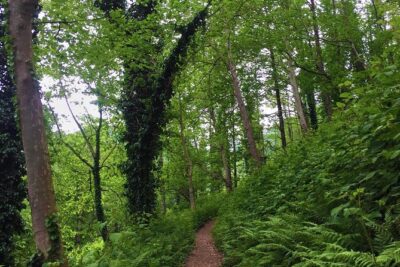
Private Hiking Tour to Mtirala National Park from Batumi
Read our review →Browse the lists this tour appears in