
Reviewed · COOKING CLASSES
Small-Group Khinkali and Khachapuri Cooking Class in Tbilisi
Khinkali and khachapuri are the two Georgian foods you should understand before leaving Tbilisi. This class lets you work with both: shaping the famous pleated dumplings and preparing a cheese-filled Imeretian khachapuri, then sitting down to eat with wine, salad, and farm cheese.
I like the central downtown setting and the friendly, low-pressure teaching. I also like the price: $27.50 buys about two hours of instruction plus a full meal, which is hard to beat in Tbilisi. The main catch is that this is held in a restaurant hall, not the kitchen, and group sizes have sometimes grown well beyond the advertised limit of six.
Key points before you book
- You make two Georgian classics: Khinkali dumplings and Imeretian khachapuri, a round cheese-filled bread.
- The meal is built in: Wine, Georgian tomato salad, farm cheeses, and your freshly prepared food are included.
- The class takes place at a restaurant table: You will not work inside the kitchen or handle every hot cooking step.
- Group size needs checking: The stated maximum is six, but some sessions have had nine to 14 people, with one report of an even larger group.
- The teaching style is casual: Instructors such as Vladimir, Artem, Seva, and Sewa have been praised for humor, patience, and clear explanations.
- The price is excellent for a food activity: At $27.50, it combines a lesson, social time, drinks, and dinner.
Starting at Griboedov Street in central Tbilisi
The meeting point is St.Bunny31 on Griboedov Street, in the heart of downtown Tbilisi. That central location makes this easy to fit between sightseeing, shopping, and an evening walk.
You return to the same place at the end. The activity is near public transportation, and confirmation is provided when you book. The class is offered in English, so you can follow the recipes and ask questions without relying on gestures or translation.
The setting matters. This is not a private home or a traditional cooking school. It takes place in the dining area of a restaurant. That gives you a comfortable place to eat and makes the class easy to run, but it also limits how much of the hot cooking process you see.
More cooking classes in Tbilisi:
- Cook True Ajarian Khachapuri and Khinkali in Highlanders Style
★ 5.0 · 93 reviews - Maia and Nina’s Magic Kitchen
★ 5.0 · 49 reviews - Taste of Kakheti: Wine Tour Bread Baking & Churchkhela Workshop
★ 4.5 · 46 reviews
A glass of wine and a Georgian table
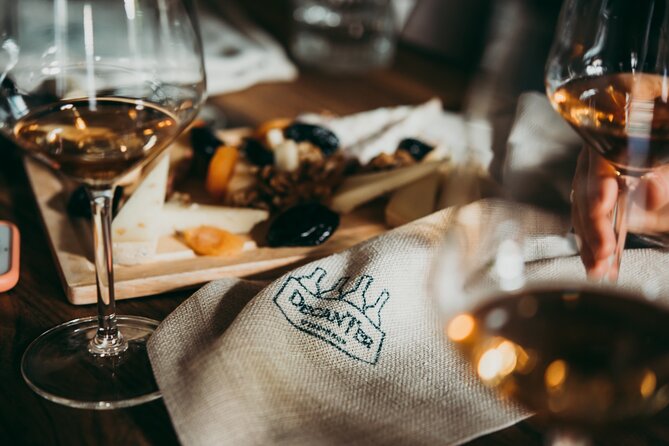
The class begins with the sort of food that makes Georgian meals feel generous even before the main dishes arrive. You are served Georgian wine, a vegetable salad made with local tomatoes, and a plate of farm cheeses.
The extras are more than decoration. Georgian food is meant to be shared, and these small plates give the class a social rhythm. You can talk with the chef and the people at your table while the dough rests or the kitchen finishes cooking.
Portions have not always matched the size of the group. When the class is small, the wine, cheese, salad, and cooked dishes can feel like a full lunch or dinner. In a larger session, shared cheese and salad may feel modest. If you want a substantial meal, arrive hungry, but do not expect a private feast prepared only for you.
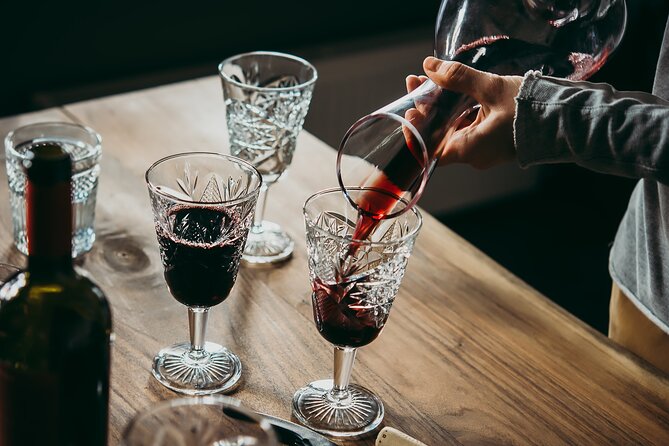
Wine is part of the experience, though the available choice may be limited. One booking included red wine only, with no option between red and white. If you cannot drink red wine, confirm the arrangement before booking rather than assuming a choice will be offered.
Learning khachapuri, Georgia’s cheese-filled bread
The khachapuri portion focuses on Imeretian khachapuri. Unlike the boat-shaped Adjarian version often pictured in guidebooks, Imeretian khachapuri is a round, cheese-filled bread.
You prepare the dough and filling, spread the cheese, and shape the bread before it goes to the kitchen. The chef explains the basic method and the small tricks that make the dough easier to handle.
This is one of the most hands-on parts of the class. You are not simply watching a cook assemble bread. You get to work with the dough, distribute the cheese, and prepare it for cooking.
There is an important limit. The bread is usually cooked behind the scenes, rather than by each participant in the dining room. That is understandable in a restaurant setting, but it means you do not control the oven or watch the complete hot stage from start to finish.
Some sessions divide the work among the group. One person may prepare the khachapuri dough while others work on the filling or another task. In a small class, you are more likely to have a fuller turn. In a larger class, hands-on time can be shared.
The reward comes when the warm bread returns to the table. Homemade khachapuri tastes especially good after you have handled the dough yourself. It is rich, filling, and best eaten while warm.
Folding khinkali with the chef’s tips
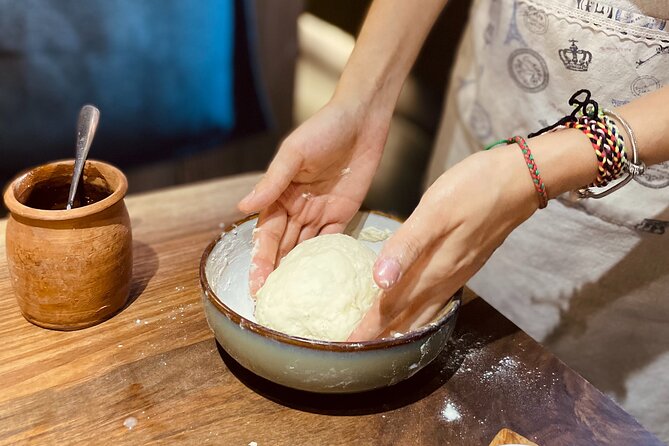
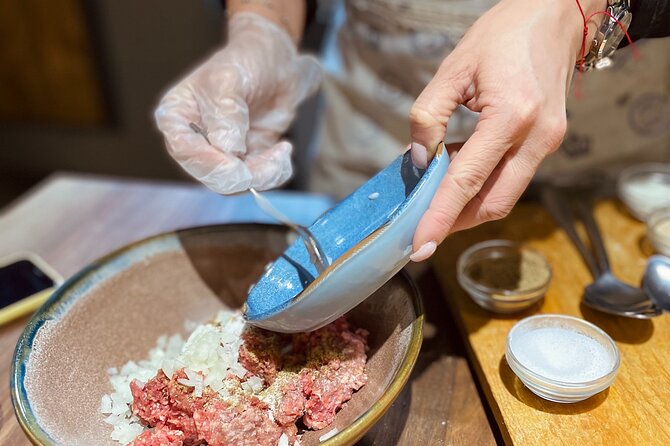
Khinkali is the class’s most entertaining skill. These Georgian dumplings are filled with meat, cheese, or mushrooms, then gathered into a pleated bundle with a little topknot.
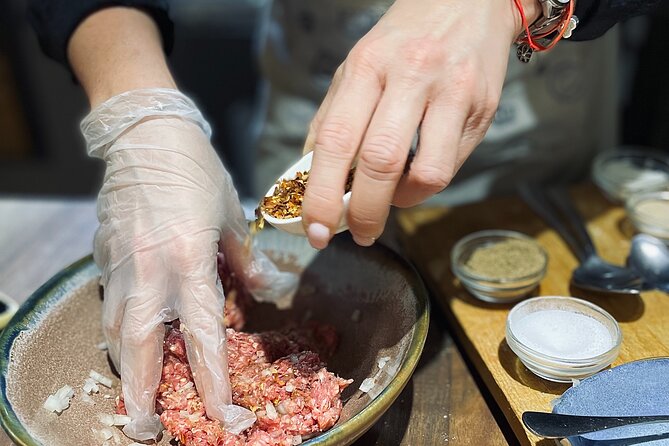
The chef explains how to make the dough and prepares or demonstrates the filling. You then learn the traditional folding technique. The goal is not just to seal the dumpling, but to create the familiar cinched shape.
This is where patience helps. Beginners rarely produce perfect dumplings on the first try, and that is part of the fun. The instructors have been praised for giving clear, step-by-step help and for making mistakes feel harmless.
The exact amount of dough preparation can vary. One participant found that the khinkali dough had already been prepared, while the filling and folding were done during the class. Another session included an explanation of the dough but focused most of the practical work on the filling and shaping.
The dumplings are cooked in the restaurant kitchen and brought back for the meal. You do not usually boil them yourself. That means this is a partial cooking class rather than a full kitchen apprenticeship, but you still learn the part most visitors find hardest: how to fold and seal them.
Eat khinkali carefully. The dumpling holds hot broth inside, so biting into it too quickly can be messy. The class is a good place to learn the shape and method, but you may need a little practice at home before your dumplings look restaurant-perfect.
A few more Tbilisi days to weigh up
- Nana’s Kitchen – traditional Georgian cooking class at real Georgian family home
★ 5.0 · 37 reviews - Join a Local for a Market Tour, Cooking Class and Meal in her Tbilisi Home
★ 5.0 · 15 reviews - Georgian Dance Class in Tbilisi, Georgia
★ 5.0 · 10 reviews - Taste of Georgia. Cooking-Class Khinkali, Khachapuri and more
★ 5.0 · 7 reviews
Stories, toasts, and the human side of the class
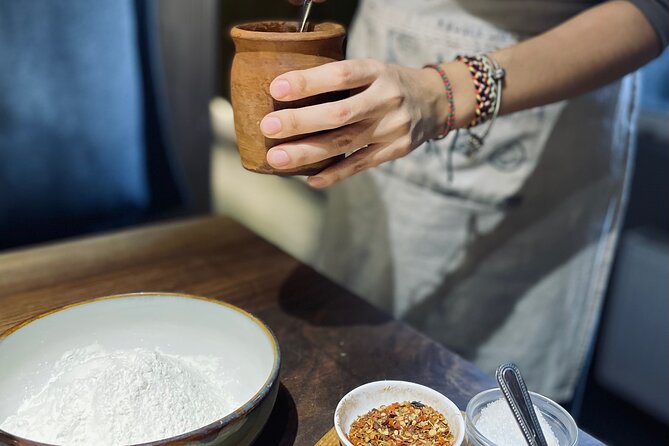
The chef does more than give recipe instructions. During the folding and preparation, the conversation can include Tbilisi stories, Georgian food customs, and the traditions behind Georgian feasts and toasts.
Several instructors have been singled out for making the class warm and funny. Vladimir has been praised for turning the evening into an easygoing dinner. Artem has been described as friendly and good at explaining the process and local background. Seva, also written as Sewa, has been praised for patience, humor, and his talk about Georgian feast traditions.
The experience depends heavily on who leads your session. The strongest classes seem to come when the chef has time to stay with the group, answer questions, and keep the pace moving.
That last point is important. Some sessions have had long waits while staff brought ingredients or moved food from the kitchen. A few classes started late or ran past the advertised two hours. In one case, the chef was also teaching another group, which reduced the amount of direct instruction.
You should expect a social meal with cooking instruction, not a tightly timed professional workshop. If you enjoy chatting between tasks, the slower moments may be pleasant. If you want constant hands-on work, a busy or oversized session may test your patience.
Why the small group matters
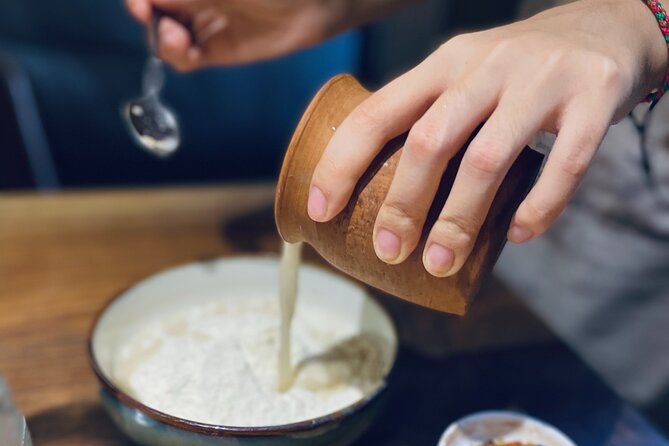
The experience is advertised for a maximum of six participants. At that size, the format makes sense. You can watch the chef, take a turn with the dough, ask questions, and still have time to eat.
Actual group sizes have varied. Some sessions have had only two participants, while others have included nine, 10, 13, or about 14 people. One account described an even larger group. This is the biggest gap between the promise and the practical experience.
A large group changes the class in several ways:
- You may share one preparation task with several people.
- You may spend more time waiting for ingredients or kitchen space.
- The shared salad and cheese may feel smaller.
- The chef may need to divide attention between groups.
- You may have less chance to make a complete dish yourself.
A small group can feel almost like a private lesson. A larger group feels more like a hosted food demonstration with turns at the table. Both can be enjoyable, but they are not the same product.
If group size is central to your decision, ask for the expected number before you go. That is especially sensible during the busy tourist season, when the advertised limit has not always held.
What the $27.50 price really buys
At $27.50 per person, this is one of the better-value food activities in Tbilisi. You receive instruction in two signature dishes, wine, salad, cheese, and the cooked food for your meal.
The value is strongest if you want both a cultural activity and lunch or dinner. You are not paying only for a recipe lesson. You are also paying for the social setting, the chef’s stories, the ingredients, and the chance to eat what you helped prepare.
The value drops if the class is crowded, starts late, or leaves you with only a few short turns at the table. You may still eat well, but the cooking lesson becomes less personal.
It is also worth comparing this with what you want from a cooking class. If your goal is to master dough from start to finish, boil your own dumplings, and bake your own bread, this is not the best match. If your goal is to learn the key techniques, enjoy Georgian food, and spend a relaxed couple of hours with other people, the price is very fair.
Who will enjoy this most
I would recommend this class to first-time visitors who want a friendly introduction to Georgian food without committing half a day. It also suits solo visitors, since the shared table creates an easy way to meet people.
Families can enjoy it too. A booking with two adults and children aged two and eight was reported as a pleasant full-meal experience. Young children may not take part in every step, but the food, table setting, and short format make it more manageable than a long formal class.
This is also a good choice for people who are curious about Georgian food but do not cook much at home. The techniques are simple enough for beginners, and the chef breaks the work into clear stages.
I would be more cautious if you are a serious home cook looking for a detailed culinary lesson. The hot cooking is handled by restaurant staff, and some participants may only get to complete part of a recipe.
Timing, comfort, and practical details
The advertised duration is about two hours, though some sessions have lasted closer to three hours, including the meal. Delays have occurred, so avoid scheduling a tight museum visit, airport transfer, or dinner reservation immediately afterward.
The class can take place indoors in the restaurant hall, but one session was held outside during very hot weather. Tbilisi summers can be intense, and comfort depends on the room, the group size, and the day. If you are sensitive to heat, ask where your session will be held.
Service animals are allowed, and the venue is near public transportation. The activity ends at the starting point, which keeps the logistics simple.
Free cancellation is available if you cancel at least 24 hours before the start time. Changes or cancellations made later are not accepted for a refund.
Should you book this Tbilisi cooking class?
Book it if you want a reasonably priced, social introduction to khinkali and khachapuri, and you are happy with a restaurant-table format. The best version is a small session led by an attentive chef such as Vladimir, Artem, Seva, or Sewa, with enough time for everyone to shape dumplings and work with the bread dough.
Think twice if the advertised group limit is essential to you, or if you want to perform every cooking step yourself. Ask about the group size, wine choice, indoor setting, and how much dough preparation will be done before you arrive.
For most visitors, the combination of Georgian food, wine, stories, and a full meal is worth $27.50. Just treat it as a lively food workshop, not a complete professional cooking course.
FAQ
Where does the cooking class meet?
The class starts at St.Bunny31 on Griboedov Street in Tbilisi, Georgia. It ends back at the same meeting point.
How long does the experience last?
The advertised duration is approximately two hours. Some sessions have lasted longer, including time spent eating.
What dishes will I learn to make?
You will learn about khinkali and Imeretian khachapuri. Khinkali may have veal, cheese, or mushroom filling, while Imeretian khachapuri is a Georgian cheese dish.
Is the class held in a kitchen?
No. The workshop takes place in the restaurant hall rather than inside the kitchen. The restaurant staff handle the hot cooking steps behind the scenes.
What will I get to do myself?
You learn about khinkali dough, prepare the khachapuri filling, work with khachapuri dough, spread the cheese, and practice folding khinkali.
Are food and drinks included?
Yes. Georgian wine, a vegetable salad, farm cheeses, and the freshly prepared khinkali and khachapuri are included.
How many people can join?
The activity is advertised for a maximum of six participants. Some sessions have had larger groups, including nine to 14 people.
Is the activity offered in English?
Yes. The class is offered in English.
Can I cancel for a refund?
You can cancel for a full refund at least 24 hours before the experience start time. Cancellations or changes made less than 24 hours before the start are not refunded.
Just added around Tbilisi
- Old tbilisi walking tour & wine tasting★ 5.0 · 9 reviews
- Tbilisi Airport to Gudauri, Bakuriani, Batumi, Tbilisi★ 5.0 · 3 reviews
- Private Adorable City Tour of Tbilisi★ 5.0 · 3 reviews
- Vardzia. Lake Paravani, Khertvisi & Lomisa castle, Rabati★ 4.5 · 12 reviews
- full day Kazbegi-Gudauri-jvari -from Tbilisi★ 5.0 · 6 reviews
- Your unique photo session in Tblisi, Georgia★ 3.5 · 4 reviews
- Private Wine Tour In Kakheti Region with 7 Wines and Lunch★ 5.0 · 3 reviews
- Wine promenade in hospitable Tbilisi★ 5.0 · 17 reviews
Cooking Classes, compared.
Cook True Ajarian Khachapuri and Khinkali in Highlanders Style
Read our review →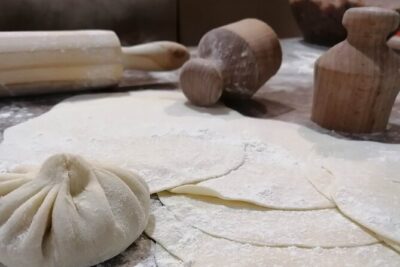

Taste of Kakheti: Wine Tour Bread Baking & Churchkhela Workshop
Read our review →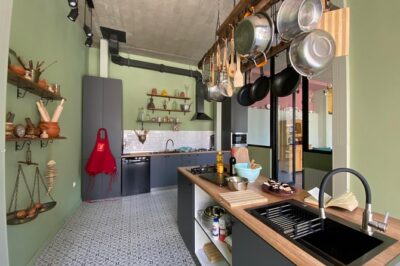
Nana’s Kitchen – traditional Georgian cooking class at real Georgian family home
Read our review →
Join a Local for a Market Tour, Cooking Class and Meal in her Tbilisi Home
Read our review →
One Day Kakheti Tour with Wine Tasting and Free Churchkhela
Read our review →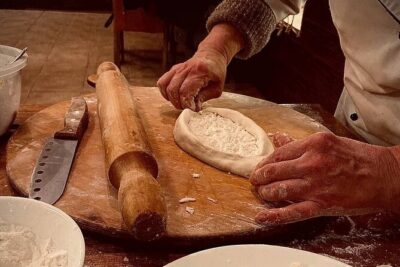
Taste of Georgia. Cooking-Class Khinkali, Khachapuri and more
Read our review →
Military Road Marvels: Ananuri, Kazbegi & Khinkali Masterclass
Read our review →Browse the lists this tour appears in