
Reviewed · WALKING TOURS
Alternative walking tour New Tiflis and backstreets
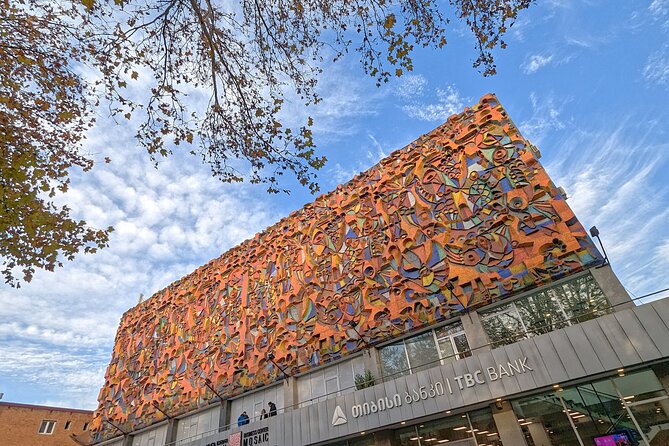
Tbilisi’s best surprises often sit beyond the postcard center. This three-hour walk leads from Liberty Square through New Tiflis, an area of old facades, flower stalls, markets, theaters, street art, and ordinary residential streets. It gives you a useful look at how the city moves between imperial architecture, Soviet buildings, and newer creative spaces.
I like the route’s variety, especially the shift from Dry Bridge Market to the converted Fabrika factory. I also like the small maximum group of 10 and the guides’ focus on history, art, and daily life. The main catch is simple: you walk about 3 km, sometimes beside busy streets, and this is not a gentle Old Town stroll.
Key points to know before you book
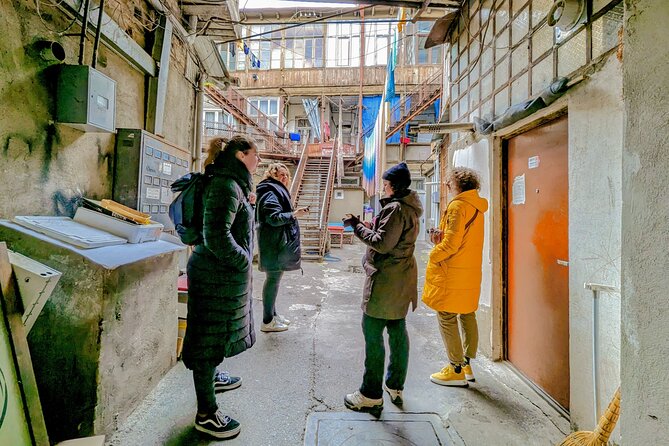
- New Tiflis instead of the Old Town: The route focuses on Agmashenebeli Avenue, Marjanishvili, side streets, and less touristy parts of central Tbilisi.
- Dry Bridge Market adds local character: You’ll browse Soviet-era objects, antiques, handmade work, clothing, jewelry, and unusual souvenirs.
- Fabrika shows modern Tbilisi: A former Soviet sewing factory now houses creative spaces, cafés, art, and colorful murals.
- Oksana has earned strong praise: When she leads the tour, expect clear explanations about Tbilisi, Georgia, art, history, and everyday life.
- The walk is small and practical: Up to 10 people, English-speaking guide, mobile ticket, and a complimentary wine tasting.
- Plan for weather and pavement: Wear firm, comfortable shoes, bring water in summer, and dress warmly in winter.
Why this route gives you a better sense of Tbilisi
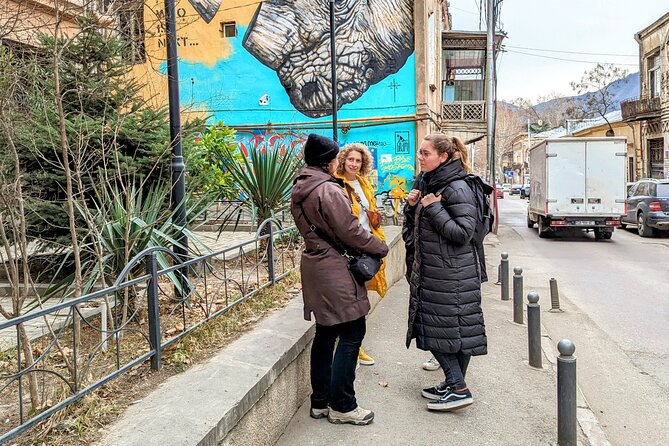
Many first visits to Tbilisi center on the Old Town, with its balconies, churches, baths, and steep lanes. Those sights matter, but this walk takes a different approach. It shows you the city’s newer central districts and the streets between major attractions.
You begin at Liberty Square, then move north toward Orbeliani Square and the Dry Bridge area. From there, the route follows Agmashenebeli Avenue and continues through Roses Park, Fabrika, a historic Catholic church, and the Marjanishvili district.
That progression matters. You see formal public spaces, old European-style facades, a flea market, a Soviet industrial building turned cultural venue, and active city streets in one compact outing. It is less about collecting major monuments and more about understanding how Tbilisi looks and feels away from the main sightseeing circuit.
The guide service is in English, and the group is capped at 10. That size should make it easier to hear explanations and ask questions than on a large coach-style outing. Oksana is specifically praised for answering questions and talking about Georgian history, art, local life, and practical recommendations. Guide assignments can vary, so you should not assume she will lead every departure, but her name gives you a useful sense of the standard intended for the tour.
More walking tours in Tbilisi:
- Tbilisi Walking Tour Including Cable Car and Traditional Bakery
★ 5.0 · 1,310 reviews - Tbilisi:Evening Walking & Talking Tour with Wine & Boat Ride
★ 5.0 · 572 reviews - Old Tbilisi Highlights walking tour with wine & 10 tastings
★ 5.0 · 276 reviews
Liberty Square and Orbeliani Square: a formal start
The meeting point is outside the Burberry shop at Liberty Square, also called Tavisuplebis Moedani. The square is easy to locate and has a metro station, so it is a practical starting point if you are staying elsewhere in the city.
At the center is the golden statue of St. George slaying the dragon. The surrounding buildings include Tbilisi City Hall and the Georgian National Museum. Liberty Square has also been the setting for public demonstrations, celebrations, New Year events, and Independence Day gatherings, so your guide can use it to explain the square’s place in modern Georgia.
The opening stop is brief, about 10 minutes. That is useful because the tour does not spend too long on a location you can easily revisit on your own. Arrive early, though. The guide waits up to 10 minutes after the scheduled start, and late arrivals may need to rebook.
Orbeliani Square follows, with about 25 minutes here. The square is associated with the Orbeliani Palace, the official residence of Georgia’s president. You will view the exterior rather than go inside. The building’s grand details offer a sharp contrast with the casual cafés, restaurants, and flower market nearby.
The flower market is one of the more appealing parts of this stop. Stalls filled with flowers and fragrant herbs give the square a sensory lift, and you get a better feel for how an ordinary public space serves both daily errands and sightseeing. If you want photographs, this is one of the easiest places on the route to find colorful detail.
Dry Bridge Market: the best stop for browsing
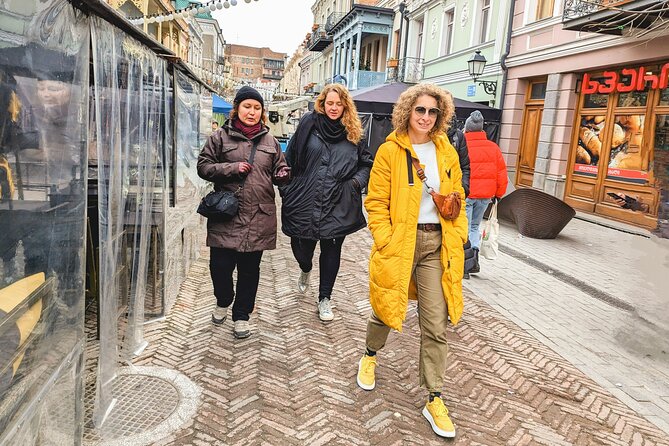
Allow about 30 minutes at Dry Bridge Market. This is the stop most likely to reward curiosity rather than a checklist mentality.
The market carries antique goods, vintage clothing, jewelry, furniture, Soviet-era memorabilia, and handmade objects. Some sellers are artists or craftspeople, so the selection is not limited to old household items. You might find a small keepsake with a connection to Georgia, though the supplied tour details do not promise any particular item or price.
The market also gives your guide a chance to explain how objects connect with Tbilisi’s past. Sellers may know the stories behind pieces, and browsing here can help you see the city as a place where old belongings, local making, and commerce meet.
Keep your expectations practical. Thirty minutes is enough for an introduction and a quick look around, not a serious shopping expedition. If you spot something you like, you may need to decide quickly. The group continues on a fixed route, and the guide is not offering unlimited time for bargaining.
This is also one reason comfortable footwear matters. The tour includes several stops, but the main activity is walking between them. You should be ready for a steady three-hour outing rather than a series of short rides.
Agmashenebeli Avenue and Roses Park
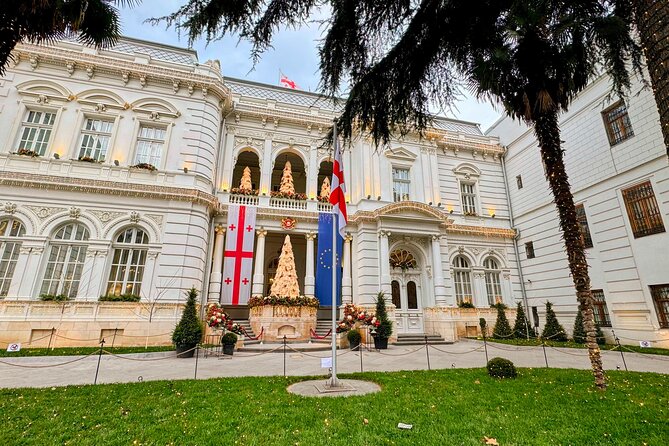
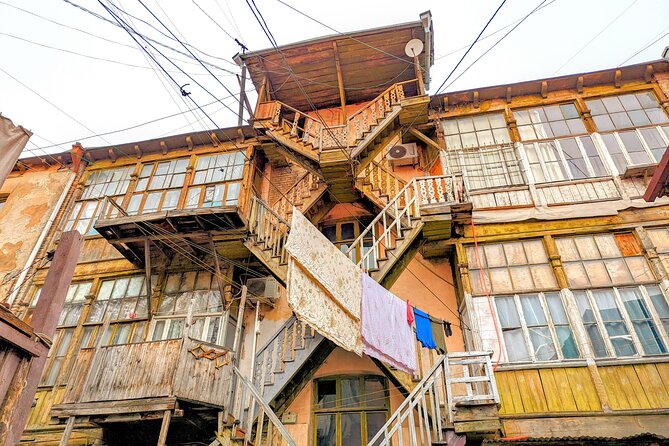
Agmashenebeli Avenue brings a change of pace. The street is lined with buildings from the late 19th and early 20th centuries, many with Art Nouveau and Neo-Renaissance details. Look up as you walk. Facades, balconies, pilasters, arches, and decorative trim are the main attraction here.
The avenue also connects the walk to Tbilisi’s performing arts scene. The Marjanishvili Theatre is one of the notable buildings along the route, while the Tbilisi Opera and Ballet Theatre is at the northern end of the avenue. The tour does not include admission to a performance, but your guide can place these venues within Georgia’s cultural life.
The allotted time is about 25 minutes. That makes this a walking-and-looking stop, not an architectural lecture that examines every facade. If you enjoy old urban buildings, you will want to keep your camera ready. If architecture is not your main interest, the avenue still helps explain why New Tiflis feels different from the older lanes around the baths.
Roses Park is a quieter pause, with about 20 minutes to walk through the garden. It contains more than 200 varieties of roses, which are in bloom during the summer months. The park is tucked into the backstreets and offers a glimpse of everyday Tbilisi rather than a major monument.
The season matters here. Summer should bring the strongest display and scent, while a winter visit will not offer the same garden experience. The tour still passes through the area, but you should keep your expectations tied to the time of year.
More days out of Tbilisi:
- Day Trip to Kakheti Wine Region Including 9 Wine Tastings
★ 5.0 · 2,774 reviews - Highlights of Caucasus Mountains-Jinvali,Ananuri,Gudauri,Kazbegi(Group tour)
★ 5.0 · 2,682 reviews - Day Trip to Kazbegi and Gudauri
★ 5.0 · 2,009 reviews - Day Trip to Mtskheta Gori and Uplistsikhe
★ 5.0 · 1,801 reviews
Fabrika: old industry, new creative life
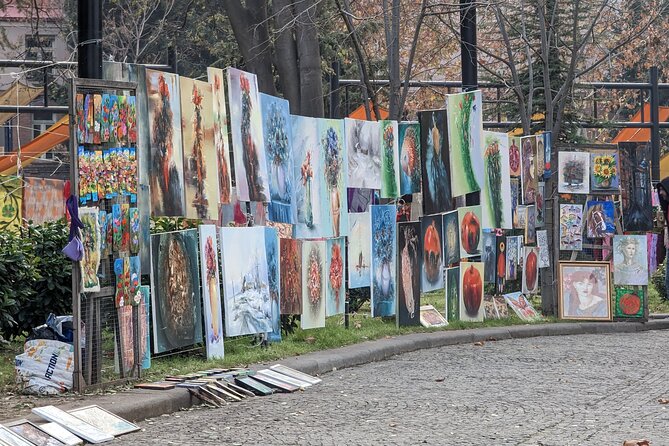
Fabrika is one of the route’s most distinctive stops. The building began as a Soviet sewing factory and has since been converted into a multi-use cultural and social space.
You will see street art on and around the building, including large murals by artists from Georgia and elsewhere. That makes Fabrika useful for understanding contemporary Tbilisi. The city’s creative identity is not confined to galleries or formal museums. It also appears on walls, in reused industrial buildings, and in places where people gather to work, eat, and spend time.
The tour allows about 25 minutes here. That is enough to walk around, see the art, and understand the basic transformation of the site. It is not enough for an extended visit to every part of the complex, so you may want to return later if the space catches your interest.
I especially like this stop because it connects the past and present without pretending the old factory has disappeared. The building’s earlier industrial role remains part of the story, while the murals and new uses show how Tbilisi is changing.
Fabrika also breaks up the architecture-heavy sections of the route. After the market, historic facades, and rose garden, you get a more modern view of the city. This mix is one of the tour’s strengths.
St. Peter and Paul Church: a different side of the city
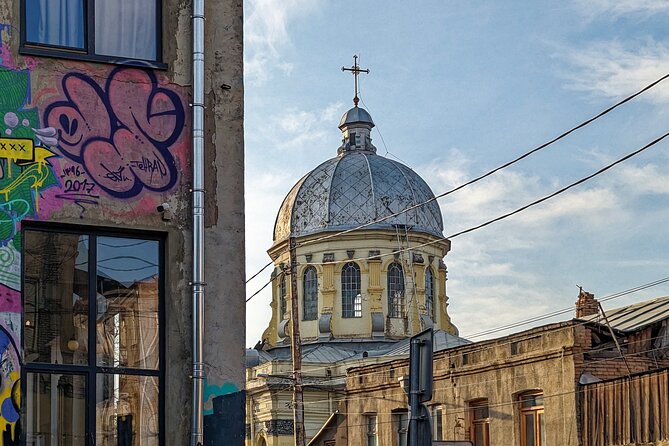
The Roman Catholic Church of St. Peter and St. Paul receives about 15 minutes. Built between 1870 and 1877, it was initiated by K. Zubalashvili and designed by Albert Zaltsman. Its marked Baroque style gives it a strong visual presence, with yellow walls, pilasters, arches, and a rose window above the entrance.
The church is also linked to the Catholic community in Georgia and to Pope John Paul II’s Mass there in 1999. You get a short look at a religious building that broadens the usual picture of Georgian architecture and faith.
The rose window and floral decoration above the wooden door are especially worth noticing. The facade’s shades of yellow and its curved details make it one of the more photogenic stops, though the visit is brief and free time inside may depend on conditions at the church.
As with the other stops, the value comes from the context supplied by the guide. Without explanation, you might simply see a yellow Baroque church. With context, you can place it within Tbilisi’s mix of communities and architectural traditions.
Marjanishvili Theatre and the final square

The Kote Marjanishvili State Drama Theatre is another 15-minute stop. It is one of Georgia’s oldest and most important theaters, after the Rustaveli Theatre in national importance. Kote Marjanishvili founded it in Kutaisi in 1928, and it moved to Tbilisi in 1930.
The theater occupies an Art Nouveau building that was renovated and reopened in 2006 with a production of Bertolt Brecht’s The Threepenny Opera. It presents plays, musicals, and operas. You do not attend a performance on this walk, but the stop gives you a useful reason to consider returning for a show if the schedule fits your visit.
The tour ends at Marjanishvili Square, after another 15 minutes. The square is surrounded by cafés, restaurants, and shops, so it is a convenient place to continue your evening. The Marjanishvili metro station is nearby, and its high-relief bust of Kote Marjanishvili gives the transport stop a direct link to the theater and the district.
Ending here is practical. You are not dropped in an isolated area, and you can use the metro or remain in the neighborhood for food and further exploring. The route finishes with options rather than a forced return to the starting point.
Price, group size, and what you receive
At $30 per person, this is a fair price for a three-hour guided walk in a central part of Tbilisi. There are no paid admissions listed, so you are mainly paying for the guide’s time, route planning, interpretation, and the convenience of linking several areas that would otherwise require your own research.
The complimentary wine tasting adds a small local touch. It should not be treated as a full food or wine tour, since no larger tasting program is described. Still, it gives the walk a social finish and a chance to connect the sights with Georgian hospitality.
The maximum group size is 10. That is a meaningful advantage on a walking tour because narrow streets, market stalls, and busy sidewalks can make a large group awkward. You should still expect normal city noise and traffic in parts of the route.
Group discounts are available, and the ticket is mobile. Hotel pickup and drop-off are not included. You meet at Liberty Square and finish near Marjanishvili metro station, so you need to make your own way to the start and onward after the walk.
Walking conditions and the best time to go
The route covers about 3 km at a relaxed pace, but the distance is only part of the effort. You will spend most of the three hours on your feet, moving between stops and standing while the guide explains buildings and neighborhoods.
Wear comfortable shoes with good grip. Winter in Tbilisi can be cold, windy, and rainy, so bring warm layers and avoid slippery soles. Summer can be hot around midday, making sun protection and water important.
Busy streets and traffic noise are part of the urban setting. If you prefer quiet lanes and long periods inside museums, this may not be your ideal tour. It is also not recommended if you have major mobility issues, a recent injury, or trouble walking several kilometers.
The tour requires good weather and a minimum number of participants. If poor weather or low enrollment cancels it, you are offered another date or a full refund. You can cancel for a full refund up to 24 hours before the start time, but later changes or cancellations are not refunded.
Who should book this New Tiflis walk?
I would choose this tour early in a Tbilisi stay, especially if you want to understand the city beyond the Old Town. The route gives you a practical orientation to several neighborhoods and may help you decide where to return for food, theater, shopping, or photography.
It suits you best if you enjoy:
- Urban architecture and old facades
- Markets and unusual souvenirs
- Street art and reused industrial buildings
- Short cultural stops linked by a steady walk
- Local history explained in clear English
- Small groups rather than large sightseeing crowds
It is less suitable if you want a full Old Town tour, extensive museum time, or a relaxed outing with very little walking. It also may disappoint if you expect every stop to include an interior visit. Several highlights are viewed from outside or explored briefly.
Should you book it?
Book this walk if you want to see Tbilisi’s less familiar central districts in one well-planned outing. Dry Bridge Market and Fabrika are the strongest reasons to go, while Agmashenebeli Avenue, the church, theaters, and Roses Park give the route enough variety to avoid feeling like a single-theme walk.
The $30 price is sensible for a small English-language group and a guide who can connect architecture, art, and daily life. Choose it early in your visit if you value local orientation, and skip it only if your mobility, weather tolerance, or interest in the Old Town makes this route a poor match.
FAQ
Is this an Old Town walking tour?
No. The route focuses on New Tiflis, backstreets, Agmashenebeli Avenue, Fabrika, Marjanishvili, and other central areas away from the classic Old Town route.
How long is the tour?
The tour lasts approximately three hours and covers about 3 km at a relaxed walking pace.
Where does the tour start and finish?
It starts at the entrance of the Burberry shop at Liberty Square. It ends near Marjanishvili metro station on Kote Marjanishvili Street.
Is the tour offered in English?
Yes. An English-speaking guide service is included.
Is wine included?
Yes. A complimentary wine tasting is included in the tour price.
What happens if the weather is poor?
The tour requires good weather. If it is canceled because of poor weather, you are offered a different date or a full refund.
Just added around Tbilisi
- Old tbilisi walking tour & wine tasting★ 5.0 · 9 reviews
- Tbilisi Airport to Gudauri, Bakuriani, Batumi, Tbilisi★ 5.0 · 3 reviews
- Private Adorable City Tour of Tbilisi★ 5.0 · 3 reviews
- Vardzia. Lake Paravani, Khertvisi & Lomisa castle, Rabati★ 4.5 · 12 reviews
- full day Kazbegi-Gudauri-jvari -from Tbilisi★ 5.0 · 6 reviews
- Private Wine Tour In Kakheti Region with 7 Wines and Lunch★ 5.0 · 3 reviews
- Wine promenade in hospitable Tbilisi★ 5.0 · 17 reviews
- Your unique photo session in Tblisi, Georgia★ 3.5 · 4 reviews
Walking Tours, compared.
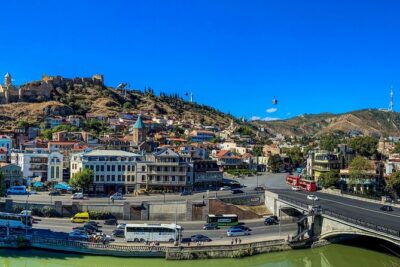
Tbilisi Walking Tour Including Cable Car and Traditional Bakery
Read our review →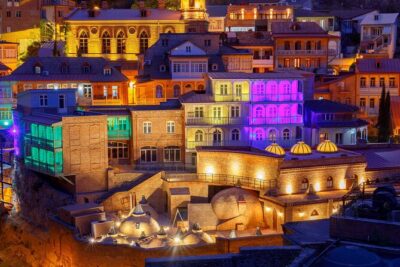
Evening Walking & Talking Tour with Wine & Boat Ride
Read our review →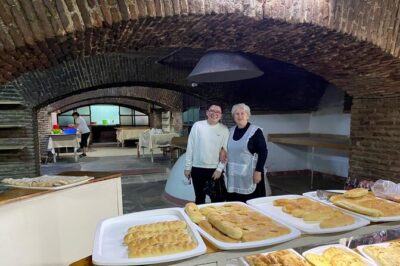
Old Tbilisi Highlights walking tour with wine & 10 tastings
Read our review →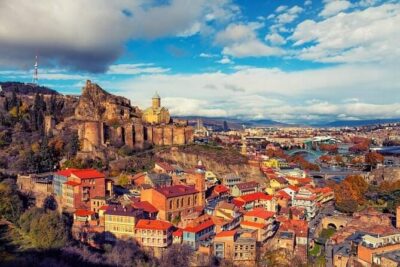
Old Tbilisi Tour: Private Walking Tour With Wine Tasting
Read our review →
Private Tbilisi Food Tour: 9 Tastings Walk in Bohemian District
Read our review →
Tbilisi Old Town Walking Tour with a Local Guide
Read our review →
Discover Tbilisi: Hidden Gems and Iconic Sights Walking Tour
Read our review →
Browse the lists this tour appears in