
Reviewed · MTSKHETA TOURS
Gori-Uplistsikhe Mtskheta-Jvari one Day private Tour
Uplistsikhe is the star here: an ancient rock-cut town where pagan, Christian, Anatolian, and Iranian influences meet above the Mtkvari River. I like that this private trip also pairs it with Stalin’s personal museum in Gori and the two great churches of Mtskheta, giving you a broad look at Georgian history in one day. The drawback is a full schedule, with walking on uneven ground and several hours in the vehicle.
I also like the small-group setup. At $185.49 for up to four people, the price is reasonable when shared, and you get your own air-conditioned vehicle rather than joining a large coach. Guide David is noted for his comfortable manner and Russian-language skills, but if you want a long, slow visit at every stop, this packed route may feel brisk.
Key points at a glance
- Uplistsikhe’s rock-cut streets: Spend about two hours exploring a settlement that began as early as the second or first millennium BC.
- Gori’s Stalin connection: See the house where Joseph Stalin was born, preserved beneath a stone canopy, along with personal objects, photographs, furniture, and gifts.
- Mtskheta’s sacred pair: Visit sixth-century Jvari and eleventh-century Svetitskhoveli, both UNESCO-listed sites.
- Private transport for up to four: The fixed group price works best when shared by three or four people.
- A full Georgian history day: Move from pre-Christian rock chambers to medieval Christianity and modern political history.
- Bring comfortable shoes: Uplistsikhe requires a moderate level of fitness and includes uneven stone paths.
From Tbilisi to Uplistsikhe’s rock-cut town
Your pickup begins at 9:00 a.m. in Tbilisi. The drive brings you toward Gori and the Mtkvari River, with Uplistsikhe as the first major stop. The planned arrival is around 11:00 a.m., leaving about two hours for the site.
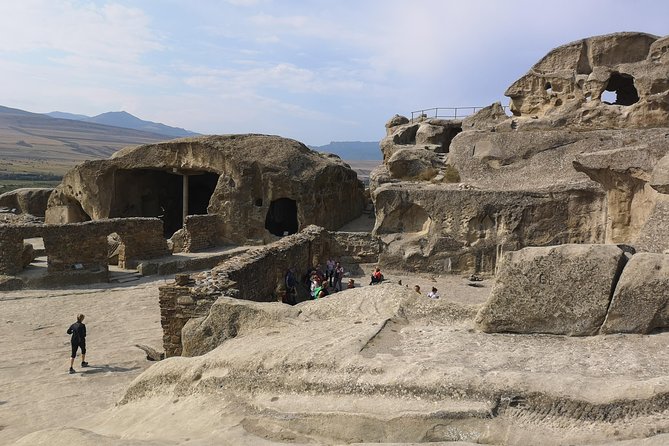
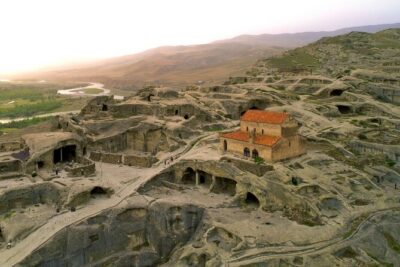
Uplistsikhe translates as Fortress of the Lord, though the name should not make you picture a conventional stone castle. This is a rock-hewn settlement, cut into a rise on the left bank of the Mtkvari. Its story reaches back to the early Iron Age, and the remains show how the site changed over many centuries.
What makes Uplistsikhe special is the mix of forms. You may see chambers and carved spaces connected with older pagan traditions alongside later Christian structures. The site also reflects contacts between Georgian culture, Anatolia, and Iran. Its position on an old trade route linking Byzantium with India and China helps explain why this was once an important center of Kartli.
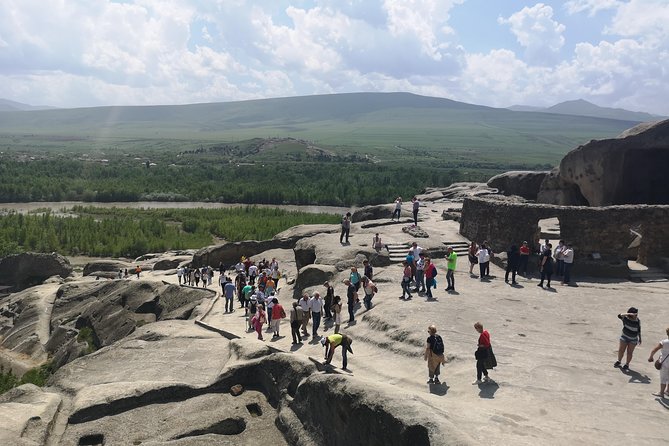
Give yourself time to look beyond the largest chambers. The pleasure here comes from reading the site as a town rather than as a single monument. Walkways lead through carved rooms, open spaces, and rock surfaces where the work of shaping the settlement remains visible.
The two-hour visit is useful, but you should not expect every corner to receive a leisurely inspection. The site requires walking, and the ground can be uneven. The tour information calls for moderate physical fitness, so comfortable shoes are sensible. If you have difficulty walking on stone or sloped paths, this is the stop to consider carefully.
Uplistsikhe also rewards a guide. Without context, a series of bare rooms can blur together. With an explanation of how pagan and Christian use overlapped, the settlement becomes easier to understand. A private tour gives you a chance to ask questions instead of following a fixed group script.
More Gori and Uplistsikhe trips:
- Day Trip to Mtskheta Gori and Uplistsikhe
★ 5.0 · 1,801 reviews - Mtskheta-Gori-Uplistsikhe
★ 5.0 · 112 reviews - Mtskheta, Jvari, gori, uflistsikhe, history and panorama (group tours)
★ 4.5 · 107 reviews
A Georgian lunch break in Gori
Around 1:00 p.m., the schedule allows about an hour and a half for lunch at a restaurant in Gori. Lunch is not included in the price, so you pay for your meal separately.
This pause matters. Uplistsikhe is an active walking stop, and the next visit is the Stalin Museum, so you will appreciate a proper break rather than a rushed snack in the vehicle. The meal is described as traditional Georgian food, giving you a chance to try local dishes during the tour instead of waiting until you return to Tbilisi.
The exact menu and restaurant are not specified, so do not book this trip expecting a particular dish or dining style. The practical point is simple: plan for lunch as an extra cost and use the time to recharge. The long break also makes the day less relentless than the list of sights might suggest.
Gori and the complicated Stalin Museum
The afternoon includes Gori, Joseph Stalin’s birthplace. The museum presents photographs, gifts, furniture, and scenes connected with his life. Nearby, the small house where Stalin was born remains under a stone canopy.
The museum can be an arresting stop because it deals with a figure who shaped the twentieth century in ways that affected millions of people. Personal belongings and carefully arranged rooms bring you close to the public image built around Stalin, while the setting in his Georgian birthplace adds a local layer to the story.
The visit is scheduled for about one hour. The information provided describes the museum admission as included, while the day’s timing also says you may choose the museum or have free time in Gori. That distinction is worth confirming with Travel To Georgia before departure if the museum is important to you. You do not want to assume a full museum visit if your group prefers free time, or assume free time if the guide has planned the museum as a fixed stop.
I would approach this museum with an open but critical mind. It contains unusual objects and staged scenes, yet a museum focused on a dictator’s life can never be treated as a complete account of his era. The value is in seeing how Stalin is presented in his birthplace and in discussing the material with your guide.
The stop also breaks up the ancient and religious focus of the day. After Uplistsikhe, Gori shifts the subject to modern political history. That contrast is one of the trip’s strengths, though people who prefer only churches and archaeological sites may find the Stalin stop less appealing.
Jvari above the meeting of two rivers
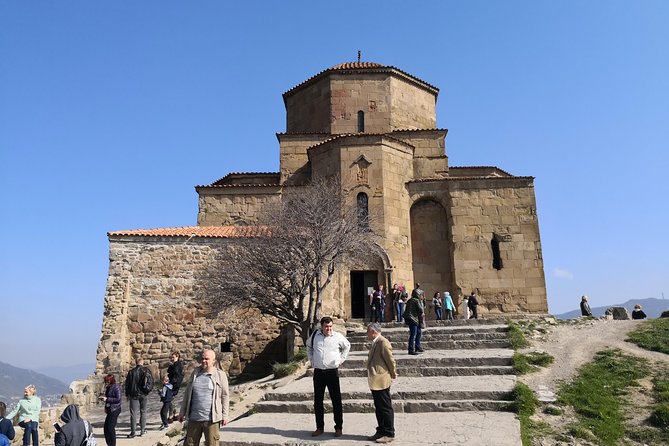
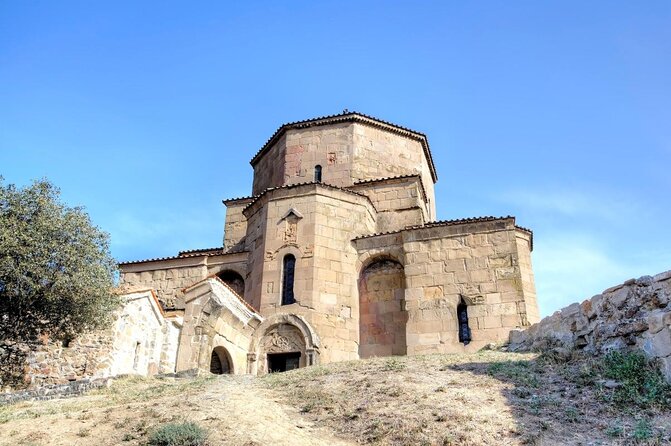
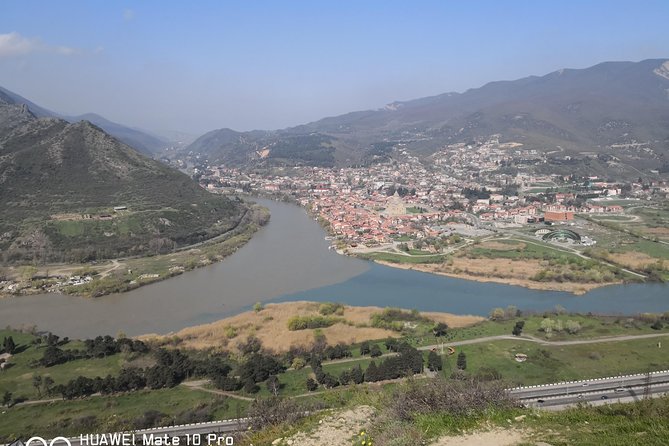
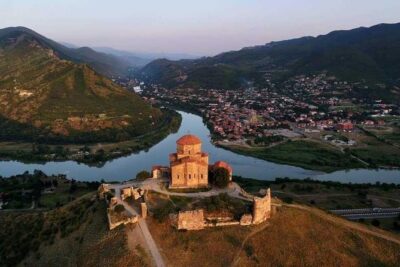
From Gori, the route continues to the Mtskheta area. Jvari Church sits on a hill opposite Mtskheta, above the meeting point of the Aragvi and Mtkvari rivers. The church dates to the sixth century and is part of the UNESCO World Heritage listing for the area.
The site’s Christian story begins with King Mirian III, who erected a large wooden cross here after Georgia adopted Christianity. Later in the sixth century, the ruler Guaram built a small church beside the Holy Cross. The present setting reflects that early Georgian Christian tradition, when churches were being shaped around new religious and architectural ideas.
Jvari is a strong stop because the church and its position work together. From the hill, you look toward Mtskheta and the river confluence, seeing why this location held such religious weight. The visit is planned for about an hour, with no admission charge listed.
The hilltop setting also means exposure to weather and some walking. The tour provides bottled water, but you should still dress for a day outside and inside churches. Georgia’s Orthodox sites require respectful clothing, so shoulders and knees should be covered where appropriate.
Jvari is likely to feel quieter and more spare than the larger cathedral below. Its appeal is not a long list of rooms or objects. It is the early date, the Christian meaning of the site, the compact church architecture, and the view across the old capital.
More Mtskheta and Jvari trips:
- Tbilisi:Mtskheta,Jvari,Bazaar,wine tasting,Chronicles of Georgia
★ 5.0 · 730 reviews - Mtskheta-Jvari-Uplistsike-Chronicle of Georgia, PRIVATE Trip
★ 5.0 · 105 reviews - Tbilisi – Mtskheta – Jvari. Full City Tour on Hop On Hop Off Bus
★ 4.5 · 91 reviews - Ancient Georgia Group Tour: Mtskheta,Jvari, Gori, Uplistsikhe
★ 4.5 · 73 reviews
Svetitskhoveli Cathedral in Mtskheta
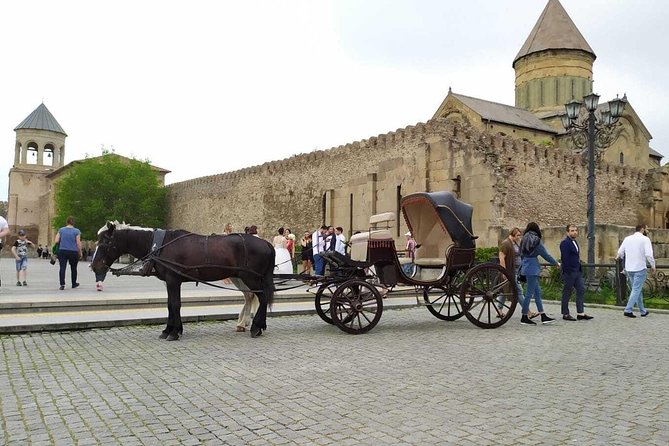
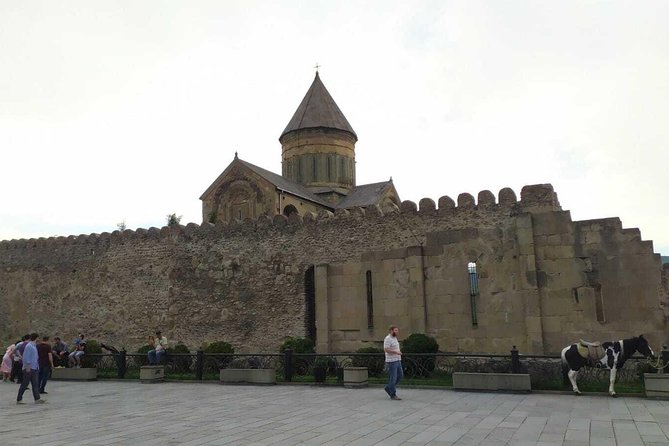
The final major sight is Svetitskhoveli Cathedral in Mtskheta, dating from the eleventh century. Mtskheta served as Georgia’s religious center for centuries, and this cathedral remains one of the country’s most sacred places.
The complex includes the cathedral, a gate, bell tower, fortifications, and clerical residences. Inside, the tradition of the site connects it with Christ’s robe and the mantle of the Prophet Elijah. The tomb of King Vakhtang Gorgasali is also identified with the cathedral.
You have about an hour here. That is enough to see the principal areas and understand why Svetitskhoveli matters, though it may feel short if you want to study every architectural detail. The cathedral is an active religious place, not simply an old building arranged for sightseeing, so services or local customs may affect how you move through it.
I like the way this stop completes the day. Uplistsikhe shows a much older world of rock-cut spaces and changing beliefs. Jvari presents the early phase of Georgian Christianity, while Svetitskhoveli shows the faith’s later monumental center. The sequence gives you a clear sense of time without turning the day into a formal lecture.
The cathedral is free to enter according to the tour details. You should still allow for a respectful visit and follow any instructions given at the site. If religious history interests you, ask David about the cathedral’s traditions and its place in Georgian life. His reported style is friendly and unobtrusive, with Russian-language ability and a habit of explaining history without overloading the day.
What the private format adds
The private arrangement is the practical reason to choose this tour over a standard group outing. Only your party participates, and the vehicle is air-conditioned. Pickup is offered, and bottled water, private transport, and fuel costs are included.
The fixed price is $185.49 for up to four people. For four, that works out to about $46.37 per person before lunch. For two people, the effective cost is about $92.75 each, so the value depends heavily on the size of your group.
You also gain control over conversation and pacing. A private vehicle lets you ask about Georgian history, Orthodox traditions, or the Stalin museum without worrying about a busload of strangers. It may also make the long day feel easier, since the vehicle is reserved for your party.
The trade-off is that a private tour is not automatically flexible in every way. The route covers several major stops, and the planned timings are fairly firm. You should tell the provider before departure if Gori free time matters more to you than the museum, especially since the published details describe both possibilities.
The tour has received a top rating from the small number of submitted evaluations, with particular praise for its full range of sights and for David’s friendly service. One account describes him as charming, comfortable to travel with, and fluent in Russian. Those details are useful if you are a Russian-speaking visitor, but the available information does not promise that every departure will have David personally, so ask who will guide your group.
Who should book this day trip?
I would recommend it to you if you have one open day from Tbilisi and want to connect several major sites without arranging separate transport. It suits first-time visitors who want ancient archaeology, Georgian Christianity, and Gori’s modern history in one outing.
It also works well for couples, families, or friends sharing the four-person price. The private vehicle is especially useful if your group prefers its own space and wants to ask questions along the way.
You should think twice if you dislike full schedules, uneven walking, or historical sites with a serious political edge. Uplistsikhe is not a smooth museum visit, and the combination of a two-hour archaeological stop, lunch, Gori, Jvari, and Svetitskhoveli makes for a substantial day.
The trip is offered with free cancellation up to 24 hours before the start time. After that point, the paid amount is not refunded, and changes made within 24 hours are not accepted. That gives you some room to adjust plans, but the local cut-off time applies.
Final call: a strong one-day introduction to Georgia
Book this tour if you want variety, private transport, and a clear route from Tbilisi. Uplistsikhe is the most distinctive stop, while Jvari and Svetitskhoveli give the day lasting religious and architectural weight. Gori adds a difficult but worthwhile look at Stalin’s Georgian origins.
At $185.49 for four people, the value is good for a private seven-to-eight-hour outing with transport, fuel, water, and museum admission listed as included. For one or two people, the cost is higher per person, but the comfort and privacy may still justify it.
I would confirm the guide’s name, the museum or free-time choice in Gori, and the exact lunch arrangements before booking. If those details suit you, this is an efficient and thoughtfully varied way to see three important parts of Georgia beyond Tbilisi.
FAQ
What is included in the tour price?
The price includes bottled water, an air-conditioned vehicle, private transportation, and the fuel surcharge. The Stalin Museum admission is listed as included.
Is lunch included?
No. Lunch is not included, and the tour allows about one hour and 30 minutes for a meal at a restaurant in Gori.
How many people can join the private tour?
The price covers a private group of up to four people. Only your group participates.
What time does the tour start?
The stated start time is 9:00 a.m. Pickup is offered from Tbilisi.
How long does the tour last?
The experience lasts approximately seven to eight hours.
What physical fitness level is needed?
A moderate level of physical fitness is recommended. Uplistsikhe includes walking through a rock-cut site with uneven ground.
Is admission to Jvari Church and Svetitskhoveli Cathedral included?
Admission is listed as free for both Jvari Church and Svetitskhoveli Cathedral.
Is the Stalin Museum visit required?
The schedule describes the museum visit as optional, with free time in Gori as another possibility. The tour details also list museum admission as included, so confirm the exact plan with the provider.
Can I cancel for a full refund?
Yes. You can cancel for a full refund if you do so at least 24 hours before the experience begins. Cancellations or changes made less than 24 hours before the start time are not accepted for a refund.
More Day Trips from Tbilisi
- Day Trip to Kakheti Wine Region Including 9 Wine Tastings
★ 5.0 · 2,774 reviews - Day Trip to Kazbegi and Gudauri
★ 5.0 · 2,009 reviews - Day Trip to Armenia Including Homemade Lunch
★ 5.0 · 1,162 reviews - Day Trip to Gudauri and Kazbegi Including 4WD
★ 5.0 · 673 reviews
Just added around Tbilisi
- Old tbilisi walking tour & wine tasting★ 5.0 · 9 reviews
- Tbilisi Airport to Gudauri, Bakuriani, Batumi, Tbilisi★ 5.0 · 3 reviews
- Private Adorable City Tour of Tbilisi★ 5.0 · 3 reviews
- Vardzia. Lake Paravani, Khertvisi & Lomisa castle, Rabati★ 4.5 · 12 reviews
- full day Kazbegi-Gudauri-jvari -from Tbilisi★ 5.0 · 6 reviews
- Private Wine Tour In Kakheti Region with 7 Wines and Lunch★ 5.0 · 3 reviews
- Wine promenade in hospitable Tbilisi★ 5.0 · 17 reviews
- Your unique photo session in Tblisi, Georgia★ 3.5 · 4 reviews
Mtskheta Tours, compared.
Mtskheta,Jvari,Bazaar,wine tasting,Chronicles of Georgia
Read our review →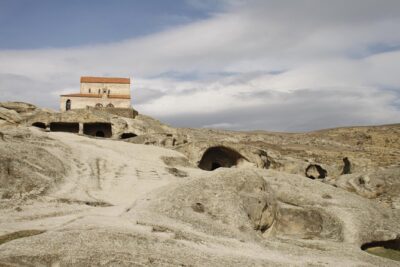
Mtskheta, Jvari, gori, uflistsikhe, history and panorama (group tours)
Read our review →
Jvari-Uplistsike-Chronicle of Georgia, PRIVATE Trip
Read our review →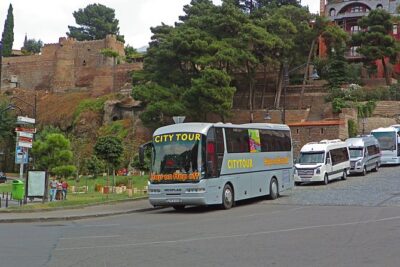
Mtskheta – Jvari. Full City Tour on Hop On Hop Off Bus
Read our review →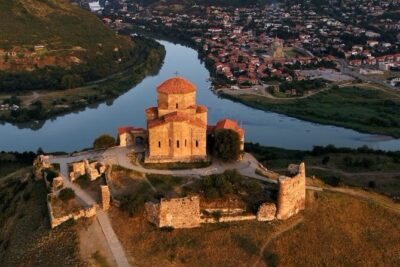
Ancient Georgia Group Tour: Mtskheta,Jvari, Gori, Uplistsikhe
Read our review →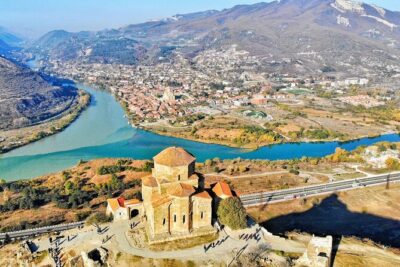
Ancient Mtskheta and Chronicle of Georgia half day tour
Read our review →Browse the lists this tour appears in