
Reviewed · MTSKHETA TOURS
Sacred Sites and Ancient Wonders: Jvari, Mtskheta and Uplistsikhe
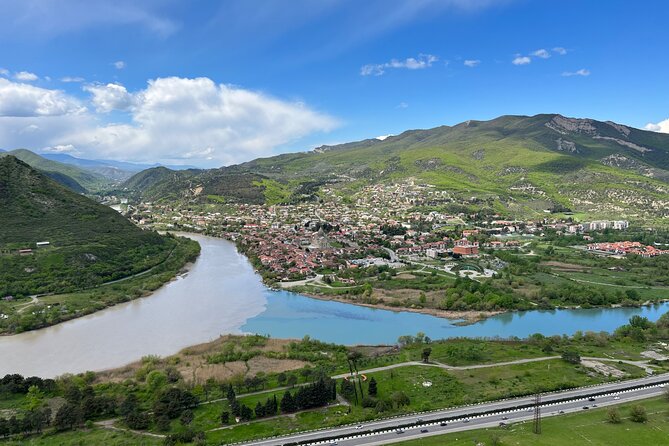
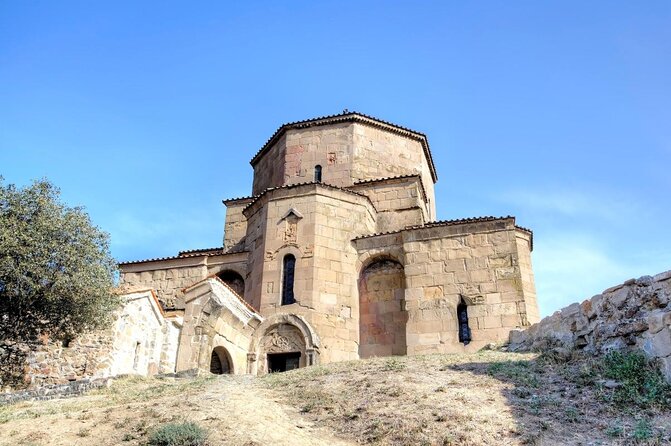
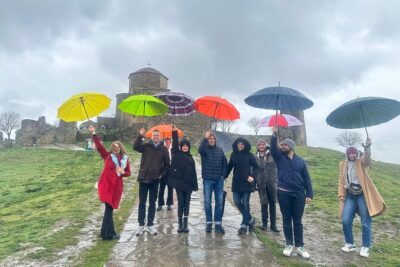
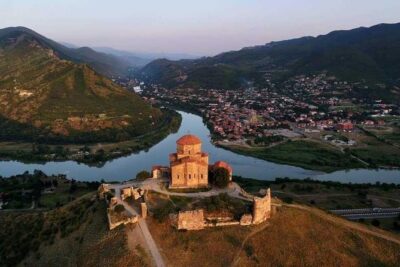
Jvari Monastery gives you the day’s first big surprise: a sixth-century church high above Mtskheta, with the Aragvi and Mtkvari rivers meeting below. I like the way this tour pairs that short hilltop visit with Svetitskhoveli Cathedral, then moves on to Gori and Uplistsikhe for a very different look at Georgia’s past.
I also like having a private vehicle and hotel pickup, since the route covers several places that are awkward to combine by public transport. The main point to consider is the pace: seven hours is enough for a strong overview, but not for long, leisurely visits at every stop. Museum and cave-town tickets, lunch, and drinks are extra.
Key points at a glance
- Jvari’s river view: See the Aragvi and Mtkvari meeting from a church above Mtskheta.
- Mtskheta’s royal cathedral: Visit the former capital and Svetitskhoveli, a UNESCO World Heritage site.
- Gori’s Soviet-era story: Enter the Stalin Museum and see the house where he was born, plus his armored train.
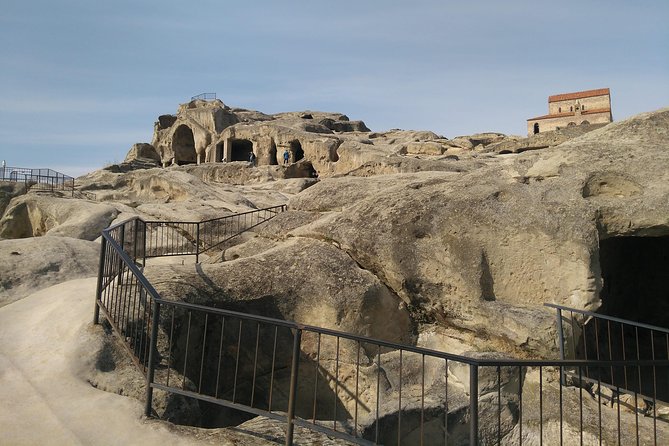
- Uplistsikhe’s rock-cut streets: Walk through an ancient Silk Road center carved into stone.
- Private touring: Your own group travels in a private vehicle with hotel pickup and drop-off.
- Known guide names: Irakli and Davit have led this route, with a reputation for clear conversation and added local stories.
Four major Georgian sites in one seven-hour outing
This route works because the sites are so different. Jvari is a scenic and spiritual stop. Mtskheta brings early Georgian kings and Orthodox tradition into focus. Gori shifts the subject to the Soviet period, while Uplistsikhe takes you much further back, to an ancient settlement cut into rock.
You start at 10:00 am in Tbilisi and return to the meeting point at the end of the day. The listed visits add up to about three and a half hours, leaving the rest of the seven-hour schedule for driving between stops and moving through the towns.
I would choose this trip if you have only a few days in Georgia and want more than another city tour. You get churches, royal history, Soviet politics, ancient trade routes, and broad views in one outing. The tradeoff is simple: you will see a lot, but each stop has a fixed time.
Two guides associated with this route are Irakli and Davit. The guide can make a real difference here because the sites are not all self-explanatory. At Gori and Uplistsikhe especially, a good explanation helps connect what you see on the ground with the larger story of Georgia.
More Gori and Uplistsikhe trips:
- Day Trip to Mtskheta Gori and Uplistsikhe
★ 5.0 · 1,801 reviews - Mtskheta-Gori-Uplistsikhe
★ 5.0 · 112 reviews - Mtskheta, Jvari, gori, uflistsikhe, history and panorama (group tours)
★ 4.5 · 107 reviews
Jvari Monastery and the meeting of two rivers
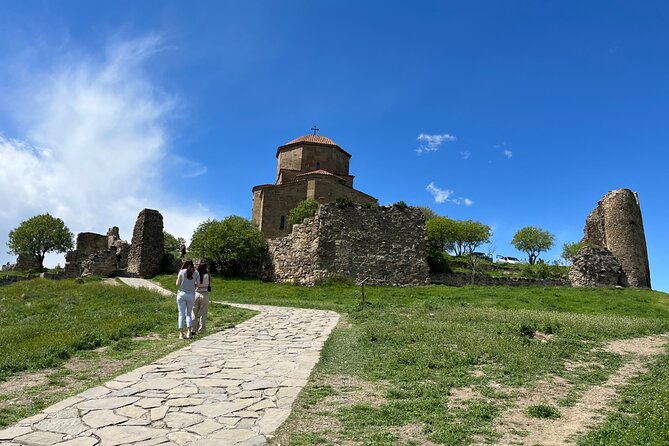
Jvari is the first stop, with about 30 minutes set aside. Admission is free.
The monastery dates from the sixth century and sits above Mtskheta. Its location does much of the work. From the hill, you can look toward the old city and see the Aragvi and Mtkvari rivers come together. This is one of those stops where the setting matters as much as the building.
Jvari is an active Georgian Orthodox site, so keep the mood respectful. The visit is short, but that is enough to see the church and take in the view. If you want a long architectural study, 30 minutes may feel tight. If you want a strong first look at the region, it is well judged.
I especially like the order of the morning. Seeing Jvari from above gives you a sense of Mtskheta before you visit the city below. You are not just walking into another church with no idea where you are. You first see the rivers, the valley, and the old capital’s position.
Bring shoes you feel comfortable walking in, and keep your camera ready for the view. The tour does not list a separate admission charge, so there is no ticket stop here.
Mtskheta and the sacred heart of Georgia
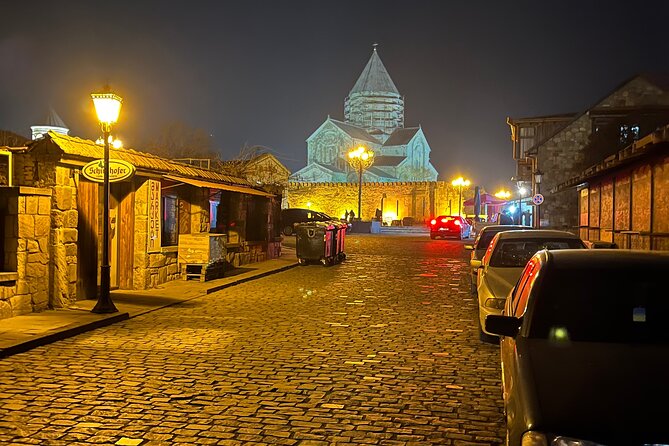
The next visit lasts about one hour and centers on Mtskheta and Svetitskhoveli Cathedral. Mtskheta was founded in the fifth century BC and served as the capital of the early Georgian Kingdom of Iberia from the third century BC until the fifth century AD. The capital later moved to Tbilisi, but Mtskheta remained an important place for royal coronations and burials.
That history gives the town more weight than its size might suggest. You are visiting a former capital that continued to matter long after it lost political power. The cathedral is recognized by UNESCO as a World Heritage site, and Georgian tradition holds that Christ’s robe lies beneath it.
Svetitskhoveli is the architectural center of the stop. It is described as a masterpiece of the Early Middle Ages, and the interior carries a strong religious presence rather than feeling like a simple museum object. Your guide can help explain what you are seeing, including the cathedral’s role in Georgian Orthodox life and royal history.
The one-hour visit should give you time for the main cathedral experience, though you may want more if you prefer to linger over details. Since admission is included at this stop, you can focus on the church and the town rather than handling another payment.
I would not treat Mtskheta as just a quick photo stop. Jvari shows you the city from above, but Mtskheta gives the place meaning. Together, the two stops make a much better visit than either one alone.
Gori and the complicated story of Stalin
The route then continues to Gori, the birthplace of Joseph Stalin. The Stalin Museum visit lasts about one hour, and admission is not included. The stated ticket price is 15 GEL per person.
The museum includes the house where Stalin was born and grew up, along with his armored train. These details make the stop quite different from the churches and ancient ruins earlier in the day. You are looking at a site connected to one of the twentieth century’s most powerful and controversial political figures.
The museum experience is not simply a visit to a birthplace. It also raises questions about memory, politics, and how a country presents a figure who was born in Georgia but ruled the Soviet Union. I would go in ready to observe and ask questions rather than expecting a neutral, modern political biography.
The armored train is one of the more unusual objects on the route. It gives the visit a physical scale that portraits and documents cannot. The small birth house also makes the story more personal, though the larger political consequences remain the important context.
A guide is useful here, particularly if you want help separating local pride, Soviet-era presentation, and the broader record of Stalin’s rule. Irakli and Davit are two guide names connected with this tour, and past days led by them included plenty of conversation and stories during the drive.
The museum ticket costs extra, and the one-hour visit leaves little room for a very detailed examination of every display. If Gori is your main reason for booking, you may want a longer museum visit than this schedule allows. If you want Gori as one part of a wider day, the timing is practical.
More Mtskheta and Jvari trips:
- Tbilisi:Mtskheta,Jvari,Bazaar,wine tasting,Chronicles of Georgia
★ 5.0 · 730 reviews - Mtskheta-Jvari-Uplistsike-Chronicle of Georgia, PRIVATE Trip
★ 5.0 · 105 reviews - Tbilisi – Mtskheta – Jvari. Full City Tour on Hop On Hop Off Bus
★ 4.5 · 91 reviews - Ancient Georgia Group Tour: Mtskheta,Jvari, Gori, Uplistsikhe
★ 4.5 · 73 reviews
Uplistsikhe, the rock-cut city on the Silk Road
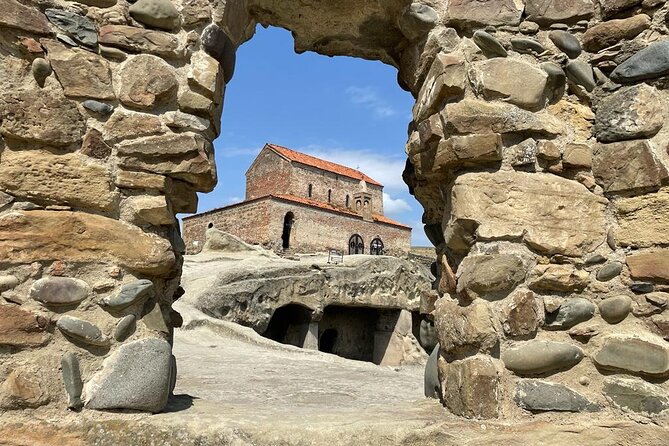
The final major stop is Uplistsikhe, translated as Fortress of the Lord. The visit lasts about one hour, and the admission price is listed as 15 GEL per person.
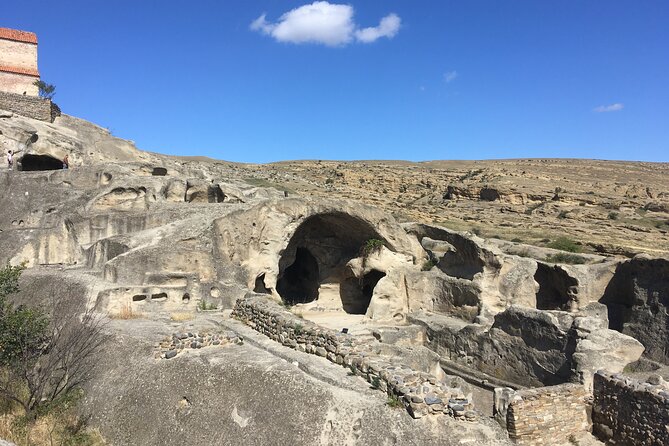
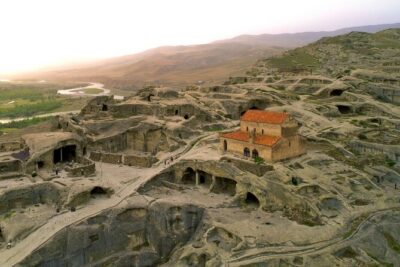
Uplistsikhe is an ancient town carved directly into rock. It sat along the old Silk Road and served as a strategic and commercial center. At its height, the city had a population of about 20,000, a striking figure when you are standing among the remaining chambers and carved spaces.
This is the most visually unusual stop of the day. Instead of entering a single grand building, you move through a wider complex of rooms, passages, and rock-cut areas. The setting helps you picture a working settlement rather than an isolated monument.
The hour gives you a useful introduction, but it is not an open-ended archaeological visit. Pay attention to the guide’s explanations because the remains can otherwise blur into stone walls and open spaces. The meaning of the site comes from knowing how it functioned as a trade and defense center.
You should also budget for the extra ticket before the day begins. Food and drinks are not included either, so carry money for the two paid sites and any refreshments you want along the way.
Uplistsikhe is a strong finish because it sends the tour back beyond the medieval churches and the Soviet period. You leave the route with a broad sense of how Georgia’s position between regions shaped its settlements and its past.
What the private vehicle changes
This is a private tour, so only your own group participates. Fuel, a driver-guide, hotel pickup, hotel drop-off, and the private vehicle are included.
That matters on a route with four separate stops. You do not need to work out a chain of buses, taxis, or train connections between Tbilisi, Mtskheta, Gori, and Uplistsikhe. You also have a guide with you for the full outing, rather than arranging separate explanations at each place.
The private setup can be especially useful if your group has a specific interest in one stop. You can ask for more explanation at Mtskheta, discuss the Stalin Museum, or use the drive for questions about Georgia. The schedule is still set at roughly seven hours, so private does not mean unlimited time.
One practical detail is that plans may sometimes change. A positive feature of the service is its willingness to handle changes without making the situation unpleasant. Still, it is wise to confirm the pickup details and keep some flexibility in your day.
The tour is listed as being near public transportation, but pickup and drop-off are provided. Most people can participate, according to the supplied information. No separate accessibility details are given, so anyone with specific mobility needs should ask the provider before booking.
Is $100 per person fair value?
At $100 per person, the price needs to be judged against what is included. You receive a private car, fuel surcharge, driver-guide, hotel pickup, and hotel drop-off. You also get a full day covering four significant sites beyond central Tbilisi.
The price does not cover lunch, drinks, or entrance fees. The two stated paid admissions total 30 GEL per person: 15 GEL for the Stalin Museum and 15 GEL for Uplistsikhe. Jvari and Svetitskhoveli are listed without admission charges.
For a solo visitor, $100 is a substantial day-trip cost. For a small private group, the value improves because the vehicle and guide serve the whole group, and group discounts are available. The convenience is also worth something. You are paying to connect several destinations without having to manage the transport yourself.
I would compare this with the cost and effort of arranging the same route independently. If you are comfortable handling transport and want to spend as long as possible at each site, a self-planned day may offer more control. If you value a guide and a direct route from your hotel, this package is easier.
Mobile ticketing is available, which should make the booking process simpler. Confirmation is received at the time of booking.
Who should book this day trip?
I think this tour suits you best if you are staying in Tbilisi and want one concentrated day outside the capital. It is a good fit for first-time visitors who want a broad introduction to Georgian religious, royal, Soviet, and ancient sites.
It also suits small groups that prefer their own vehicle. The private format avoids the social uncertainty of a large group and gives you a better chance to ask questions along the way. Guides such as Irakli and Davit have been noted for pleasant communication and for adding stories to the route.
You may want a different plan if your main goal is a slow visit to just one place. An hour at the Stalin Museum and an hour at Uplistsikhe are enough for an overview, not a specialist study. The same is true of the 30-minute Jvari visit.
Pack for a full day, budget separately for the 30 GEL in listed admission fees, and do not assume lunch is supplied. The 10:00 am start gives you a manageable morning departure, while the return to the Tbilisi meeting point keeps the day simple.
My booking verdict
I would book this tour if I wanted to see Jvari, Mtskheta, Gori, and Uplistsikhe in one day without arranging transport myself. The route has real variety, and the private vehicle makes the price easier to justify for two or more people, especially if a group discount applies.
I would skip it only if you prefer a slower schedule or care mainly about the Stalin Museum. For most visitors with limited time in Tbilisi, the combination is the main strength: a hilltop monastery, a former capital, a Soviet birthplace museum, and an ancient rock-cut town, all before returning to the city.
FAQ
Where does the tour start?
The tour starts in Tbilisi, Georgia, at 10:00 am. Hotel pickup is included.
Where does the tour end?
The activity ends back at the meeting point in Tbilisi. Hotel drop-off is included.
How long does the tour last?
The tour lasts approximately seven hours.
Is this a private tour?
Yes. Only your own group participates, and transportation is provided by private vehicle.
What sites are included?
The route includes Jvari Monastery, Mtskheta and Svetitskhoveli Cathedral, the Stalin Museum in Gori, and Uplistsikhe Cave Town.
Are entrance tickets included?
No. Extra entrance fees are not included. The listed prices are 15 GEL per person for the Stalin Museum and 15 GEL per person for Uplistsikhe.
Is lunch included?
No. Lunch, food, and drinks are not included.
Is transportation included?
Yes. The price includes a private vehicle, fuel surcharge, driver-guide, hotel pickup, and hotel drop-off.
Can I cancel for a full refund?
Yes, if you cancel at least 24 hours before the experience start time. Cancellations made less than 24 hours before the start time are not refunded.
Are group discounts available?
Yes. Group discounts are offered, though the specific discount amount is not provided.
Just added around Tbilisi
- Old tbilisi walking tour & wine tasting★ 5.0 · 9 reviews
- Tbilisi Airport to Gudauri, Bakuriani, Batumi, Tbilisi★ 5.0 · 3 reviews
- Private Adorable City Tour of Tbilisi★ 5.0 · 3 reviews
- Vardzia. Lake Paravani, Khertvisi & Lomisa castle, Rabati★ 4.5 · 12 reviews
- full day Kazbegi-Gudauri-jvari -from Tbilisi★ 5.0 · 6 reviews
- Your unique photo session in Tblisi, Georgia★ 3.5 · 4 reviews
- Private Wine Tour In Kakheti Region with 7 Wines and Lunch★ 5.0 · 3 reviews
- Wine promenade in hospitable Tbilisi★ 5.0 · 17 reviews
Mtskheta Tours, compared.
Mtskheta,Jvari,Bazaar,wine tasting,Chronicles of Georgia
Read our review →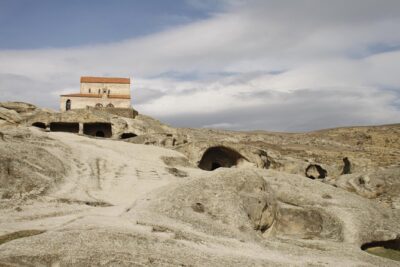
Mtskheta, Jvari, gori, uflistsikhe, history and panorama (group tours)
Read our review →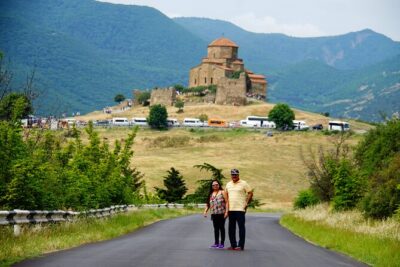
Jvari-Uplistsike-Chronicle of Georgia, PRIVATE Trip
Read our review →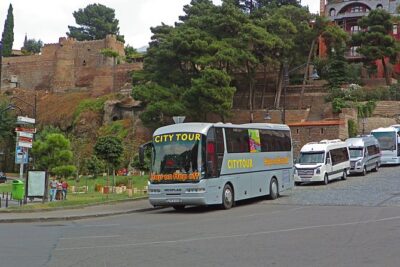
Mtskheta – Jvari. Full City Tour on Hop On Hop Off Bus
Read our review →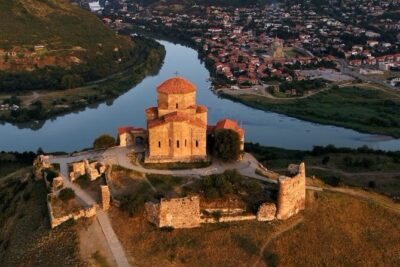
Ancient Georgia Group Tour: Mtskheta,Jvari, Gori, Uplistsikhe
Read our review →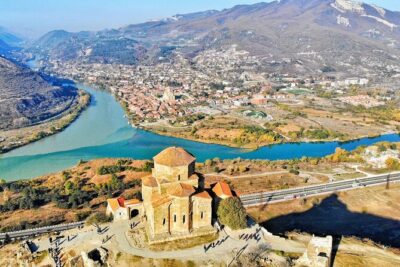
Ancient Mtskheta and Chronicle of Georgia half day tour
Read our review →Browse the lists this tour appears in