
Reviewed · MTSKHETA TOURS
Private Walking Tour in Tbilisi and Mtskheta Old Town
Tbilisi and Mtskheta tell Georgia’s story in two very different settings: one is a lively capital built around steep hills and the Mtkvari River, while the other is the country’s ancient capital, with churches and river views spread across open hills. This private tour links both places in a single half-day, with guide Giorgi providing the historical and political context that can be hard to find on your own.
I like the way the tour combines Tbilisi’s compact Old Town with the wider views from Narikala Fortress and the cable car. I also like the private format, since you can explore with only your own group and travel to Mtskheta by private car rather than joining a large coach.
The main consideration is pace. Four to five hours is enough for an introduction, but not enough for long visits at every stop. You will also spend much of the day on your feet, with hills, church courtyards, and fortress paths involved.
Key points to know before booking
- Two historic cities in one half-day: See central Tbilisi and ancient Mtskheta without arranging separate transport.
- Guide Giorgi leads the experience: The tour is offered in English, with a strong focus on history and politics.
- The cable car is included: You get a quick ride above Tbilisi Old Town and access to broad city views.
- Private car to Mtskheta: The drive from Tbilisi takes about 30 minutes, keeping the route efficient.
- A private group only: Your party does not share the activity with other groups.
- Free cancellation up to 24 hours ahead: Changes made inside the final 24 hours are not accepted.
Why this route works so well
The best feature here is the contrast between Tbilisi and Mtskheta. Tbilisi gives you layers of religious communities, urban life, fortifications, and river valleys in a small area. Mtskheta offers a quieter historical setting centered on major Georgian churches.
That contrast makes the tour useful if you have limited time in Georgia. Instead of spending a full morning only in the capital, you also reach the country’s former capital and see how the two places relate to one another.
I would especially consider this tour if you want more than pretty buildings. One available review singled out the guide’s attention to history and politics, which is a good match for Georgia. The country’s past is tied to shifting borders, faiths, rulers, and outside powers, so an English-speaking guide can add much more than directions between monuments.
The route is also sensible geographically. It begins around Liberty Square in Tbilisi, covers the Old Town, uses the aerial tramway to reach the upper part of the city, and then moves by private car to Mtskheta. After exploring there, you return to Tbilisi by car.
More Mtskheta and Jvari trips:
- Day Trip to Mtskheta Gori and Uplistsikhe
★ 5.0 · 1,801 reviews - Tbilisi:Mtskheta,Jvari,Bazaar,wine tasting,Chronicles of Georgia
★ 5.0 · 730 reviews - Mtskheta-Gori-Uplistsikhe
★ 5.0 · 112 reviews
Anchiskhati Basilica and Tbilisi’s oldest building
The first stop is Anchiskhati Basilica, described as the oldest building in Tbilisi. The visit is scheduled for about 10 minutes, so expect a brief introduction rather than a long architectural study.
That short stop still matters. Starting here gives you an immediate sense that Tbilisi is not a modern city with a few old buildings added around the edges. Its central streets contain religious sites that reach back to the earliest layers of the city.
Admission is free. Since the visit is short, I would pay attention to Giorgi’s explanation and use the stop to get your bearings before the route becomes busier and more varied.
Sioni Cathedral and Tbilisi’s close religious mix
Sioni Cathedral is another of Tbilisi’s oldest sites, with about 15 minutes planned here. The unusual part is the surrounding religious mix. A Muslim mosque, Armenian church, Jewish synagogue, and Catholic church are nearby, and the tour includes visiting these sites as well.
This is one of the most valuable parts of the route because it gives you a direct look at the city’s religious geography. Rather than presenting Tbilisi as a single-faith destination, the stop shows how several communities have occupied the same urban center.
The time allowance is still tight. You should expect a focused walk and explanation, not extended visits inside each religious building. Dress and behave respectfully at all religious sites, and follow any local rules about entry.
Jan Shardeni Street and old-meets-new Tbilisi
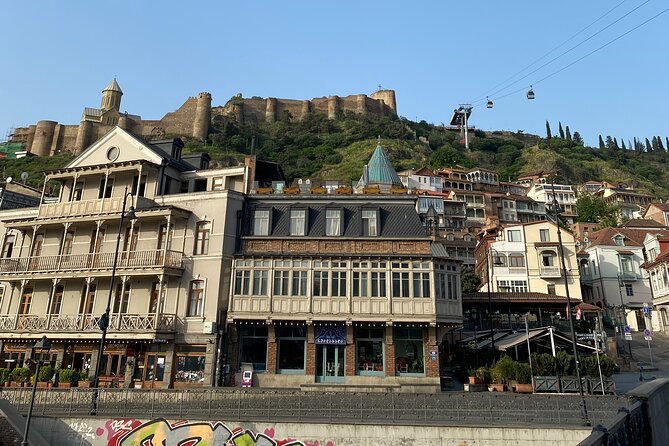
Jan Shardeni Street takes about 15 minutes. Named for Jean-Baptiste Chardin, the street represents the meeting of old and new ways of life in Tbilisi.
This is a useful transition between the city’s historic monuments and its present-day social scene. You will see how restored old streets can serve modern life while remaining part of the traditional center.
The stop is best understood as a quick orientation rather than a shopping or dining session. If you want a long meal, café break, or extended wandering here, you would need to return on your own later. The tour keeps moving because Mtskheta is still ahead.
More walking tours in Tbilisi:
- Tbilisi Walking Tour Including Cable Car and Traditional Bakery
★ 5.0 · 1,310 reviews - Tbilisi:Evening Walking & Talking Tour with Wine & Boat Ride
★ 5.0 · 572 reviews - Old Tbilisi Highlights walking tour with wine & 10 tastings
★ 5.0 · 276 reviews - Old Tbilisi Tour: Private Walking Tour With Wine Tasting
★ 5.0 · 273 reviews
Metekhi Cathedral above the Mtkvari River
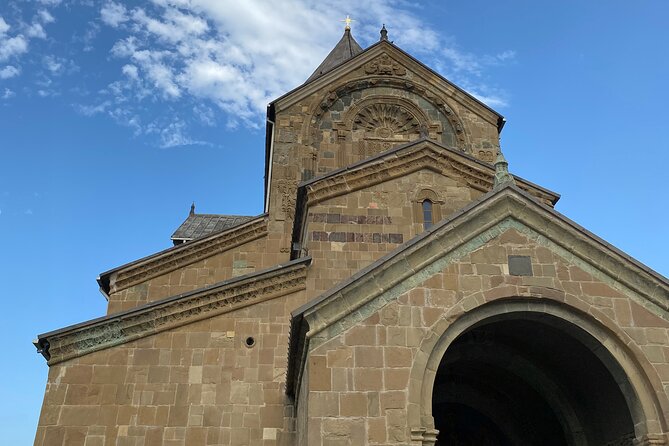
The route continues to Metekhi Cathedral on the left bank of the Mtkvari River. The church is associated with the Virgin Mary, and its yard includes a statue of King Vakhtang Gorgasali, identified here as the fifth-century ruler who built a strong castle and the first church at the site.
The setting is important. This is not simply another church interior. The river, raised position, churchyard, and statue create one of the clearest historical viewpoints in central Tbilisi.
You get about 15 minutes here. That should be enough to see the church and its surroundings, but not enough for a slow visit. If you enjoy city views, keep an eye on the setting around the building rather than focusing only on the facade.
Riding above the Old Town by aerial tramway
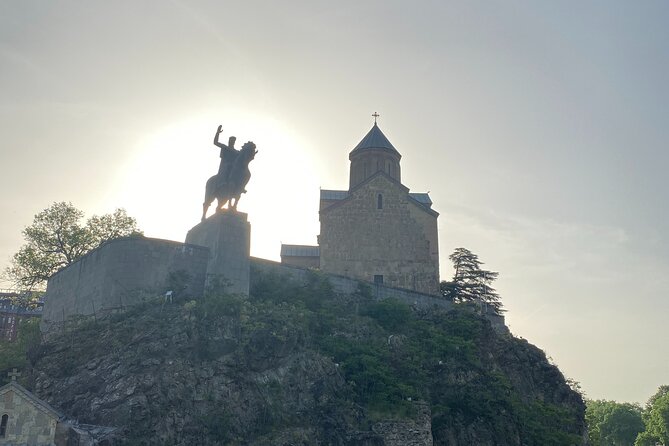
The Tbilisi aerial tramway is included in the tour, and the scheduled visit lasts about 15 minutes. The cable car offers a quick way to rise above the Old Town and see the city from a different angle.
I like this part because it changes the rhythm of the tour. Much of the first section takes place at street level, among churches and narrow historic roads. The tramway gives you a broader view before you reach Narikala Fortress.
The short timing means this is mainly a transport and sightseeing segment. You should not expect a long cable-car excursion. Still, including the ride is practical, since it avoids making the walk to the fortress entirely uphill and adds a memorable view without requiring a separate ticket.
Narikala Fortress and the best Tbilisi views
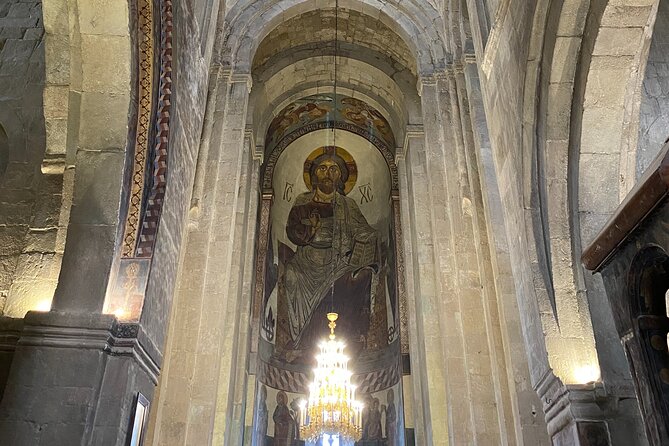
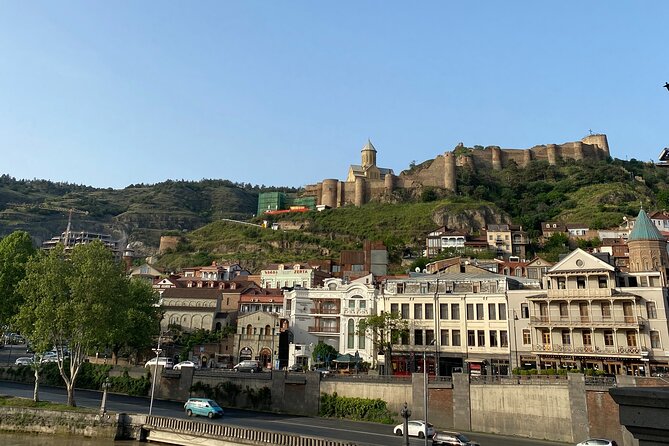
Narikala Fortress receives the longest Tbilisi stop, about 40 minutes. This ancient fortress overlooks the capital and the Mtkvari River, and its earliest walls are also connected with King Vakhtang Gorgasali.
Fortresses make sense only when you see their position, and Narikala is valuable for exactly that reason. From above, the city’s layout becomes easier to understand. You can connect the river, the Old Town, the churches, and the hills in one view.
This stop also requires practical planning. Fortress ground and hill paths can be uneven, and you will be walking outdoors. Comfortable shoes are a sensible choice. The tour data says most people can participate, but the route is not a seated sightseeing trip.
Admission to the fortress is free. The 40-minute stop gives you enough time for the main views and a guided explanation, though not for an unhurried exploration of every corner.
The 30-minute drive to ancient Mtskheta
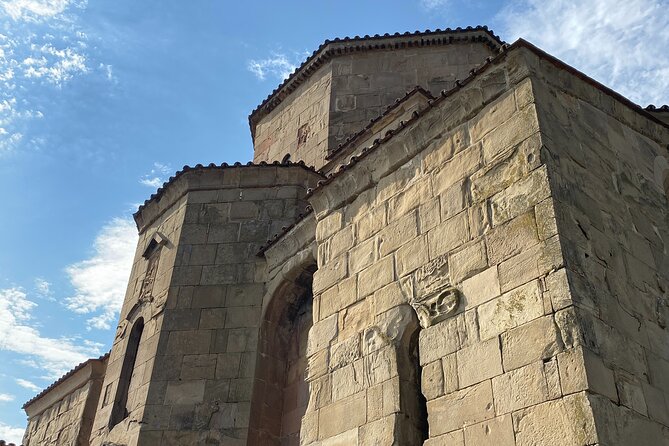
After the Tbilisi portion, the whole group travels to Mtskheta by private car. The drive takes about 30 minutes from Tbilisi.
This transfer is one of the tour’s practical strengths. You do not have to work out a separate journey between the capital and Mtskheta, and the private format keeps the move relatively simple. It also lets you cover two destinations that would otherwise require more planning.
The change of setting is part of the appeal. Tbilisi is a capital with a busy urban identity. Mtskheta is described as the most ancient capital of Georgia, and its major sights are centered on historical churches and elevated viewpoints.
The tour begins again from the gates of Mtskheta, then returns to Tbilisi by car after the visits. Since the entire activity lasts about four to five hours, you should expect a fairly full schedule.
Jvari Church and the meeting of two rivers
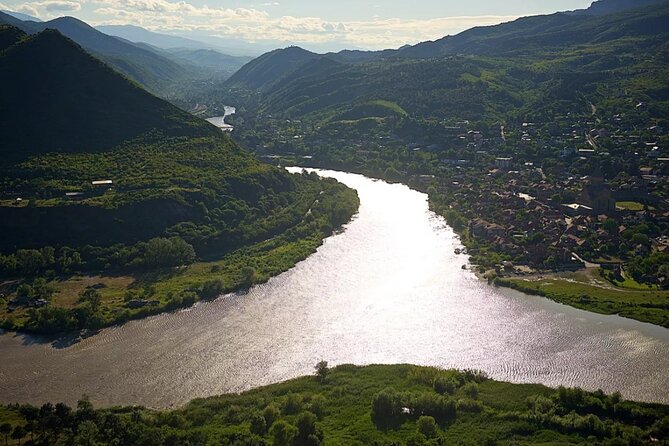
Jvari Church is allotted about an hour, making it one of the two major Mtskheta stops. The site includes a fourteenth-century building, ancient castle walls, and a view of the meeting point of the Mtkvari and Aragvi rivers.
The view is the main reason this stop matters. From the hill, Mtskheta spreads below you, and the two rivers provide a clear geographic marker. This is the sort of place where a guide’s explanation helps you read the setting rather than simply take a photograph.
The church also adds architectural and historical weight. You get both the building and the remains of the castle walls, so the stop is not limited to one monument.
Because Jvari is on higher ground, you should be ready for outdoor walking and exposure to the elements. The supplied details do not specify how much walking is required from the vehicle, so ask Giorgi at the start if you need to plan around mobility concerns.
Svetitskhoveli Cathedral in Mtskheta
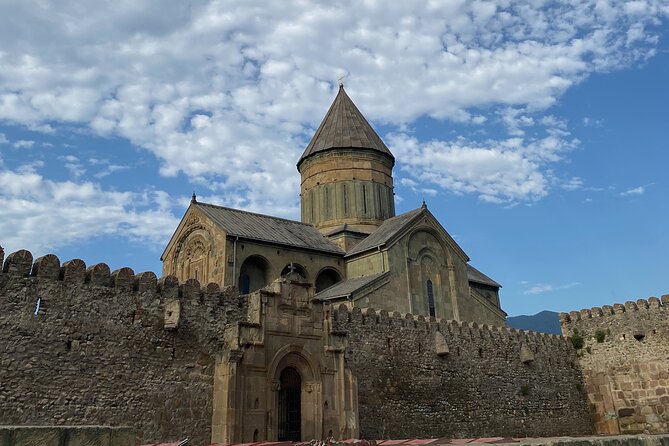
The final major visit is Svetitskhoveli Cathedral, also allotted about an hour. The walking tour in Mtskheta includes this cathedral, along with the broader views from Jvari Monastery.
Svetitskhoveli is the natural finishing point for the Mtskheta section. After seeing the town from above at Jvari, you move into its historic center and experience the place at street level. The one-hour allowance gives you more breathing room than the short Tbilisi church stops.
I would treat this as a good place to ask questions. If your interest is Georgian history, religion, or politics, the cathedral and the former-capital setting provide useful subjects for a longer conversation with Giorgi.
Admission is free. As with the other religious sites, respectful clothing and behavior are wise, even though no special dress rules are provided in the tour details.
What the private format adds
A private tour changes the experience more than the word private might suggest. You are not sharing the guide with unrelated participants, so the pace belongs to your group. That can be useful when you want to ask about Georgian politics, historical figures, or the religious communities around Sioni Cathedral.
It also makes the transport arrangement easier. The group travels together by private car to Mtskheta and returns to Tbilisi the same way. You are not left to connect the two cities by public transport after the Old Town portion.
The tradeoff is that you have less freedom to leave the route. This is a fixed half-day itinerary with eight listed stops, and the time at several locations is short. If you prefer spending two hours in one cathedral or wandering without a schedule, a private guide for a longer custom visit may suit you better.
Is $55 a fair price?
At $55 per person, the value depends on how much planning you want to avoid. The price covers a four-to-five-hour private activity, an English-speaking guide, the cable-car ticket, and private-car transport between Tbilisi and Mtskheta.
You also receive a route that combines multiple churches, a fortress, an elevated city view, and two historic towns. Admission at the listed religious and fortress sites is free, but the real cost value is the guide’s time and the transportation between places.
For a solo visitor, $55 is a larger personal expense than it would be for a couple or small group. For two or more people, the private format becomes easier to justify, especially if you would otherwise need to arrange a separate trip to Mtskheta.
The tour is most worthwhile for someone who values context and convenience. If you only want to see the sights quickly and do not need explanations, independent transport may cost less. If you want Giorgi to connect the sites and handle the transfer, the price is more reasonable.
Who should book this Tbilisi and Mtskheta tour?
I would recommend it to first-time visitors who want a strong introduction to both places. It is also a good fit for people interested in Georgia’s religious mix, political past, and major historic figures.
History-minded couples, families, and small groups should appreciate the private format. The activity is offered in English, mobile tickets are available, pickup is offered, and service animals are allowed. Most people can participate, but the amount of walking and the hilltop fortress and church settings should be considered.
I would be more cautious about booking it if you want a relaxed day with long meal stops, extensive shopping, or time to explore each church in detail. The route is efficient, but it is not slow.
Should you book it?
Book this tour if you want Tbilisi and Mtskheta in one organized outing, especially if history and politics are high on your list. Giorgi’s role is central to the experience, and the strongest available praise focuses on how informative and engaging the historical side can be.
Skip it if you already know both cities well or prefer to set your own pace. For everyone else, the combination of Old Town churches, the aerial tramway, Narikala Fortress, Jvari’s river view, and Svetitskhoveli Cathedral makes $55 a sensible price for a compact introduction to Georgia’s past.
FAQ
How long does the tour last?
The tour lasts approximately four to five hours.
Where does the tour begin?
It starts around Liberty Square, with visits to Tbilisi Old Town sites.
Is pickup available?
Yes, pickup is offered. The tour information identifies the starting area as around Liberty Square.
Is the tour conducted in English?
Yes, the tour is offered in English.
Is this a private tour?
Yes. Only your group participates in the activity.
How do you travel from Tbilisi to Mtskheta?
The group travels by private car, and the drive takes about 30 minutes.
Is the aerial tramway ticket included?
Yes, admission for the Tbilisi aerial tramway is included.
Are entrance tickets included at the churches and fortress?
Admission is listed as free for Anchiskhati Basilica, Sioni Cathedral, Metekhi Cathedral, Narikala Fortress, Jvari Church, and Svetitskhoveli Cathedral.
Can I cancel for a full refund?
Yes, you can cancel up to 24 hours before the experience starts for a full refund. Cancellations or changes made less than 24 hours before the start time are not accepted.
Just added around Tbilisi
- Tbilisi Airport to Gudauri, Bakuriani, Batumi, Tbilisi★ 5.0 · 3 reviews
- Private Adorable City Tour of Tbilisi★ 5.0 · 3 reviews
- Old tbilisi walking tour & wine tasting★ 5.0 · 9 reviews
- Vardzia. Lake Paravani, Khertvisi & Lomisa castle, Rabati★ 4.5 · 12 reviews
- full day Kazbegi-Gudauri-jvari -from Tbilisi★ 5.0 · 6 reviews
- Private Wine Tour In Kakheti Region with 7 Wines and Lunch★ 5.0 · 3 reviews
- Wine promenade in hospitable Tbilisi★ 5.0 · 17 reviews
- Your unique photo session in Tblisi, Georgia★ 3.5 · 4 reviews
Mtskheta Tours, compared.
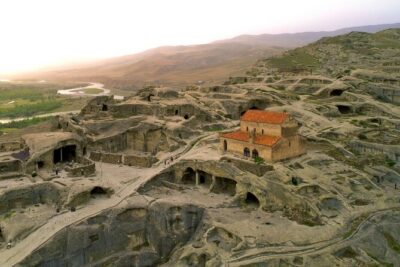
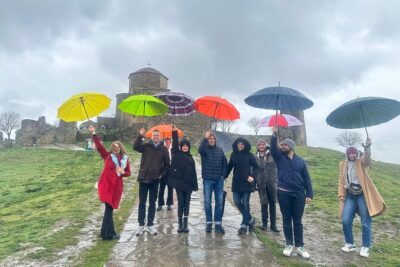
Mtskheta,Jvari,Bazaar,wine tasting,Chronicles of Georgia
Read our review →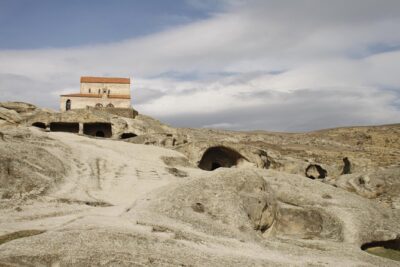
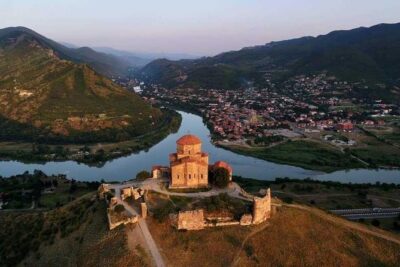
Mtskheta, Jvari, gori, uflistsikhe, history and panorama (group tours)
Read our review →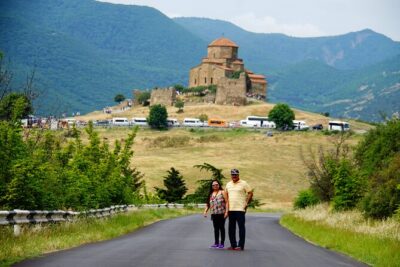
Jvari-Uplistsike-Chronicle of Georgia, PRIVATE Trip
Read our review →
Mtskheta – Jvari. Full City Tour on Hop On Hop Off Bus
Read our review →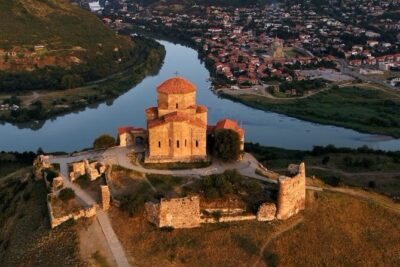
Ancient Georgia Group Tour: Mtskheta,Jvari, Gori, Uplistsikhe
Read our review →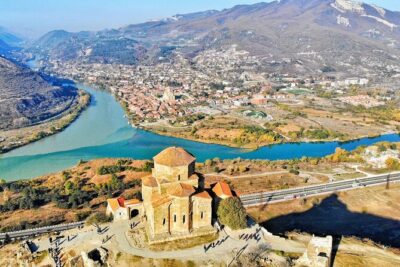
Ancient Mtskheta and Chronicle of Georgia half day tour
Read our review →Browse the lists this tour appears in