
Reviewed · MTSKHETA TOURS
Mtskheta, Jvari, gori, uflistsikhe, history and panorama (Private tours)
The most striking thing about this private tour is the sweep of Georgian history packed into one day. You move from the ancient cave city of Uplistsikhe, shaped by pagan worship and Bronze Age trade, to the Christian churches of Mtskheta, then on to Gori and its complicated Stalin connection.
I like the strong contrast between the sites and the personal format. You get the sweeping Aragvi and Kura river views from Jvari Church, then time to explore Mtskheta’s sacred buildings without being tied to a large coach group. Guides Nino and Giorgi Beruashvili are named as especially warm and attentive, with Giorgi also handling the driving.
The main drawback is the pace. Nine hours is a full day, and adding the optional Stalin Museum gives you even more history but less breathing room. Lunch is not included, and the extra entrance fees for Gori and Uplistsikhe should be confirmed before you set out.
Key points at a glance
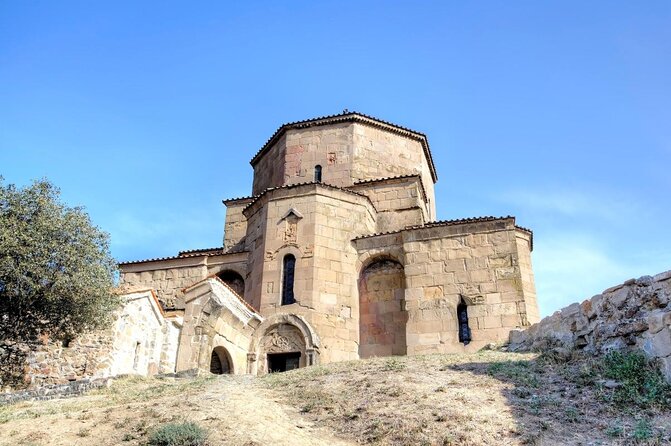
- Jvari gives you the classic Mtskheta panorama: You look down on the meeting point of the Aragvi and Kura rivers from a sixth-century church.
- Mtskheta covers Georgia’s early Christian story: Svetitskhoveli Cathedral and Samtavro Church connect royal history, saints, and important religious traditions.
- Uplistsikhe supplies the ancient counterpoint: Its rock-cut rooms and passageways offer a direct look at Georgia before Christianity.
- The Stalin Museum is optional: You can add Gori’s museum for 15 GEL, or keep the day focused on older Georgian history.
- The private setup changes the feel: Only your group takes part, with an air-conditioned vehicle, WiFi, pickup, and a dedicated guide.
- Expect a long but useful day: The tour lasts about nine hours and starts at 9:30 am from 3 Vakhtang Gorgasali Street in Tbilisi.
One day, several versions of Georgia
This tour works because its route is not just a list of monuments. It gives you a clear before-and-after story.
At Uplistsikhe, you see a settlement shaped by ancient religious customs, trade, and rock-cut building. At Mtskheta, you see the place where Christianity became central to Georgian royal and religious life. Gori adds a much more recent chapter through Joseph Stalin, who was born there.
I like this kind of day because the sites explain one another. The churches are not isolated buildings, and the cave city is not simply an unusual photo stop. Your guide can help connect the changes in worship, political power, and daily life across a very long stretch of Georgian history.
The route also gives you variety under pressure. You will not spend nine hours looking at similar churches. You will walk through an old religious center, visit a cathedral, see a smaller church complex, study a museum if you choose, and climb around ancient stone rooms.
More Gori and Uplistsikhe trips:
- Day Trip to Mtskheta Gori and Uplistsikhe
★ 5.0 · 1,801 reviews - Mtskheta-Gori-Uplistsikhe
★ 5.0 · 112 reviews - Mtskheta, Jvari, gori, uflistsikhe, history and panorama (group tours)
★ 4.5 · 107 reviews
Starting at Jvari and the river junction
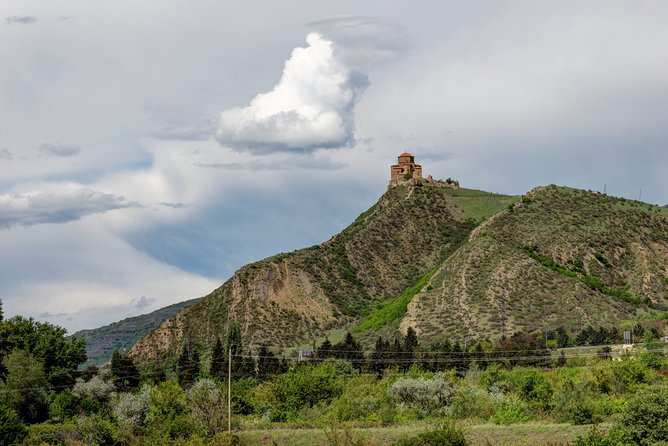
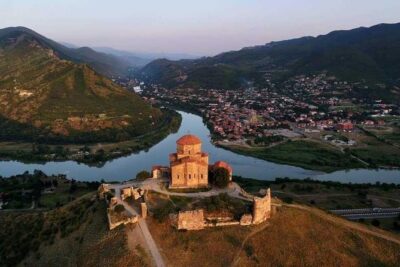
Jvari Church is the first major stop, with about an hour set aside for it and admission included.
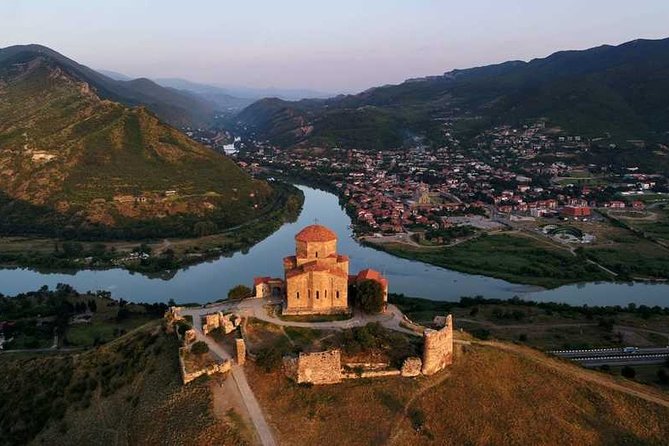
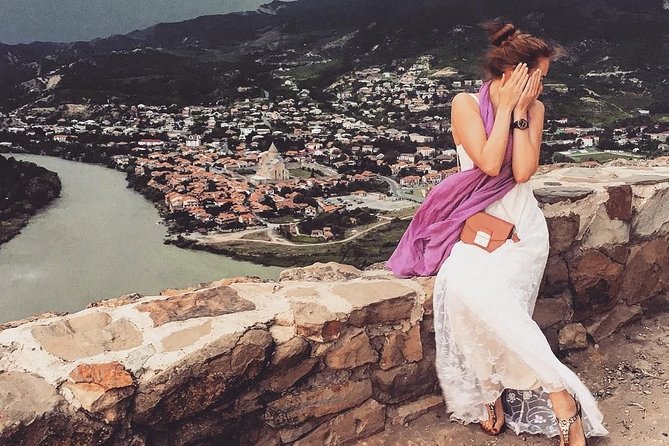
The church sits above Mtskheta and offers the view that makes this opening stop so effective. Below, the Aragvi and Kura rivers meet, creating a broad scene of water, hills, and historic settlement. The view is more than a pleasant backdrop. It explains why Mtskheta became such an important center in the first place.
The sixth-century church also places you in the early Christian period right away. According to the tour’s historical account, the walk and route connect with places associated with the poem Mtsyri by Mikhail Lermontov. The description also links the area with literary and artistic figures including Pushkin, Lermontov, Tchaikovsky, Dumas, and Tolstoy.
You do not need to know those names in advance to enjoy Jvari. Still, the literary connection gives the viewpoint another layer. You are seeing the same dramatic setting that has inspired writers and artists, not just stopping at a church for a quick photograph.
The hilltop location means you should expect the view to be a major part of the visit. If you prefer a slow, detailed look at every architectural feature, an hour may feel brief. If you want a powerful opening image and a clear introduction to Mtskheta, the timing makes sense.
Svetitskhoveli and the spiritual center of Mtskheta
The next hour belongs to Svetitskhoveli Cathedral, Mtskheta’s patriarchal cathedral and one of the main religious sites on the route. Admission is included.
The cathedral is tied to the Georgian Orthodox Church and to major religious traditions. The tour presents it as the burial place of important Christian relics, including the tunic of Jesus Christ, the mantle of the Prophet Elijah, and relics associated with Saint Andrew the First-Called.
Those traditions matter because they help explain why Mtskheta is more than an old capital or a pretty town. This is a place where Georgian Christianity is tied to national identity, royal power, and pilgrimage. Your guide’s role is important here. A building of this age can feel hard to read without someone explaining which details carry religious or historical weight.
Plan to pay attention to the mood of the space, not only the stonework. The cathedral is an active religious place, so respectful clothing and behavior are sensible, even though the tour information does not list a formal dress code.
An hour gives you enough time for an organized introduction and a look around. You may want more time if you prefer to sit quietly or study every corner. The private format helps because your guide can adjust the explanation to your interests instead of delivering a fixed speech to a large crowd.
Samtavro Church and the Georgian royal story
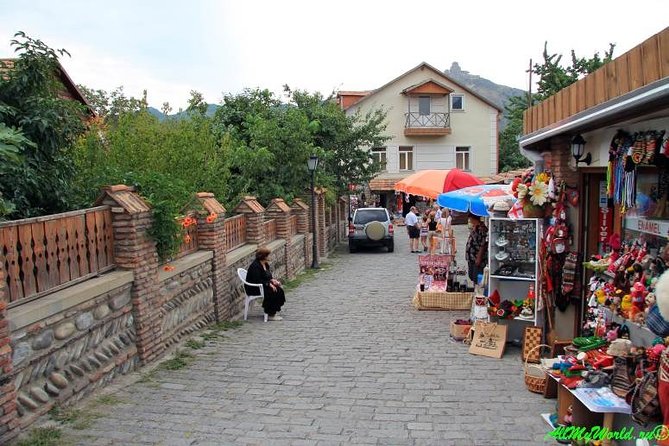
Samtavro Church receives about 30 minutes. That is a shorter stop, but it adds important names and traditions to the Mtskheta visit.
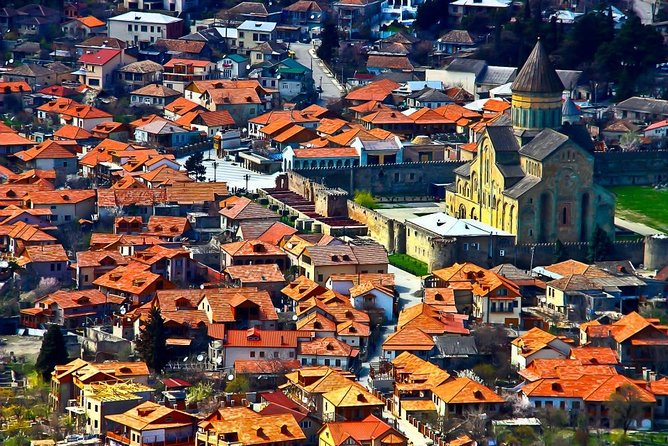
The complex is connected with King Mirian, described as Georgia’s first Christian king, and his wife, Queen Nana. Their graves place the adoption of Christianity into a royal setting. You are not only hearing that Georgia became Christian. You are seeing how that change is linked to the people who ruled the country.
Samtavro is also associated with Saint Nino and the elder Gabriel Samtavrii. A blackberry bush connected with Saint Nino is described as miraculous because it repeatedly grew back after being cut down.
That detail gives the visit a more personal and local feel. Grand cathedrals can make history seem distant. A sacred tree or bush tied to a preacher’s story brings the tradition closer to everyday belief.
The 30-minute stop should be enough for a focused visit, especially if your guide explains the key figures before you arrive. It is not a long independent exploration period. If you want to linger at every religious site, the schedule may feel brisk, but the short visit keeps the entire day from becoming too heavy.
More Mtskheta and Jvari trips:
- Tbilisi:Mtskheta,Jvari,Bazaar,wine tasting,Chronicles of Georgia
★ 5.0 · 730 reviews - Mtskheta-Jvari-Uplistsike-Chronicle of Georgia, PRIVATE Trip
★ 5.0 · 105 reviews - Tbilisi – Mtskheta – Jvari. Full City Tour on Hop On Hop Off Bus
★ 4.5 · 91 reviews - Ancient Georgia Group Tour: Mtskheta,Jvari, Gori, Uplistsikhe
★ 4.5 · 73 reviews
Choosing the Stalin Museum in Gori
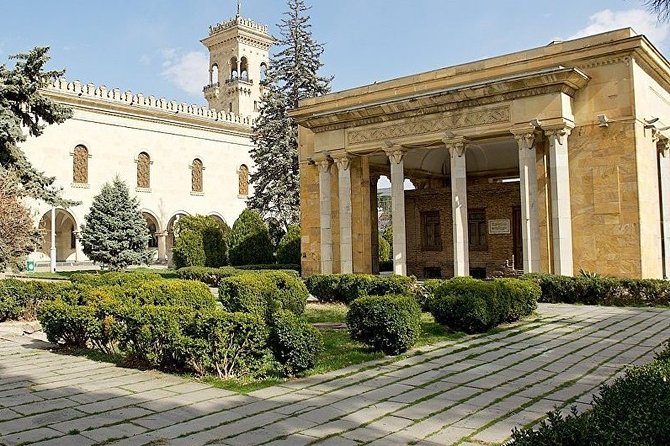
Gori appears in the second half of the route, and the Stalin Museum is offered at the group’s request. The museum visit lasts about an hour, but its 15 GEL ticket is not included.
This is the point where you choose what kind of history you want to add. The museum presents Stalin through preserved sculpture, personal belongings, furniture, and a guided museum visit. It offers a look at the Soviet leader’s connection to his hometown.
The attraction may interest you if you want to understand how Georgia handles one of its most famous and controversial historical figures. It is also a clear change of tone from the churches and ancient ruins earlier in the day.
You should ask the guide about the timing before committing. The tour already includes several stops, and the museum adds another hour plus the entry fee. If your main goal is early Georgian history, you might prefer to keep Gori brief and preserve energy for Uplistsikhe. If twentieth-century political history matters to you, the museum gives the day a wider scope.
The fact that the visit is optional is useful. You do not have to pay for or enter a museum that does not fit your interests. Since the decision is made at the request of the group, a private party can discuss the choice together rather than being split by a fixed public-tour schedule.
Walking through Uplistsikhe’s ancient rooms
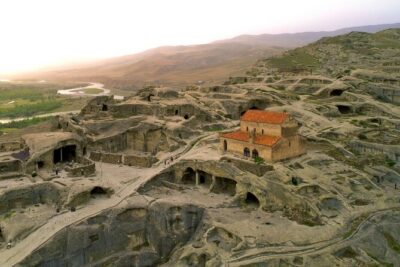
Uplistsikhe is the tour’s strongest contrast with Mtskheta. The site is described as a cave city dating from the end of the second millennium to the beginning of the first millennium BC. Its rock-cut rooms and stone passages show a world before Christianity took hold in Georgia.
You will move through living areas, utility rooms, and religious spaces cut into the rock. The value here is visual. Instead of hearing only about ancient pagan life, you can see the practical spaces where people worked, stored goods, and carried out rituals.
The site is also linked with trade involving ancient states such as Urartu and Media. Its rise and decline help place Georgia within wider regional networks. This is useful context because Uplistsikhe was not an isolated cave settlement. It had connections beyond its immediate valley.
The Kura Valley views are another reason to allow time here. The site combines archaeology with open views, so you get both close-up stonework and a sense of the surrounding region.
The tour description gives one hour for Uplistsikhe and lists a separate 15 GEL admission cost, even though another part of the supplied details refers to admission as free. Confirm the current fee before departure. That small check avoids an awkward surprise at the entrance.
You should also expect uneven walking through the complex. The information provided does not specify accessibility conditions, but rock-cut paths and stone passageways naturally call for sensible footwear and care. The tour is suitable for most participants, yet anyone who dislikes uneven ground should ask the provider for current details.
What the private format adds
The private arrangement is one of the strongest reasons to choose this experience over a standard shared outing. Only your group participates, and the tour includes an air-conditioned vehicle, onboard WiFi, pickup, and a highly qualified guide.
Those features matter on a nine-hour route. You will spend substantial time moving between Tbilisi, Mtskheta, Gori, and Uplistsikhe. Air conditioning is welcome, especially when the day includes outdoor walking and exposed stone sites. WiFi can also be handy during a long transfer, although the information does not promise a specific connection quality.
A private vehicle lets the day feel less rigid. You can discuss the optional museum, ask for more explanation at Mtskheta, or move on when you have had enough of a stop. The exact amount of flexibility is still something to confirm with the provider, but the private format gives you a better chance of shaping the day around your group.
The guide can also change the experience from sightseeing to interpretation. Nino is specifically described as generous with useful information and very courteous. Giorgi Beruashvili is described as caring and attentive, while another note identifies Giorgi as the driver who handles the road quickly and carefully. Confirm who will lead your particular departure, since guide assignment can vary.
Food, timing, and the real cost
The listed price is $90 per person. For a private nine-hour outing with transportation, WiFi, pickup, and a guide, that can be a fair value, especially for a small group that wants a dedicated vehicle and a history-focused route.
The price does not include lunch. One useful detail from the experience is a positive mention of a café near the rock city, where the food was described as very good and inexpensive. Treat that as a possibility rather than a guaranteed meal arrangement, since lunch is not included and no fixed restaurant is specified.
You also need to budget for the extra entrance fees. The Stalin Museum is listed at 15 GEL, and Uplistsikhe is also listed with a 15 GEL additional ticket in the tour details. Because the Uplistsikhe information is inconsistent about admission, confirm the current amount before you go.
The start time is 9:30 am, with the stated meeting point at 3 Vakhtang Gorgasali Street in Tbilisi. Pickup is offered, so clarify the exact pickup location and time when booking. The experience is usually booked around 11 days ahead, which suggests you should not leave it until the last moment if your dates are fixed.
Free cancellation is available if you cancel at least 24 hours before the start time. Inside that window, the amount paid is not refunded, and last-minute changes are not accepted.
Who will enjoy this route most
I would choose this tour if you want a strong first look at Georgian history outside Tbilisi and prefer having one guide explain the connections. It suits couples, families, and small groups who value a private vehicle and do not want to manage several separate day trips.
It is especially good for you if:
- You want both pre-Christian and Christian Georgian history in one day.
- You enjoy viewpoints as much as monuments.
- You like having the option to add a museum rather than being forced into it.
- You want help making sense of religious traditions and ancient ruins.
- You are comfortable with a long schedule and some walking through stone sites.
I would think twice if you prefer slow travel with long meals and generous free time. The route covers a lot, and the nine-hour duration is not a minor detail. It is a full historical sweep, not a relaxed village day.
Should you book Mtskheta, Jvari, Gori, and Uplistsikhe?
Book it if you want maximum variety in a single private day. Jvari supplies the panorama, Mtskheta brings Georgia’s Christian story into focus, Gori offers an optional modern political chapter, and Uplistsikhe takes you back to an ancient pagan world.
The strongest choice is to keep the day flexible around your interests. If churches and archaeology are your priority, spend your attention on Jvari, Svetitskhoveli, Samtavro, and Uplistsikhe. If you want a wider historical arc, add the Stalin Museum and accept the longer, denser schedule.
Nino and Giorgi Beruashvili are the named guides connected with the warm, attentive style described for this experience. Still, confirm your guide and the entrance fees before departure. With that small preparation, the tour offers a practical and memorable way to see several very different sides of Georgia without arranging each stop yourself.
FAQ
How long does the tour last?
The experience lasts approximately nine hours and starts at 9:30 am.
Where does the tour start?
The listed ticket redemption point is 3 Vakhtang Gorgasali Street, Tbilisi 0105, Georgia. Pickup is also offered, so confirm the exact arrangement when booking.
Is the tour private?
Yes. Only your group participates in the activity.
Is lunch included?
No. Lunch is not included in the tour price. A café near Uplistsikhe is mentioned as a possible place to eat, but no fixed lunch arrangement is specified.
How much does the Stalin Museum cost?
The Stalin Museum ticket costs an additional 15 GEL. The museum visit is optional and is made at the request of the group.
Can I cancel for a full refund?
Yes, if you cancel at least 24 hours before the experience start time. Cancellations or changes made within 24 hours are not refunded.
More Historic Sites near Tbilisi
- Tbilisi old town & soviet heritage – Private driver-guided Tour
★ 5.0 · 83 reviews - A 6-Day Private Expedition into Rich Heritage
★ 5.0 · 34 reviews - Jewish Heritage Walking Tour with Kosher Wine Tasting
★ 5.0 · 15 reviews - Kazbegi-Ananuri-Gudauri: Epic Views & History (Group)
★ 5.0 · 15 reviews
Just added around Tbilisi
- Old tbilisi walking tour & wine tasting★ 5.0 · 9 reviews
- Tbilisi Airport to Gudauri, Bakuriani, Batumi, Tbilisi★ 5.0 · 3 reviews
- Private Adorable City Tour of Tbilisi★ 5.0 · 3 reviews
- Vardzia. Lake Paravani, Khertvisi & Lomisa castle, Rabati★ 4.5 · 12 reviews
- full day Kazbegi-Gudauri-jvari -from Tbilisi★ 5.0 · 6 reviews
- Private Wine Tour In Kakheti Region with 7 Wines and Lunch★ 5.0 · 3 reviews
- Wine promenade in hospitable Tbilisi★ 5.0 · 17 reviews
- Your unique photo session in Tblisi, Georgia★ 3.5 · 4 reviews
Mtskheta Tours, compared.
Mtskheta,Jvari,Bazaar,wine tasting,Chronicles of Georgia
Read our review →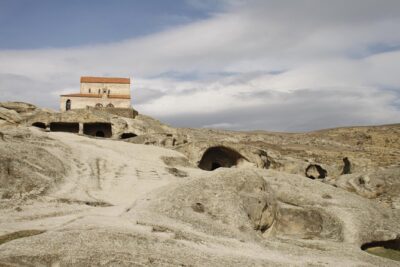
Mtskheta, Jvari, gori, uflistsikhe, history and panorama (group tours)
Read our review →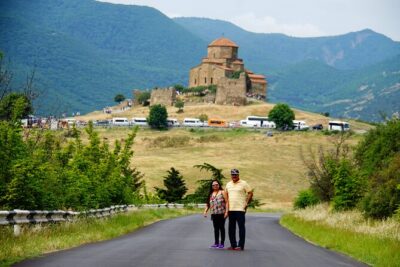
Jvari-Uplistsike-Chronicle of Georgia, PRIVATE Trip
Read our review →
Mtskheta – Jvari. Full City Tour on Hop On Hop Off Bus
Read our review →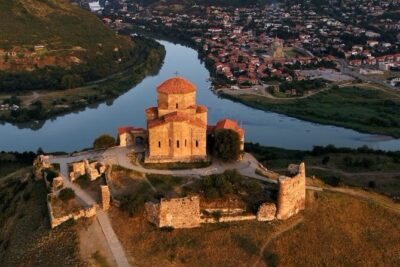
Ancient Georgia Group Tour: Mtskheta,Jvari, Gori, Uplistsikhe
Read our review →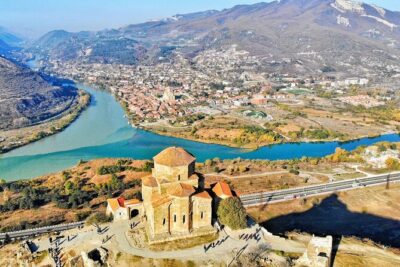
Ancient Mtskheta and Chronicle of Georgia half day tour
Read our review →Browse the lists this tour appears in