
Reviewed · MTSKHETA TOURS
Mtskheta – Jvari + Gori – Uplistsikhe Private Day Tour
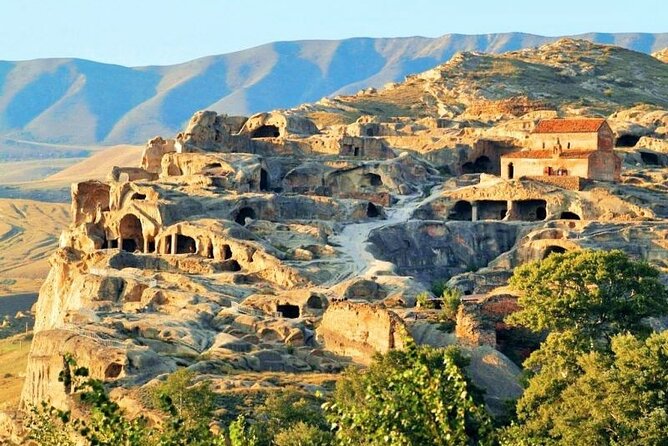
Uplistsikhe is the main event here: a 3,000-year-old cave city cut into rock, with tunnels, a sun temple, a winery, a church, and royal chambers. I like that the tour pairs it with Jvari’s hilltop river views and Mtskheta’s sacred Svetitskhoveli Cathedral. I also like the private car and hotel pickup, which make a long day simpler.
The main drawback is time. Four major stops in 8 to 9 hours leave little room for lingering, and Gori’s Stalin Museum may not suit every visitor. Add $10 per person for the two listed entrance fees, and plan for walking at the hilltop monastery and cave town.
Key points to know before booking
- Uplistsikhe is the highlight: Explore an ancient rock-cut settlement with caves, tunnels, religious spaces, and a former royal area.
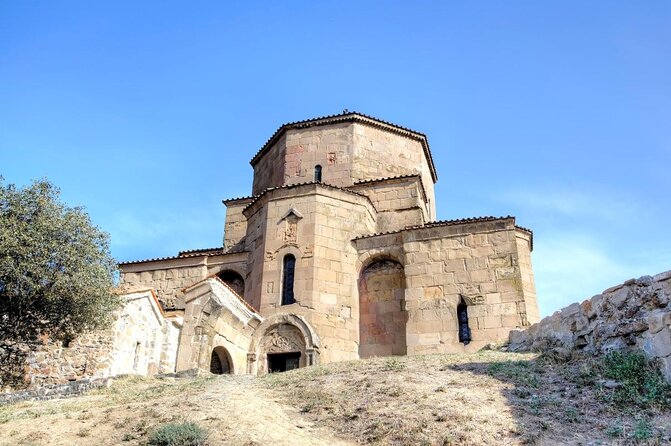
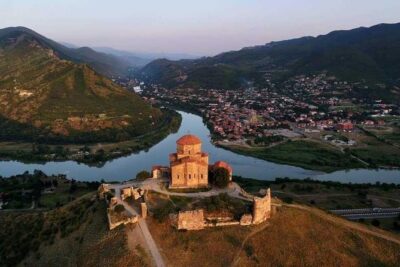
- Jvari gives you the best view: The 6th-century monastery sits above the meeting point of the Aragvi and Kura rivers.
- Mtskheta adds Georgia’s religious heart: Visit the former capital and Svetitskhoveli Cathedral, where Christ’s robe is traditionally said to be buried.
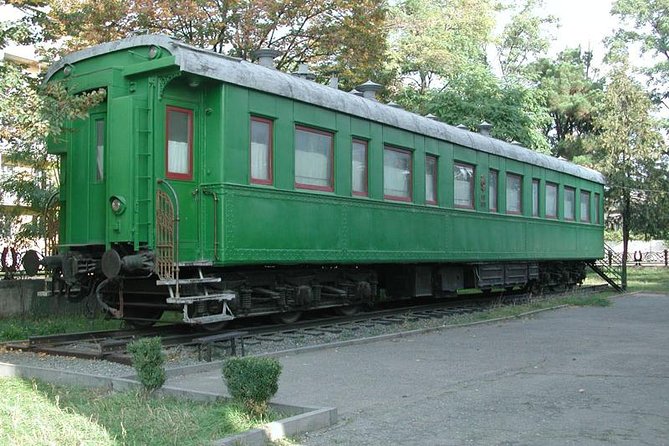
- Gori brings a difficult modern chapter: The Stalin Museum includes his childhood home, armored train, personal objects, photographs, and diplomatic gifts.
- The tour is genuinely private: Your group travels alone, with hotel or address pickup in Tbilisi and private transport.
- Budget another $10 per person: The Stalin Museum and Uplistsikhe entrance fees are not included in the listed price.
Four very different chapters of Georgia in one day
This private day tour works because the stops are not copies of one another. You move from a hilltop monastery to an ancient capital, then to a Soviet-era museum and finally to a rock settlement that reaches back thousands of years.
That range gives you a useful first look at Georgia. You see Orthodox religious culture, early state history, Soviet memory, and one of the country’s most unusual archaeological sites. The trade-off is a full schedule. This is not a slow village day with long meals and plenty of wandering.
The advertised price is $57.80 per person. For a private vehicle, hotel pickup and drop-off, onboard WiFi, and an English-speaking guide, that can be good value, especially if you are traveling with companions. The two listed admission charges add $5 for the Stalin Museum and $5 for Uplistsikhe, so budget $67.80 per person before any other spending.
More Gori and Uplistsikhe trips:
- Day Trip to Mtskheta Gori and Uplistsikhe
★ 5.0 · 1,801 reviews - Mtskheta-Gori-Uplistsikhe
★ 5.0 · 112 reviews - Mtskheta, Jvari, gori, uflistsikhe, history and panorama (group tours)
★ 4.5 · 107 reviews
Jvari Monastery and the meeting of two rivers
Your first stop is Jvari Monastery, a 6th-century church above Mtskheta. Its position is the real introduction. From the high ground, you look toward the meeting point of the Aragvi and Kura rivers and across the surrounding area.
Jvari means cross in Georgian. The guide explains the story behind the name at the site, which helps turn a quick photo stop into something more meaningful. The church itself is compact, old, and important to Georgia’s Christian tradition.
The planned visit is about 20 minutes, and admission is listed as free. That is enough for a look inside and a few minutes with the view, but not enough for a long, quiet visit. If you enjoy photographing churches, rivers, and broad views, this is one of the most rewarding short stops.
The hilltop location also means you should expect some outdoor walking. The tour does not provide a detailed accessibility description, so anyone with mobility concerns should ask Georgia Tour Factory what the current walking conditions are before booking.
Mtskheta, Georgia’s former capital
From Jvari, the tour continues to Mtskheta, an ancient town inhabited for about 2,500 years. It was once the capital of the early Kingdom of Iberia and is now a museum city with several important monuments.
The focus is Svetitskhoveli Cathedral, Georgia’s main Christian Orthodox cathedral. It is also one of the country’s most sacred places, traditionally associated with the burial place of Christ’s robe. The exact religious tradition matters here because Mtskheta is not simply an old town with attractive buildings. It remains a major spiritual center.
The scheduled visit lasts about 50 minutes. That should give you time for the cathedral and a quick look around, but it is a short introduction rather than a full archaeological visit. Other historic features connected with Mtskheta include Pompey Bridge, a stone bridge over the Kura River dating to the period of Pompey the Great, a church from the 4th or 5th century, and Bebris Castle, associated with the 1st century.
I like the way Mtskheta follows Jvari. You first see the old capital from above, then visit the town itself. That pairing gives the landscape and the history a clear connection. The limitation is that you cannot explore every monument in less than an hour, so listen closely to your guide and choose your priorities.
Gori and the Stalin Museum
Gori changes the tone of the day. It is the hometown of Joseph Stalin, the Soviet leader, and the stop centers on the Stalin Museum.
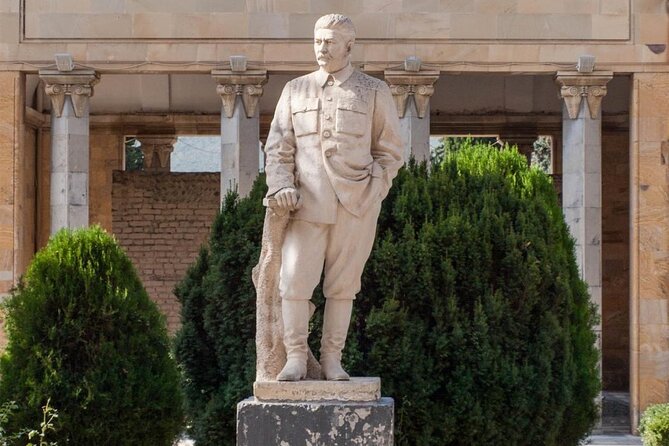
The museum includes the house where Stalin was born, his armored train, personal objects such as a pipe, chair, and sword, and photographs from different parts of his life. You can also see photographs connected with his early revolutionary activity and a hall displaying gifts sent from countries including Germany, Poland, China, and the United Kingdom.
This is not a light sightseeing stop. The museum presents a major political figure through personal objects, photographs, and official gifts, but the subject carries a great deal of historical weight. I would visit with an open mind and pay attention to what is displayed, what is emphasized, and what is left for your own judgment.
The planned time is one hour. That is enough to see the main exhibits, though the museum may hold your attention longer if you want to examine the photographs and objects closely. Admission costs $5 per person and is not included.
The Gori stop is valuable because it keeps the day from becoming a procession of ancient monuments. You get a look at Georgia’s 20th-century past, even though the subject may be uncomfortable. If your main interest is medieval churches or archaeology, you may find this the least appealing part of the route. If you want a broader understanding of Georgia, it earns its place.
More Mtskheta and Jvari trips:
- Tbilisi:Mtskheta,Jvari,Bazaar,wine tasting,Chronicles of Georgia
★ 5.0 · 730 reviews - Mtskheta-Jvari-Uplistsike-Chronicle of Georgia, PRIVATE Trip
★ 5.0 · 105 reviews - Tbilisi – Mtskheta – Jvari. Full City Tour on Hop On Hop Off Bus
★ 4.5 · 91 reviews - Ancient Georgia Group Tour: Mtskheta,Jvari, Gori, Uplistsikhe
★ 4.5 · 73 reviews
Uplistsikhe, the rock-cut city
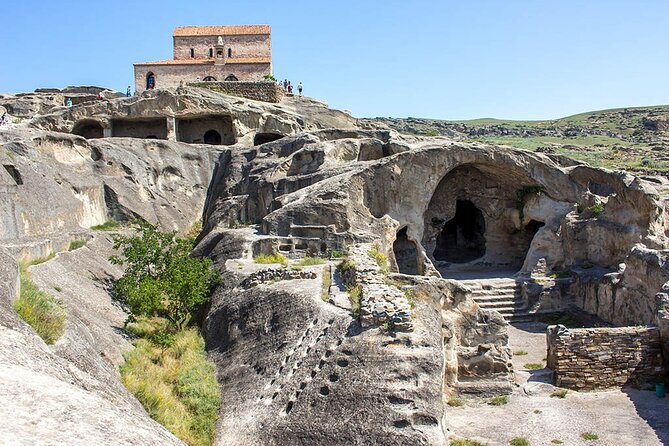
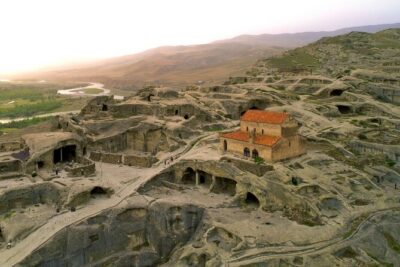
Uplistsikhe means Fortress of God. This ancient cave town is carved into rock and dates back about 3,000 years. It is the stop that gives the tour its strongest sense of discovery, not because it is obscure, but because its surviving spaces are so unusual.
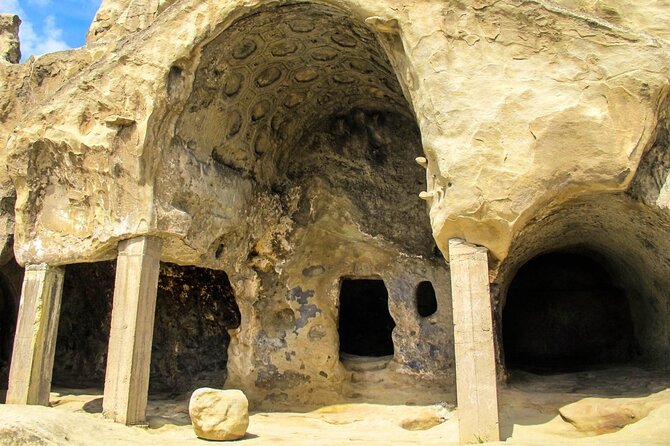
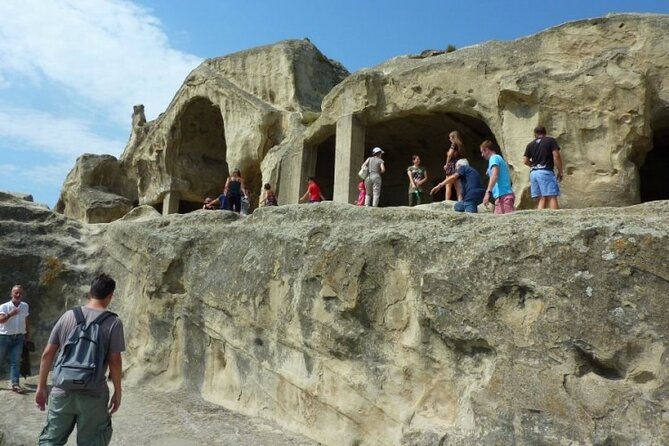
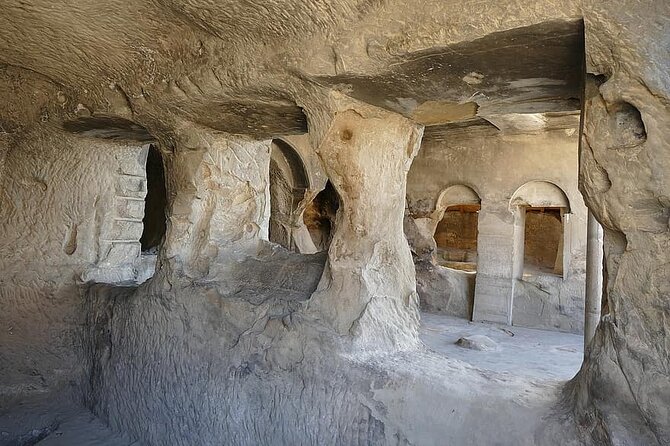
About 150 caves remain. During the visit, you can see a cave tunnel, an ancient sun temple, the royal cave linked with King Tamar, a winery, a 6th-century church, a library, and an ancient pharmacy. The site preserves buildings and religious spaces from several periods, so the story is not limited to one dynasty or one architectural style.
The planned visit is 1 hour and 30 minutes, the longest stop of the day. That is appropriate. Uplistsikhe needs time for walking, looking into the caves, and understanding how people used the rock-cut spaces. The surface can be uneven, and the site includes tunnels and elevated areas, so sensible shoes are a good idea. The tour information does not specify the exact access conditions, so ask ahead if you have mobility concerns.
Admission costs $5 per person. One participant also described adding wine tasting during the day, but that is not listed as an included feature, so treat it as a possible extra rather than a guaranteed part of the tour.
Uplistsikhe is especially good for anyone who wants more than a standard church-and-city excursion. It combines archaeology, religion, daily life, and dramatic stone spaces. You can picture the place as a functioning settlement rather than a pile of ruins, though the short visit still means you will see only part of what remains.
What the private format changes
A private tour gives you a quieter setup than a large coach excursion. Only your group participates, and pickup is available from any hotel or address in Tbilisi. That saves the trouble of finding a meeting point and makes the early start easier.
Private transport also matters on a route with four stops spread across the region. You can leave your bags in the vehicle, travel directly between sites, and ask your guide to explain what you are seeing along the way. WiFi is provided onboard, though the tour information does not promise a particular connection speed or coverage.
The guides named in the available information are George and Gogi. George is described as fluent in English, with clear communication, and Gogi is described as friendly and well informed. Those details matter because this tour depends on explanation. At Jvari and Mtskheta, a guide can connect the buildings to Georgia’s religious past. At Gori, a clear English explanation helps you approach a complicated subject. At Uplistsikhe, guidance can help you recognize a winery, temple, royal space, or pharmacy rather than seeing only holes in stone.
The tour is offered in English. Confirmation arrives at booking, and mobile tickets are supported.
How the timing feels across 8 to 9 hours
Eight to nine hours is a reasonable length for this route, but it is still a full day. The listed stop times add up to four hours, leaving the rest for driving, pickup, drop-off, and the natural pauses of a day on the road.
You should expect a structured outing rather than an open-ended day. Jvari gets about 20 minutes, Mtskheta 50 minutes, Gori one hour, and Uplistsikhe 90 minutes. That order gives the cave town the most attention, which makes sense if Uplistsikhe is your priority.
I would tell the guide early if one stop matters most to you. The tour is private, so your group has more room to discuss the pace than it would on a large group trip. Still, the route has a lot of ground to cover, and extra time at one stop may reduce time at another.
The best fit is someone who wants to see several major sites outside Tbilisi in one day and prefers a private car to arranging separate transport. It also suits a first visit when you want a broad introduction rather than a single-site excursion.
Price, admissions, and overall value
At $57.80 per person, the tour’s value depends partly on group size. A couple pays more per person than a larger private group, but everyone gets hotel pickup, private transport, WiFi, and a dedicated English-speaking guide. Group discounts are available, though the exact discount is not specified.
The listed admission costs are clear: $5 for the Stalin Museum and $5 for Uplistsikhe. Jvari and Mtskheta are listed with free admission. That makes the known total $67.80 per person before food, drinks, optional wine tasting, or other personal expenses.
I like the straightforward structure. You do not have to arrange a taxi for each stop, and you can cover sites that would be awkward to combine independently in one day. The compromise is that this is not an all-inclusive package. Bring money for the two entrance fees and any optional purchases.
The strongest value comes from the mix of sites. If you only want Uplistsikhe, a shorter private outing might suit you better. If you want Uplistsikhe plus the two UNESCO sites, a Soviet history stop, and door-to-door transport, the price is easier to justify.
Who should book this day out?
I would choose this tour if I wanted a private overview of the area around Tbilisi, especially with Uplistsikhe high on my list. The combination of hilltop views, sacred monuments, ancient rock chambers, and Soviet history gives you more range than a single-site trip.
It is also a good choice for couples, families, or small groups who value flexibility and do not want to share a vehicle with strangers. The English-speaking guides George and Gogi add reassurance for anyone who wants clear explanations rather than simple transport.
I would hesitate if you dislike long touring days, have limited walking ability without confirming the site conditions, or want to spend deep, unhurried time in one place. Gori may also feel heavy if you are not interested in Stalin or 20th-century political history.
The booking policy is generous: you can cancel for a full refund up to 24 hours before the start time. Changes made less than 24 hours before departure are not accepted, and poor weather can lead to a new date or full refund. The experience requires good weather.
Should you book the Mtskheta, Gori, and Uplistsikhe tour?
Book it if you want Uplistsikhe as the centerpiece but also want Georgia’s old capital, a famous hilltop monastery, and a serious look at the Stalin era. The private format, Tbilisi pickup, English guidance, and manageable extra fees make the day practical.
Skip it if you prefer a slower schedule or have no interest in Gori. For most first-time visitors who want a wide sample of Georgia beyond Tbilisi, this is a strong one-day route, provided you are comfortable with a busy day and plenty of walking.
FAQ
How long does the tour last?
The tour lasts approximately 8 to 9 hours, including transportation and the visits to Jvari Monastery, Mtskheta, Gori, and Uplistsikhe.
Where does pickup take place?
Pickup and drop-off are available from any hotel or address in Tbilisi.
Is this a private tour?
Yes. Only your group participates, and private transportation is included.
Is the tour offered in English?
Yes. The experience is offered in English. Guides named in the information include George and Gogi.
What is included in the price?
Private transportation, WiFi onboard, and hotel pickup and drop-off are included.
Are entrance fees included?
No. The Stalin Museum costs $5 per person, and Uplistsikhe Cave Town costs $5 per person. Jvari Monastery and Mtskheta are listed with free admission.
How much does the tour cost?
The listed price is $57.80 per person. The known entrance fees add $10 per person.
Can I cancel for a full refund?
Yes, if you cancel at least 24 hours before the experience start time. Cancellations made less than 24 hours before the start time are not refunded. If poor weather causes cancellation, you will be offered another date or a full refund.
Just added around Tbilisi
- Old tbilisi walking tour & wine tasting★ 5.0 · 9 reviews
- Tbilisi Airport to Gudauri, Bakuriani, Batumi, Tbilisi★ 5.0 · 3 reviews
- Private Adorable City Tour of Tbilisi★ 5.0 · 3 reviews
- Vardzia. Lake Paravani, Khertvisi & Lomisa castle, Rabati★ 4.5 · 12 reviews
- full day Kazbegi-Gudauri-jvari -from Tbilisi★ 5.0 · 6 reviews
- Wine promenade in hospitable Tbilisi★ 5.0 · 17 reviews
- Your unique photo session in Tblisi, Georgia★ 3.5 · 4 reviews
- Private Wine Tour In Kakheti Region with 7 Wines and Lunch★ 5.0 · 3 reviews
Mtskheta Tours, compared.
Mtskheta,Jvari,Bazaar,wine tasting,Chronicles of Georgia
Read our review →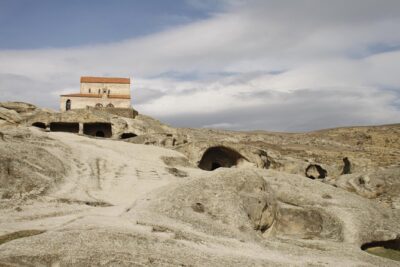
Mtskheta, Jvari, gori, uflistsikhe, history and panorama (group tours)
Read our review →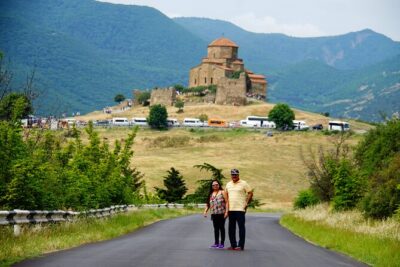
Jvari-Uplistsike-Chronicle of Georgia, PRIVATE Trip
Read our review →
Mtskheta – Jvari. Full City Tour on Hop On Hop Off Bus
Read our review →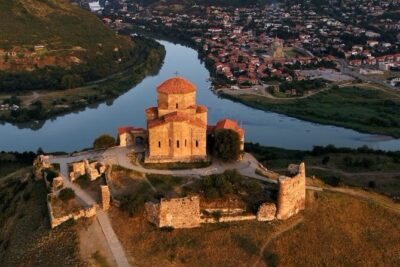
Ancient Georgia Group Tour: Mtskheta,Jvari, Gori, Uplistsikhe
Read our review →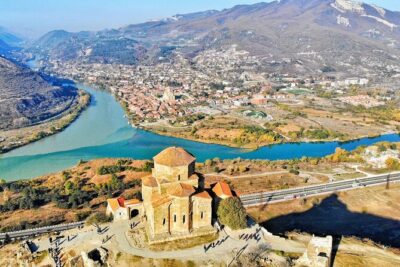
Ancient Mtskheta and Chronicle of Georgia half day tour
Read our review →Browse the lists this tour appears in