
Reviewed · SOVIET ERA TOURS
Soviet Tour – Hidden Tbilisi
Tbilisi’s Soviet story is easiest to grasp away from the postcard center. This small-group tour links bold architecture, Socialist monuments, suburban views, and Stalin’s underground printing house, giving you a sharper sense of how Soviet rule shaped daily life and public space. The Bank of Georgia headquarters and the Chronicles of Georgia are the visual stars.
I like the maximum group size of six, which gives you room to ask questions, and I like the air-conditioned vehicle because these sights are spread across the city. Guides named Giorgi, Irakli, David, and George have been praised for clear explanations and friendly communication. One possible drawback is the $99 price, especially since transport to the meeting point is not included and the advertised tour lasts only about 3 to 4 hours.
Key points to know before booking
- Small group, maximum six people: You get a more personal guide-led outing than on a large bus tour.
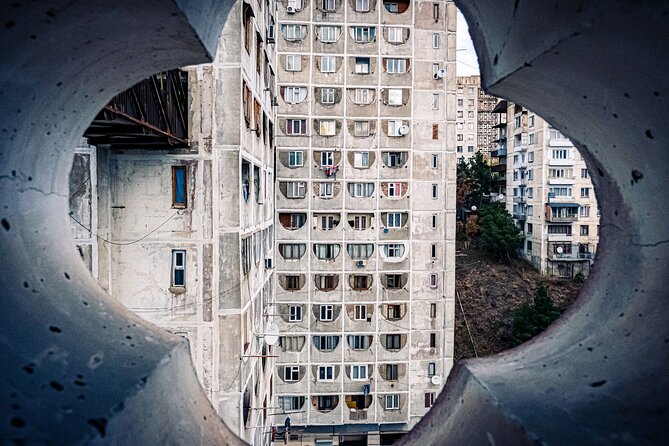
- Soviet architecture across Tbilisi: The route connects unusual buildings and monuments that are difficult to cover efficiently on foot.
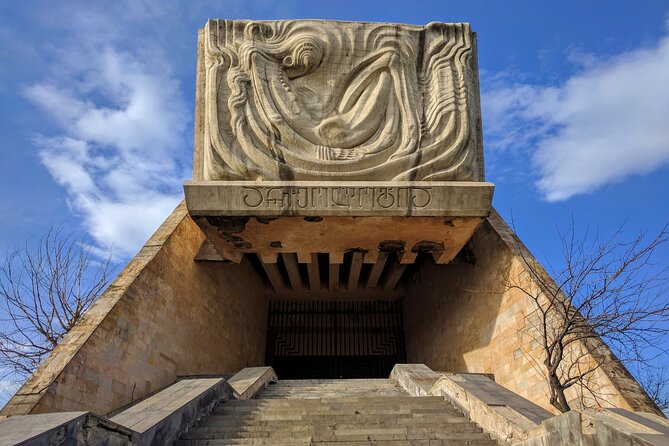
- Bank of Georgia headquarters: Its strange, stacked form is not just artistic. The shape has a practical reason.
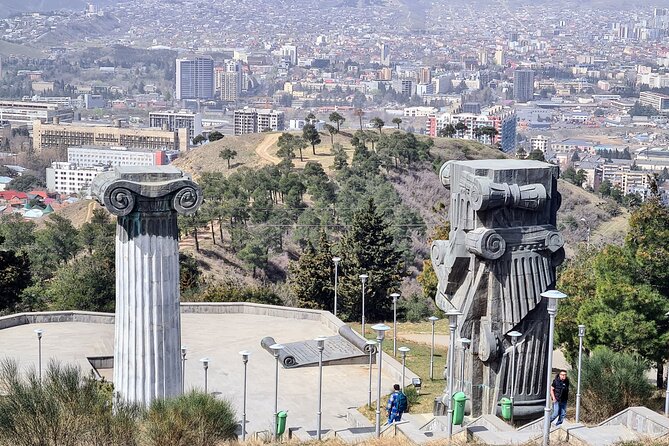
- Chronicles of Georgia: This massive Socialist monument offers wide views over Tbilisi’s outer districts.
- Stalin’s underground printing house: You enter a real historical site linked to early Bolshevik activity and propaganda work.
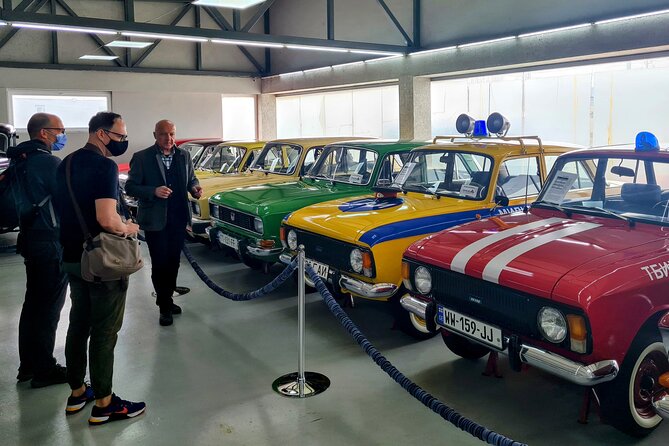
- Possible extra stop: The Soviet car museum can be added when arranged, according to one tour experience.
Why Soviet Tbilisi is worth your afternoon
Most first visits to Tbilisi focus on the Old Town, sulfur baths, churches, balconies, and the hilltop fortress. Those places matter, but they tell only part of the city’s story. This tour takes you into a less polished side of Tbilisi, where Soviet planning, monumental sculpture, concrete architecture, and political memory are easier to see.
I like this approach because the tour is not only about looking at odd buildings. A good guide can explain why a structure was made that way, who used it, and how its role changed after the Soviet period. The experience turns architecture into a way of reading Georgian history.
The tour is conducted in English and uses an air-conditioned vehicle. That matters in Tbilisi, where the stops are scattered and public transport connections may not be obvious to a first-time visitor. You begin and finish at 2 Rose Revolution Square, near public transportation, but you must arrange your own way to the starting point.
The advertised duration is about 3 to 4 hours. One particularly long outing described by a past participant lasted around five hours, but you should plan around the published time rather than count on an extension. The route can involve several stops, and the pace may depend on your guide, traffic, questions, and any extra stop added during the day.
More Soviet era walks around Tbilisi:
- 1 Day Private Armenia: UNESCO, Soviet & Curated Family Lunch
★ 5.0 · 106 reviews - Tbilisi old town & soviet heritage – Private driver-guided Tour
★ 5.0 · 83 reviews - Armenia: 1 Day Soviet gems, UNESCO + Family lunch (Small group)
★ 5.0 · 68 reviews
A small group makes the history easier to follow
With no more than six people, this is a much better setup for questions than a full-size city coach. Soviet history can raise complicated issues, and you may want to ask about censorship, architecture, daily life, or Georgia’s changing relationship with Moscow. A small group gives the guide a fair chance to answer without turning the tour into a speech.
The guides bring different strengths. Giorgi was praised for taking visitors to five Soviet-related places and introducing them to two historians connected with the sites. That kind of personal contact can add a human layer to what might otherwise be a tour of concrete and stone.
Irakli was praised for his command of Georgian and Soviet history, while David was noted for connecting architecture with both past and present-day Georgia. George received praise for clear communication before the tour, a steady flow of information, and flexibility after the scheduled route ended.
You should not assume that every departure will include the same guide or the same extra encounters. The useful point is that the experience depends heavily on the person leading it. If you enjoy asking questions and comparing different viewpoints, tell your guide early. The tour is designed for conversation, not just sightseeing from a vehicle window.
Stop one: a broad look at Soviet buildings across Tbilisi
The first section lasts about two hours and takes you to several Soviet-era buildings and monuments spread around Tbilisi. This is the main body of the experience, rather than a single attraction with a fixed script.
That wide route is valuable because Soviet design appears in many forms. You may see public buildings made to project authority, monuments built to shape collective memory, and structures whose practical use mattered as much as their appearance. The guide’s job is to connect these pieces rather than leave you with a collection of strange photographs.
The vehicle makes this part practical. Walking between all the stops would take much longer, and the tour would lose time on ordinary city streets. The air conditioning is also a welcome feature during warm weather, although you should still expect to get in and out several times.
The main limitation is that the exact selection of lesser-known sites can vary. The supplied route names the Bank of Georgia headquarters, the Chronicles of Georgia, and Stalin’s underground printing house, but the wider two-hour section may include other buildings chosen by the guide. If you have a strong interest in a particular structure, ask about it when booking or at the start.
Stop two: the Bank of Georgia headquarters
The Bank of Georgia headquarters is one of the tour’s best architecture stops. It is often placed among the top examples of Soviet architecture, and its unusual form immediately raises a question: why was it built this way?
The building’s stacked, irregular shape has a practical reason, which gives the stop more substance than a simple photo opportunity. Your guide can explain how the form works and why Soviet-era architects were willing to create such a bold structure.
You get about 15 minutes here, with admission included at no extra charge. That is enough for an explanation and a look at the exterior, though it is not a long architectural study. You should expect a quick, focused stop rather than time to wander through the headquarters.
This is a good example of what the tour does best. It takes an unfamiliar building and gives you a way to understand it. Afterward, you are more likely to notice how function, politics, and visual power meet in Tbilisi’s Soviet architecture.
More days out of Tbilisi:
- Day Trip to Kakheti Wine Region Including 9 Wine Tastings
★ 5.0 · 2,774 reviews - Highlights of Caucasus Mountains-Jinvali,Ananuri,Gudauri,Kazbegi(Group tour)
★ 5.0 · 2,682 reviews - Day Trip to Kazbegi and Gudauri
★ 5.0 · 2,009 reviews - Day Trip to Mtskheta Gori and Uplistsikhe
★ 5.0 · 1,801 reviews
Stop three: the Chronicles of Georgia
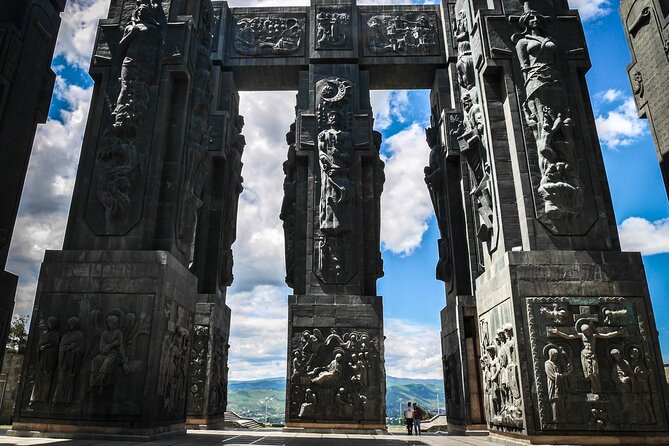
The Chronicles of Georgia is often called the Stonehenge of Tbilisi because of its huge vertical pillars. The comparison is easy to understand once you see the scale, though the monument belongs to a very different political and artistic tradition.
The site is a strong example of Socialist monumentalism. Its size and placement are meant to impress, and the monument presents history on a grand public scale. This is not a quiet old ruin. It is a statement in stone, designed to make national and political themes feel permanent.
You have about 30 minutes here, and admission is free. The stop also gives you a broad panorama over Tbilisi’s suburbs. That view helps explain the city beyond its historic center, including the spread of residential districts and the varied terrain around the capital.
Bring a little patience for the scale of the place. Large monuments can be hard to understand in a quick photograph, and you may appreciate it more after your guide explains its purpose and style. The site is especially worthwhile if you want Soviet history tied to public art rather than only to government buildings.
Stop four: Stalin’s underground printing house
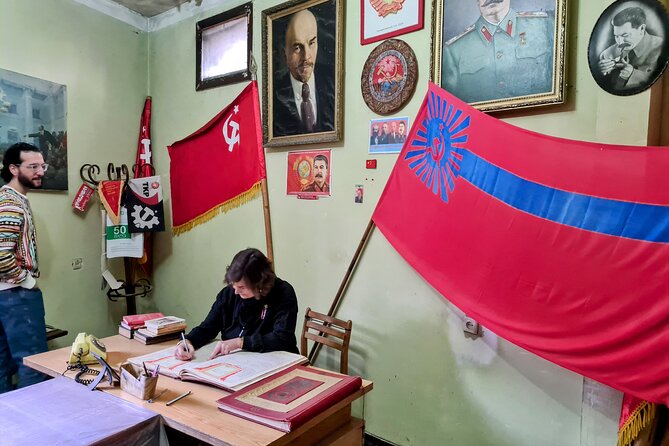
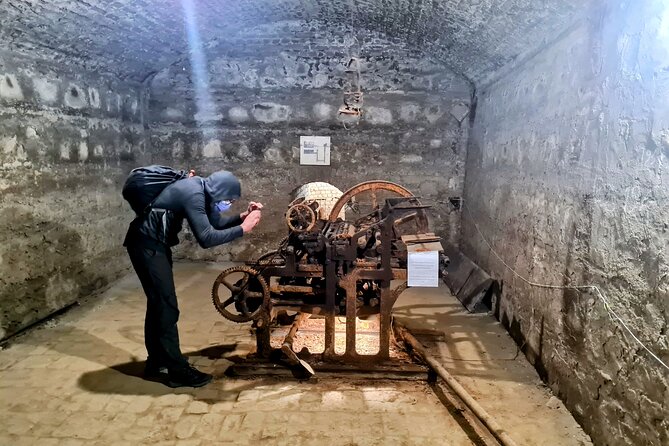
The underground printing house is the most intimate and unusual stop on the route. Here, you visit a concealed printing site connected with Stalin and his supporters, who used it to make plans and produce propaganda leaflets.
The site shifts the focus from grand architecture to political organization. Instead of looking at what the Soviet state built later, you are shown an earlier underground world of pamphlets, planning, and revolutionary activity. That makes it an important counterpoint to the monumental sites.
About 40 minutes are set aside, and admission is included. This is enough time for a proper visit rather than a quick exterior stop. You can expect the guide to explain the historical setting and why the site matters.
The subject is political and may be presented from more than one angle. Georgia’s experience under Soviet rule cannot be reduced to buildings and dates. If you want a tour that avoids difficult history, this is probably not the right choice. If you want to understand how revolutionary movements operated and how propaganda supported them, this is one of the strongest parts of the day.
The human side of Georgia’s Soviet past
The best version of this tour does not treat Soviet history as a museum display sealed off from modern life. One account described introductions to two historians who manage historical places and explain how they view the world shaped by Soviet rule. That kind of conversation can add much more than a standard guidebook paragraph.
You may also hear about small cultural details that reveal how government reached into ordinary life. One past participant learned that certain cartoon characters had been banned in their home country. Details like this can make censorship and state control feel less abstract.
A good guide should help you connect architecture with daily experience, but the tour is not advertised as a formal oral-history program. Personal encounters may depend on timing and availability. Treat them as a possible bonus, not a guaranteed feature.
The same applies to food. One guide, Giorgi, finished a tour by bringing a special khachapuri filled with beans. It was a memorable gesture, but it is not listed as a standard inclusion. You should enjoy such additions if they happen, while judging the tour by its stated route and guiding service.
What $99 gets you in practical terms
At $99 per person, this is not the cheapest way to spend an afternoon in Tbilisi. The price makes more sense if you value private transport, a small group, English-language guiding, and access to sites that are spread around the city.
You are paying for an air-conditioned vehicle, a professional local guide, exclusive access, and admission to the parts of the route that require tickets. The Bank of Georgia headquarters and Chronicles of Georgia do not require an admission fee, while the underground printing house is included in the tour price.
The value depends on your alternative. You could visit some Soviet-era locations independently, but arranging the route would take time, and reaching scattered sites may be awkward. You would also lose the historical explanation that gives the buildings their meaning.
The price is harder to justify if you mainly want a general introduction to Tbilisi. This is a focused history and architecture outing, not a broad city tour. It also does not include transport to or from Rose Revolution Square, so add that cost and time to your plan.
Group discounts may be available, which can improve the value for friends or family booking together. The maximum group size remains six, so ask about the final price before you commit if you are booking for several people.
Timing, transport, and comfort
The tour begins and ends at 2 Rose Revolution Square. Since the activity does not include pickup or drop-off from your hotel, leave enough time to reach the meeting point. The location is near public transportation, which helps, but you are still responsible for getting there.
The air-conditioned vehicle is one of the more useful features. The route crosses different parts of Tbilisi, and the vehicle saves your energy for the places you came to see. It also keeps the group together, which matters when the next stop is far from the last.
The schedule includes several short visits, so wear shoes that are comfortable for standing and walking around monuments. This is practical advice rather than a claim about special terrain. The supplied information does not give detailed access notes for every stop, so contact the provider if you need specific assistance.
Confirmation arrives when you book, and the activity is offered in English. Free cancellation is available if you cancel at least 24 hours before the local start time. Changes or cancellations inside that window are not accepted for a refund.
Who will get the most from this experience
I would choose this tour if you have already seen Tbilisi’s main central sights and want a different side of the city. It is also a strong choice for anyone interested in Soviet architecture, Georgian political history, propaganda, or the way public monuments shape memory.
You will get more from it if you ask questions. The guides have been praised for answering questions, adding background stories, and showing flexibility when interest moved beyond the planned stops. Tell the guide what you want to understand, whether that is architecture, politics, daily life, or the fall of the Soviet system.
This is less suitable if you want a relaxed food tour, a walk through the Old Town, or a fixed museum program. The route involves driving between sites, and the subject matter is serious. The unusual buildings are often the hook, but the history is the main point.
Families with older children and teenagers may find the mix of dramatic monuments and underground political activity more engaging than a standard city lecture. The tour is listed as suitable for most people, but detailed accessibility information is not provided.
Should you book Soviet Tour: Hidden Tbilisi?
I would book it if you want to see parts of Tbilisi that are difficult to connect on your own and you value a guide who can explain why the city looks the way it does. The small group, air-conditioned vehicle, and English-language commentary make the $99 price easier to accept, especially for a first visit focused on twentieth-century history.
I would skip it if your time in Tbilisi is very short and you have not yet seen the Old Town, fortress, and other central sights. I would also check the final meeting arrangements carefully, since hotel transfers are not included.
For the right audience, this is a thoughtful, unusual half-day outing. The Bank of Georgia headquarters gives you striking architecture, the Chronicles of Georgia supplies scale and views, and the underground printing house brings the politics down to a human level. Add the chance of meeting local historians or seeing the Soviet car museum, and the tour can become an especially memorable way to read Tbilisi beyond its familiar center.
FAQ
How long does the Soviet Tour: Hidden Tbilisi last?
The advertised duration is approximately 3 to 4 hours. A past tour experience lasted about 5 hours, but you should plan around the published duration.
How many people can join the tour?
The activity has a maximum of 6 travelers.
Where does the tour begin and end?
It begins at 2 Rose Revolution Square, Tbilisi 0108, Georgia, and ends back at the same meeting point.
Is transportation included?
Transportation between the tour stops is provided in an air-conditioned vehicle. Transport to and from the meeting point is not included.
Is admission included at the attractions?
Admission to the first tour section and Stalin’s underground printing house is included. The Bank of Georgia stop and Chronicles of Georgia are listed as free admission.
What language is the tour offered in?
The tour is offered in English.
Just added around Tbilisi
- Old tbilisi walking tour & wine tasting★ 5.0 · 9 reviews
- Tbilisi Airport to Gudauri, Bakuriani, Batumi, Tbilisi★ 5.0 · 3 reviews
- Private Adorable City Tour of Tbilisi★ 5.0 · 3 reviews
- Vardzia. Lake Paravani, Khertvisi & Lomisa castle, Rabati★ 4.5 · 12 reviews
- full day Kazbegi-Gudauri-jvari -from Tbilisi★ 5.0 · 6 reviews
- Private Wine Tour In Kakheti Region with 7 Wines and Lunch★ 5.0 · 3 reviews
- Wine promenade in hospitable Tbilisi★ 5.0 · 17 reviews
- Your unique photo session in Tblisi, Georgia★ 3.5 · 4 reviews
Soviet Era Tours, compared.
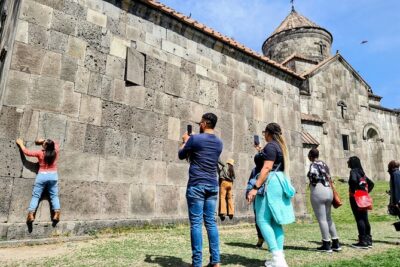
1 Day Private Armenia: UNESCO, Soviet & Curated Family Lunch
Read our review →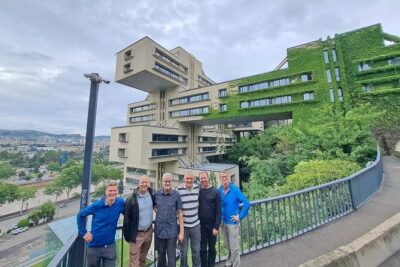
Tbilisi old town & soviet heritage – Private driver-guided Tour
Read our review →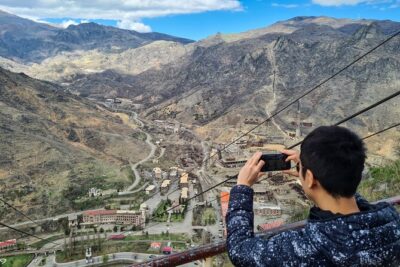
Armenia: 1 Day Soviet gems, UNESCO + Family lunch (Small group)
Read our review →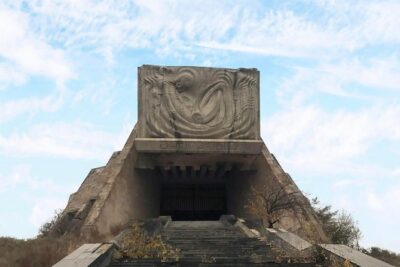
Brutal Tbilisi: Urban exploration and untold stories
Read our review →
Soviet past – Private day tour to Chiatura, Katskhi pillar and Chronicles
Read our review →
Soviet Story – Private day trip to Chiatura, Stalin’s museum and Katskhi pillar
Read our review →
Browse the lists this tour appears in