
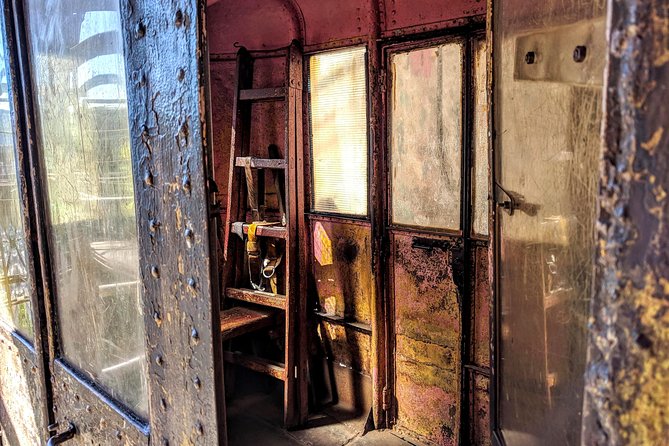
Reviewed · CHIATURA & KATSKHI PILLAR TOURS
Soviet past – Private day tour to Chiatura, Katskhi pillar and Chronicles
Chiatura is the star here: a Georgian mining town where rusting Soviet cable cars and stark concrete stations remain part of daily life, even though the old cars are now suspended for safety. I like the way this tour pairs that industrial past with Katskhi Pillar and Mgvimevi Monastery. You get unusual history, striking photographs, and a look at parts of Georgia that sit well beyond the usual Tbilisi route.
I also like the private format. Your guide can explain what you are seeing at your pace, help with the monastery dress code, and point out the best photo locations. The main drawback is the long drive and the fact that you cannot ride the old cable cars now. This is a full day for curious explorers, not a quick sightseeing outing.
Key points to know before you book
- Chiatura’s cable cars are visible, not operating: You can photograph the rusty cabins and brutalist stations, but all old cable cars are currently suspended for safety.
- Katskhi Pillar is a rare sight: A church sits atop a tall natural stone pillar surrounded by legend and pilgrimage.
- Mgvimevi Monastery is built into a cave: Expect stairs, a dress code, and an unusual meeting of rock and medieval architecture.
- The private guide makes the difference: Guides including Zurab, Irakli, Levan, Revan, and Maria have been praised for warmth, humor, local knowledge, and careful driving.
- The day lasts 9 to 11 hours: Pickup is from your Tbilisi hotel or rental at 9:00 am, with lunch arranged separately.
- The Chronicles of Georgia makes a dramatic finish: Giant Soviet-era monuments overlook Tbilisi’s concrete suburbs and provide a strong final stop.
Why Chiatura makes this day trip different
Many day trips from Tbilisi focus on famous churches, wine regions, or mountain views. This one takes a sharper turn into Georgia’s industrial and Soviet past.
Chiatura grew around mining, and its cable-car network once carried workers across the steep town. The system was practical rather than decorative. It connected parts of town where roads were less useful, and the old stations still show that plain working purpose. Concrete platforms, aging machinery, and rusting cabins give Chiatura a stark character that feels very different from Georgia’s polished historic centers.
You will not find a functioning vintage ride waiting for you. The old cable cars have been suspended for safety, so the experience is about seeing the infrastructure, walking around selected areas, and understanding how the town worked. That limitation matters. If your main reason for booking is to ride a Soviet cable car, this is not the right trip.
If you enjoy unusual places, old machinery, photography, or modern history, Chiatura is likely to be the strongest part of the day. Your guide can help you find the more interesting stations and explain the town instead of leaving you to stare at concrete and rust without context. The guide’s local knowledge is especially useful because the old areas may feel scattered rather than arranged for sightseeing.
More Chiatura and Katskhi trips:
- Soviet Story – Private day trip to Chiatura, Stalin’s museum and Katskhi pillar
★ 4.5 · 15 reviews - Chiatura and Katskhi Pillar One Day Urbex Tour
★ 5.0 · 14 reviews - Chiatura. Soviet Past in the present. + Katskhi pillar
★ 5.0 · 9 reviews
The drive from Tbilisi and the value of a private vehicle
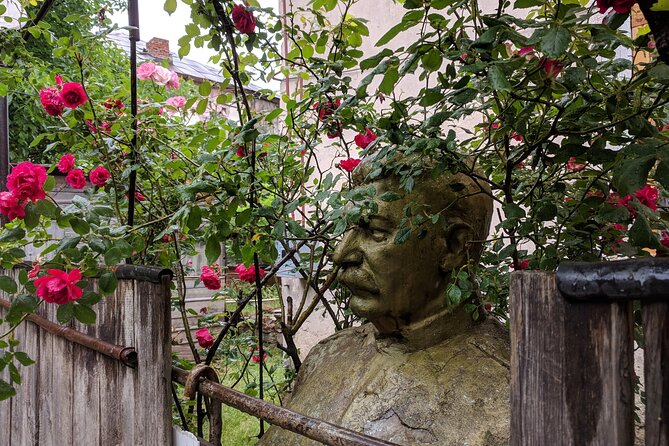
The tour begins at 9:00 am with pickup from your hotel or vacation rental in Tbilisi. You provide the accommodation location after booking, and the guide collects only your party. The total outing takes about 9 to 11 hours, so the transport is not a minor detail. It is what makes this far-flung collection of sites possible in one day.
A private vehicle gives you more breathing room than a large group excursion. You can ask questions, pause for photographs, and talk through the history as you go. Guides such as Zurab, Irakli, Levan Leiashvili, Revan, and Maria have each been singled out for friendly company, clear explanations, humor, and good driving. Guide assignment is not guaranteed, but the strong pattern is worth noting.
WiFi is provided on board, along with bottled water. Lunch is not included, but the guide can recommend a favorite local place. That arrangement gives you some choice, though you should remember to budget for the meal. A stop for food also breaks up the long day and lets you ask for something that suits your group.
At $149 per person, the cost is easiest to justify for a small private party that values time and flexibility. You are paying for a private guide, private transport, pickup, water, WiFi, and a full day of sightseeing rather than separate admission charges. If you are alone, the price feels heavier. If several people share the vehicle, the personal service and lack of a large group can make the price reasonable.
Chiatura’s cable-car stations and Soviet atmosphere
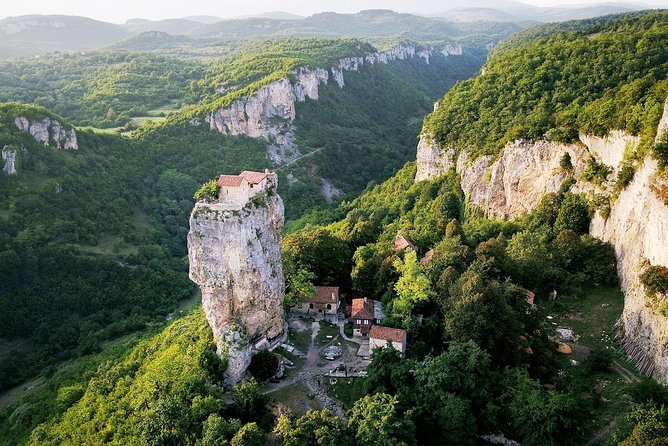
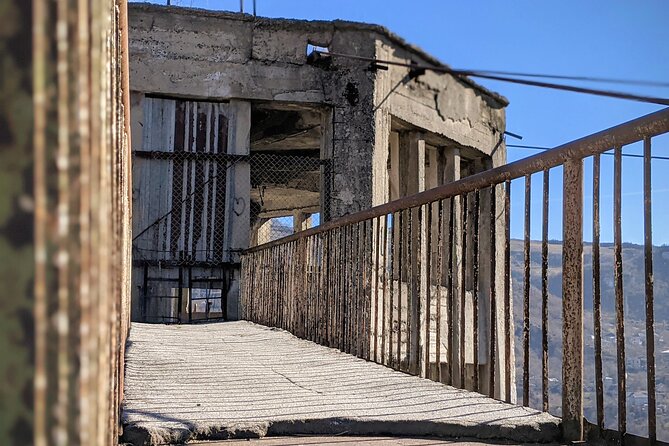
Plan on about two hours in Chiatura. This is the longest stop, and it deserves the time because the town is not just a single viewpoint. The old cable cars, stations, and surrounding streets form a larger picture of a place shaped by Soviet engineering and mining.
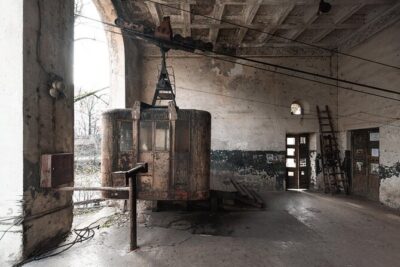
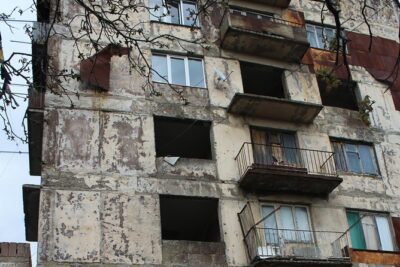
The cabins are rusty, and the stations have the heavy concrete look associated with Soviet public works. For photographers, the appeal is clear: peeling surfaces, strong geometric lines, empty platforms, and a working town around old infrastructure. The contrast between the abandoned-looking machinery and present-day life gives the place its power.
Do not expect a tidy museum. Chiatura is described as a ghost-like town in places, but it is also still living and breathing. That mix is important. You are not walking through a preserved film set. You are seeing a real town with aging infrastructure, ordinary homes, and a complicated industrial past.
Follow your guide’s instructions around the old stations. Since the cable cars are closed for safety, you should not enter cabins or restricted areas. The best photographs may come from public viewpoints and carefully selected stops rather than from trying to get as close as possible.
The town has a cinematic mood, but the appeal is not only visual. Your guide can connect the cable cars to work, transport, and local life. That turns an interesting photograph into a more useful understanding of why the town looks this way.
Katskhi Pillar, a church above the ground
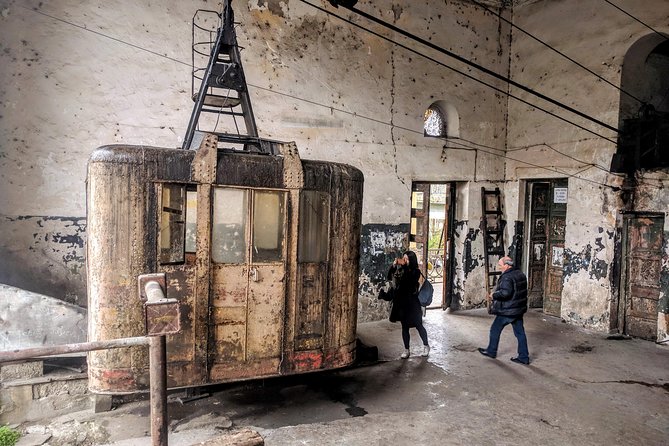
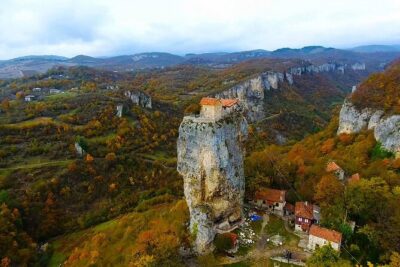
The next major stop is Katskhi Pillar, with about 30 minutes set aside. The site is striking because a small monastery sits on top of a tall natural stone pillar. From below, the structure seems almost impossible, which explains why legends continue to surround it.
You will not need a long visit to appreciate the shape of the place. The pillar creates an immediate photograph, while the surrounding setting gives you a quieter pause after Chiatura’s concrete and machinery. It is one of the day’s clearest examples of Georgia’s ability to put spiritual buildings in dramatic locations.
The time here is short, so think of it as a focused viewpoint and cultural stop rather than a long monastery visit. The tour information does not promise access to the church on top, and you should not assume that you will climb the pillar. The value is in seeing the site, hearing its stories, and understanding its place in Georgian religious culture.
Occasionally, the stop may coincide with a local wedding or pilgrimage activity. That can add life to the visit, but it also means you should behave respectfully and keep a little distance from private ceremonies.
More Soviet era walks around Tbilisi:
- 1 Day Private Armenia: UNESCO, Soviet & Curated Family Lunch
★ 5.0 · 106 reviews - Tbilisi old town & soviet heritage – Private driver-guided Tour
★ 5.0 · 83 reviews - Armenia: 1 Day Soviet gems, UNESCO + Family lunch (Small group)
★ 5.0 · 68 reviews - Brutal Tbilisi: Urban exploration and untold stories
★ 5.0 · 59 reviews
Mgvimevi Monastery inside the rock
Mgvimevi Monastery is another 30-minute stop, but it has a very different feel from Katskhi Pillar. Here, the church is built into a natural cave, creating a close relationship between stone and architecture. The monastery dates from the late Middle Ages, yet its setting can look startling beside the concrete surroundings of the former industrial town.
You should expect a few stairs. The approach is not presented as a difficult hike, but this is not a flat roadside photo stop. Wear shoes that feel secure on steps, and take your time if your knees make climbing uncomfortable.
Dress respectfully inside. A visitor may be asked to cover shoulders or knees, so modest clothing is the sensible choice. This is a working religious place, not simply an architectural attraction. Keep your voice low, follow local instructions, and avoid treating the interior as a studio.
The interiors are one of the reasons to make the stop. Rock walls and the built church create a compact, unusual space that feels unlike the grand open churches found elsewhere in Georgia. The contrast between the cave monastery and Chiatura’s Soviet structures gives the middle of the day real variety.
A priest may be present, and religious blessings can occur. That is part of the living character of the place, but nothing should be expected or requested as a performance. The best approach is respectful curiosity.
The Chronicles of Georgia as a Soviet-era finale
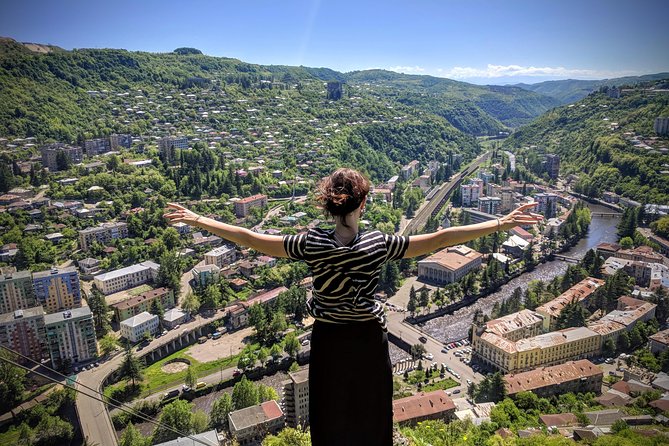
The final stop is the Chronicles of Georgia, with around 30 minutes to explore. This huge monument overlooks Tbilisi’s concrete suburbs and makes a fitting end to a day focused on Soviet-era design and Georgian identity.
The monument is a strong choice for photographers. Its massive vertical forms create long shadows, bold patterns, and wide views across the city. You get a sense of scale here that is hard to find in central Tbilisi. The site also gives you a final chance to connect the day’s separate themes: religion, national identity, industrial work, and Soviet public art.
Thirty minutes is enough to walk around, take photographs, and listen to an explanation, though you may wish for more time if you enjoy monumental architecture. The visit is short because the tour has already covered a great deal of ground. Think of it as a visual finale rather than a full museum visit.
The site can feel imposing rather than delicate. That is exactly its appeal. After cave churches and old cable-car stations, these huge concrete forms bring the day back to the capital and leave you with one of the boldest views in the program.
What the guides add to the day
The guide is not just a driver on this excursion. The best version of this experience depends on someone who can explain the connection between the sites and help you see the details.
Zurab has been praised for being caring, funny, well informed, and a careful driver. Irakli has been described as relaxed and friendly, with a good instinct for food stops. Levan Leiashvili has been singled out for making the day feel personal and for bringing strong local understanding to the route. Revan has been praised for explaining each part of the day with energy and warmth, while Maria has been noted for her helpful approach and cultural explanations.
You cannot choose a particular guide based on the tour details, so treat these names as examples rather than a guarantee. Still, the repeated praise for the guiding style is important. This route has no regular museum labels to read and no simple sequence of famous monuments. A personable guide helps turn scattered places into a coherent day.
The private format also lets you ask basic questions without feeling rushed. You can ask why the cable cars were built, how the town changed, what the monastery means, or how the monument relates to Georgian identity. That kind of conversation is where the tour’s value grows.
Who should book this experience
I would recommend this trip to you if you like:
- Soviet architecture and industrial sites
- Photography with unusual subjects
- Religious buildings in unexpected settings
- Smaller towns and less familiar parts of Georgia
- Private guiding and flexible conversation
- Long day trips with several different stops
It is especially good for anyone who has already seen central Tbilisi and wants a more unusual view of the country. You get a mix of modern history, faith, local life, and architecture rather than one repeated type of sight.
I would hesitate if you want a relaxed day with little time in the car. The route is long, the schedule begins early, and the old cable cars do not operate. It also may not suit someone who wants a polished attraction with signs, gift shops, and predictable facilities.
Families can participate, but children must be accompanied by an adult. Mgvimevi’s stairs and the length of the day are worth considering for younger children. Most people can take part, but the tour details do not provide a specific accessibility assessment, so you should ask the operator if anyone in your group has mobility needs.
Booking, cancellation, and practical details
The experience is offered in English, and confirmation is provided when you book. Pickup is available from a Tbilisi hotel or vacation rental, with the meeting location supplied after booking.
The price is $149 per person. Lunch is extra, but your guide can recommend a preferred restaurant. Bottled water and WiFi are included, and there are no separate admission charges listed for the four main stops.
You can cancel up to 24 hours before the start time for a full refund. Changes or cancellations made less than 24 hours before the 9:00 am start are not accepted for a refund, and the cut-off follows local time.
Should you book the Chiatura day tour?
Book it if you want Georgia beyond the standard church-and-wine circuit. The old cable-car stations, Katskhi Pillar, cave-built Mgvimevi Monastery, and Chronicles of Georgia give you four very different subjects in one demanding but rewarding day.
The clearest reason to book is the combination. Chiatura alone might feel too specialized, while the monasteries alone might feel familiar. Together, they show a rougher, stranger, and more layered side of Georgia. Just set the right expectation: you are visiting suspended cable cars, not riding them, and spending much of the day on the road.
For a private group that values a local guide, strong photo stops, and a route that feels genuinely different, $149 can be fair value. If that sounds like your kind of day, this is one of the more memorable excursions you can make from Tbilisi.
FAQ
Where does the tour start?
Pickup is offered from your hotel or vacation rental in Tbilisi.
What time does the tour begin?
The scheduled start time is 9:00 am.
How long does the tour last?
The tour takes approximately 9 to 11 hours.
Are the Chiatura cable cars operating?
No. All of the old cable cars are currently suspended for safety reasons, but you can still see the cabins and stations.
Is this a private tour?
Yes. Only your private party and the guide participate.
Is lunch included?
No. Lunch is not included, but the guide can recommend favorite places to eat.
Is the tour offered in English?
Yes. The experience is offered in English.
Can I cancel for a full refund?
Yes. You can cancel at least 24 hours before the start time for a full refund. Changes or cancellations made less than 24 hours before the start are not accepted for a refund.
Just added around Tbilisi
- Tbilisi Airport to Gudauri, Bakuriani, Batumi, Tbilisi★ 5.0 · 3 reviews
- Private Adorable City Tour of Tbilisi★ 5.0 · 3 reviews
- Old tbilisi walking tour & wine tasting★ 5.0 · 9 reviews
- Vardzia. Lake Paravani, Khertvisi & Lomisa castle, Rabati★ 4.5 · 12 reviews
- full day Kazbegi-Gudauri-jvari -from Tbilisi★ 5.0 · 6 reviews
- Private Wine Tour In Kakheti Region with 7 Wines and Lunch★ 5.0 · 3 reviews
- Wine promenade in hospitable Tbilisi★ 5.0 · 17 reviews
- Your unique photo session in Tblisi, Georgia★ 3.5 · 4 reviews
Chiatura & Katskhi Pillar Tours, compared.
Chiatura Tour with Katskhi Pillar & Cable Car Experience
Read our review →
Soviet Story – Private day trip to Chiatura, Stalin’s museum and Katskhi pillar
Read our review →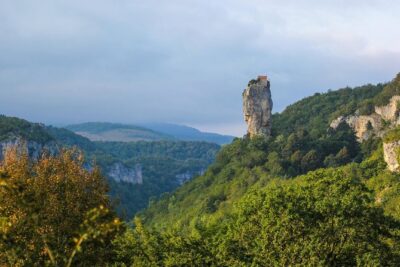
Chiatura. Soviet Past in the present. + Katskhi pillar
Read our review →
Day Tour to Georgian sky venice, Soviet city Chiatura
Read our review →
Soviet tour of Georgia – Gori, Tskaltubo, Chiatura, Enguri Dam.
Read our review →Browse the lists this tour appears in