
Reviewed · GORI & UPLISTSIKHE TOURS
Soviet tour of Georgia – Gori, Tskaltubo, Chiatura, Enguri Dam.
Georgia’s Soviet past is not tucked away in a museum. It appears in brutalist buildings, abandoned sanatoriums, mining towns, and giant hydroelectric works. This private tour links the best-known sites around Tbilisi and western Georgia, including Stalin’s hometown of Gori, Chiatura, Tskaltubo, and Enguri Dam.
I like the freedom of a private vehicle and the chance to adjust the Tskaltubo stops on site. I also like the range of subjects: you get political history in Gori, industrial architecture in Chiatura, and crumbling resort buildings in Tskaltubo. The main caution is the unclear tour description: one section describes a four-day Soviet tour, while another describes a six-day, five-night Svaneti trip with flights, hikes, and Mestia lodging. Confirm exactly what you are buying before paying.
Key points to know before booking
- Stalin’s museum in Gori provides the tour’s clearest political-history stop, with admission included.
- Chiatura brings you to a former Soviet mining town with a strong industrial character.
- Tskaltubo is the main stop for abandoned sanatoriums and Soviet resort architecture.
- Enguri Dam adds a huge working infrastructure site to the route, not just old buildings.
- A private vehicle gives your group more control than a fixed group excursion.
- An English-speaking guide costs extra or must be arranged on request, so do not assume the driver will provide full commentary.
What this Georgia Soviet tour is really about
I would think of this as an architecture and history trip rather than a standard sightseeing tour. The appeal is not a neat collection of polished monuments. It is the chance to see how Soviet planning shaped different parts of Georgia: government districts in Tbilisi, industrial towns in the west, health resorts built for the Soviet elite, and massive state infrastructure.
The route also shows how different these places feel from one another. Tbilisi gives you urban Soviet buildings within a living capital. Gori brings a more personal and political story through Stalin. Chiatura shows a town built around mining. Tskaltubo reveals what happens when grand resort buildings lose their purpose. Enguri Dam is the giant engineering finale.
The tour is private, and only your group participates. That matters here because abandoned buildings and industrial sites do not always reward a fixed, hurried schedule. You can ask to spend more time on architecture, move faster through a museum, or discuss which Tskaltubo sanatoriums to visit.
Still, this is not presented as a full guided history course. The driver is included, but an English-speaking guide is not. Guiding can be arranged on request, and I would strongly consider adding it if you want political context or detailed architectural explanations rather than transport between sites.
More Chiatura and Katskhi trips:
- Soviet past – Private day tour to Chiatura, Katskhi pillar and Chronicles
★ 5.0 · 29 reviews - Soviet Story – Private day trip to Chiatura, Stalin’s museum and Katskhi pillar
★ 4.5 · 15 reviews - Chiatura and Katskhi Pillar One Day Urbex Tour
★ 5.0 · 14 reviews
Day one: Soviet Tbilisi and Rustavi
The first day focuses on Soviet buildings in Tbilisi and Rustavi, with about six hours planned and no separate admission charge. This is a useful opening because it lets you see Soviet architecture as part of ordinary city life, not only as a ruin or museum exhibit.
Tbilisi has layers from many periods, and Soviet buildings can be easy to miss if you are looking only for grand monuments. A private tour can help you connect apartment blocks, public buildings, and planned districts with the wider story of the city. The route then extends toward Rustavi, an industrial city closely associated with the Soviet period.
The supplied itinerary lists both Tbilisi and Rustavi, but one account of the experience says there was not enough time to visit Rustavi. That is an important practical warning. Six hours can disappear quickly when driving, stopping for photographs, and discussing several parts of the city. If Rustavi matters to you, ask for it to be confirmed in advance rather than treating it as automatic.
This first day may suit you best if you enjoy urban details. It is less suitable if you expect a string of dramatic ruins. The strongest moments may be visual and architectural rather than famous attractions with a clear entrance and sign.
Day two: Stalin in Gori, then Chiatura
Day two is the longest listed day, at about 12 hours. It combines the Stalin Museum in Gori with Chiatura, then continues to Tskaltubo for the overnight stay. That makes for a full schedule, but it also gives the tour its sharpest contrast.
Gori is associated with Joseph Stalin, and the museum is the most direct way to examine that part of Georgia’s Soviet story. Admission is included. The site is interesting because it presents Stalin through a Georgian setting, not just through distant twentieth-century history.
You should allow room for a thoughtful visit. The museum is not simply another stop to rush through between towns. If you are interested in propaganda, political memory, or the way historical figures are presented, this is likely one of the most worthwhile parts of the day.
The tour then shifts from political history to industrial Georgia in Chiatura. This former Soviet mining town is known for its rugged industrial character and Soviet-era architecture. The town gives you a better sense of how the system worked on the ground, where housing, transport, and work were tied to mining.
Chiatura is not presented as a polished attraction. That is part of its value, but it also means the experience may feel more observational than organized. You are looking at a real town with a complicated past, not walking through a purpose-built museum. I would ask how much time is planned there, especially after the long visit to Gori.
The overnight stop in Tskaltubo is practical. Instead of returning to Tbilisi after a very long day, you are positioned for the abandoned sanatorium visits that follow. The tradeoff is a tiring schedule. If you prefer slow travel, this day may feel packed.
Day three: Tskaltubo to Enguri Dam
Day three covers about six hours and takes you from Tskaltubo toward Zugdidi, with a visit to the Enguri hydropower station. This is one of the tour’s most unusual combinations: a fading spa town followed by one of Georgia’s largest Soviet-era engineering projects.
Enguri Dam has a huge scale that is very different from the buildings in Tskaltubo. It was built during the Soviet period and is known for its high dome-shaped dam. The included visit adds an important industrial chapter to the trip. You are not only seeing places that time has damaged. You are also seeing infrastructure that still represents the reach and ambition of state planning.
Admission to Enguri Dam is included. The itinerary says the day heads from Tskaltubo to Zugdidi, but the accommodation details for this part are not clearly set out in the supplied information. Ask where you sleep each night and how the route connects to the separate Svaneti description before booking.
This stop will suit you if you like engineering, scale, and working infrastructure. It may be less appealing if your interest is limited to abandoned buildings. The value lies in the contrast: one part of the Soviet project has been left to decay, while another remains a major piece of infrastructure.
More Gori and Uplistsikhe trips:
- Day Trip to Mtskheta Gori and Uplistsikhe
★ 5.0 · 1,801 reviews - Mtskheta-Gori-Uplistsikhe
★ 5.0 · 112 reviews - Mtskheta, Jvari, gori, uflistsikhe, history and panorama (group tours)
★ 4.5 · 107 reviews - Day tour to Chronicles of Georgia, Gori city, Uplistsikhe cave
★ 5.0 · 86 reviews
Day four: abandoned Tskaltubo sanatoriums
The final listed day gives you about four hours in Tskaltubo. The town was developed as a Soviet spa destination, and its abandoned sanatoriums are the emotional center of this version of the tour.
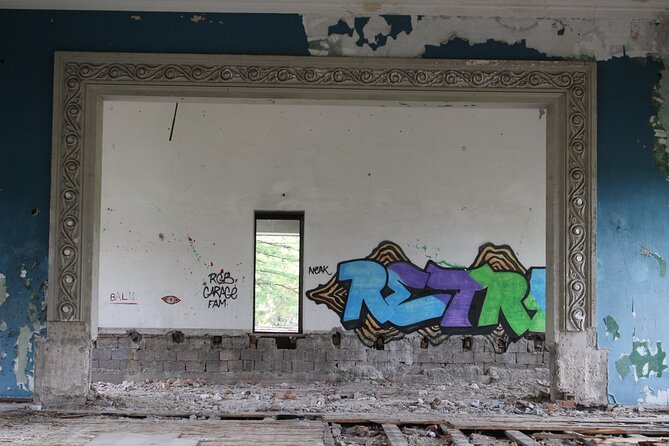
The buildings are memorable because they combine grand planning with neglect. Large public spaces, old resort forms, and overgrown interiors show how quickly a place can change when its original system disappears. You will not be seeing a restored heritage district. You will be looking at buildings where nature and time have taken over.
The exact sanatoriums are not fixed. The plan is to choose among the many options on site. That flexibility is a real advantage for a private group. You may prefer the most striking architecture, the safest accessible location, or a shorter visit after the long second day.
It is also the main area where you should manage expectations. The condition of abandoned buildings can vary, and the experience is about atmosphere and architecture rather than formal interpretation. An English-speaking guide could make a meaningful difference by explaining what each complex was built for and how Tskaltubo changed over time.
The four-hour allocation is enough for a focused look, but not enough to cover every building. Ask whether entry is permitted at the chosen sites and whether the driver will remain with the vehicle while you explore. The available information says the driver is included throughout the tour, but it does not describe security arrangements or the exact access rules for each building.
The driver, guide, and private format
The private setup is one of the strongest parts of this experience. Your group does not share the activity with other people, so the pace can be more personal. That is useful when one person wants to photograph architecture while another wants to move on.
The driver is included throughout. However, the English-speaking guide is not included and can be organized on request. This distinction matters. A driver may know the route and handle transport well, but that does not automatically mean you will receive detailed explanations at Gori, Chiatura, or Enguri Dam.
One account of the experience identifies Zviad as the person who accompanied a group through Stalin’s museum and Soviet districts in Tbilisi. Since the general tour information does not promise a named guide, confirm who will accompany you and in what role. If Zviad is available, ask whether he is serving as driver, guide, or both.
Pickup is offered, with the listed meeting point at Rose Revolution Square in Tbilisi at 8:00 a.m. The activity returns to the meeting point. Mobile ticketing is available, and confirmation is sent at booking.
Is $850 per person good value?
At $850 per person, this is not a low-cost day trip. The value depends almost entirely on the final itinerary, group size, and what is included in the version you book.
For the four-day Soviet route, the price may make sense for a small private group that wants a custom vehicle itinerary across several regions. It includes the driver, listed admissions for Stalin’s museum and Enguri Dam, and meals described as breakfast, dinner, and two lunches. Group discounts may also be available.
The price is harder to judge because the description also refers to a six-day, five-night Svaneti tour with flights from and back to Tbilisi, two hikes, Mestia accommodation, airport transfers, and meals. That is a different and much fuller program. The Svaneti details include Ushba waterfalls in Becho Gorge, Chalaadi Glacier, Ushguli, views toward the Shkhara range, and horse riding to Qoruldi Lakes, with a car available instead of horses on request.
Those Svaneti features do not match the four-day Gori, Chiatura, Tskaltubo, and Enguri Dam itinerary. Before comparing the price with other tours, ask the provider to confirm:
- Is the booking for four days or six days and five nights?
- Are flights included?
- Is Svaneti included?
- Which hotels and meals are included?
- Is the English-speaking guide extra?
- Are all listed admissions included?
- Where do you sleep after the Enguri Dam day?
Until those points are settled, the $850 price cannot be judged fairly. For the shorter Soviet route, it is best considered a private touring rate rather than a simple admission-and-transport package.
Who will enjoy this most
I would choose this experience if you have a strong interest in Soviet architecture, industrial sites, abandoned resorts, or political history. It is also a good fit for photographers who want time with large structures and decaying interiors, provided access is allowed at the selected buildings.
The private format suits couples, friends, and small family groups who do not want a fixed coach schedule. It also helps if your group has mixed interests, since the day can sometimes be adjusted.
I would not choose it if you want a relaxed holiday with short driving days and little planning. Day two is long, and the route covers several regions. I would also hesitate if you need a fully guided English-language experience unless you arrange the guide in advance.
The tour requires good weather and a minimum number of participants, despite being private for your own group. Most people can participate, service animals are allowed, and the meeting point is near public transportation.
Should you book the Soviet tour of Georgia?
Book it if the idea of seeing Georgia through its Soviet buildings appeals to you more than a standard list of churches, wine stops, and viewpoints. The combination of Stalin’s museum, Chiatura, Tskaltubo’s abandoned sanatoriums, and Enguri Dam gives you a broad look at the country’s twentieth-century past.
My advice is to book only after getting the itinerary in writing. The four-day Soviet route and the six-day Svaneti program are clearly mixed together in the available information. Once the duration, accommodation, guide, meals, and destinations are confirmed, this could be a strong private choice for a focused architectural and historical trip.
FAQ
Where does the tour start and finish?
It starts at Rose Revolution Square in Tbilisi at 8:00 a.m. The activity ends back at the meeting point.
Is this a private tour?
Yes. Only your group participates in the private activity.
Is an English-speaking guide included?
No. An English-speaking guide is not included, but guiding can be arranged on request.
What destinations are included in the four-day itinerary?
The listed route includes Soviet buildings in Tbilisi and Rustavi, Stalin’s Museum in Gori, Chiatura, Tskaltubo, and Enguri Dam.
Are meals included?
The inclusions list states that dinner, two breakfasts, and two lunches are included.
What is the cancellation policy?
You can cancel for a full refund up to 24 hours before the experience starts. Cancellations or changes made less than 24 hours before the start time are not accepted for a refund. Poor weather or failure to meet the minimum number of participants may result in a different date, an alternative experience, or a full refund.
More Soviet Era Tours in Tbilisi
- 1 Day Private Armenia: UNESCO, Soviet & Curated Family Lunch
★ 5.0 · 106 reviews - Tbilisi old town & soviet heritage – Private driver-guided Tour
★ 5.0 · 83 reviews - Armenia: 1 Day Soviet gems, UNESCO + Family lunch (Small group)
★ 5.0 · 68 reviews - Brutal Tbilisi: Urban exploration and untold stories
★ 5.0 · 59 reviews
Just added around Tbilisi
- Old tbilisi walking tour & wine tasting★ 5.0 · 9 reviews
- Tbilisi Airport to Gudauri, Bakuriani, Batumi, Tbilisi★ 5.0 · 3 reviews
- Private Adorable City Tour of Tbilisi★ 5.0 · 3 reviews
- Vardzia. Lake Paravani, Khertvisi & Lomisa castle, Rabati★ 4.5 · 12 reviews
- full day Kazbegi-Gudauri-jvari -from Tbilisi★ 5.0 · 6 reviews
- Private Wine Tour In Kakheti Region with 7 Wines and Lunch★ 5.0 · 3 reviews
- Wine promenade in hospitable Tbilisi★ 5.0 · 17 reviews
- Your unique photo session in Tblisi, Georgia★ 3.5 · 4 reviews
Gori & Uplistsikhe Tours, compared.
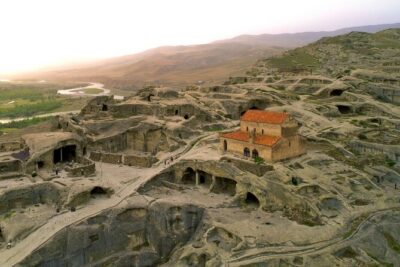
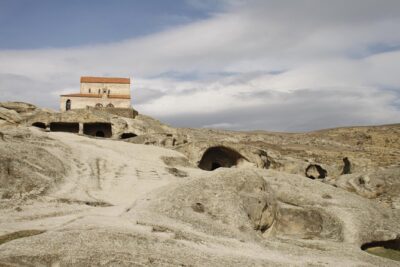
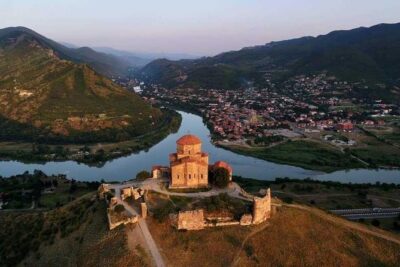
Mtskheta, Jvari, gori, uflistsikhe, history and panorama (group tours)
Read our review →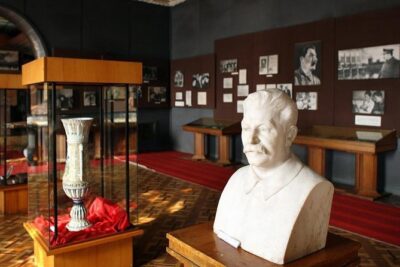
Day tour to Chronicles of Georgia, Gori city, Uplistsikhe cave
Read our review →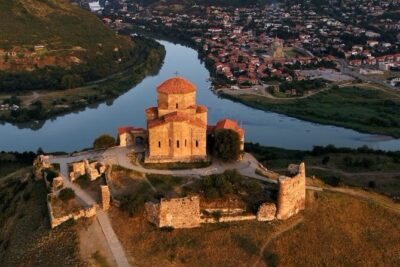
Ancient Georgia Group Tour: Mtskheta,Jvari, Gori, Uplistsikhe
Read our review →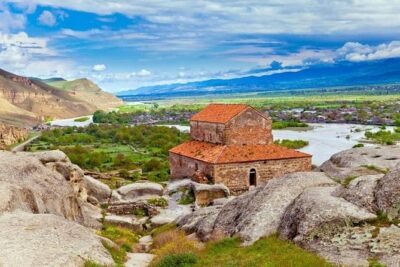
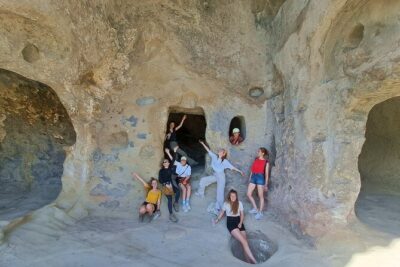
Mtskheta, Gori & Uplistsikhe Private Day Tour from Tbilisi
Read our review →Browse the lists this tour appears in