
Reviewed · CHIATURA & KATSKHI PILLAR TOURS
Kutaisi:Chiatura Tour with Katskhi Pillar & Cable Car Experience
Chiatura is the reason to book this trip. This old mining town sits in a steep Georgian valley, where Soviet cable cars once carried workers above the river and abandoned industrial buildings still cling to the hillsides. Add the Katskhi Pillar, a church-topped rock column, and you get a day that feels far removed from the usual sightseeing circuit.
I like the local guides, especially Demo, Tengo, Tango, and Ana, who bring personal knowledge of Chiatura and can adjust the day when conditions or interests change. I also like the value: transport, guiding, the cave monastery, viewpoints, railway area, theater visit, and town tour are covered for $35.
The main caution is that this is a long day with roughly three hours on the road, stairs at some sites, and an old cable-car system that may not always operate. Some listed stops can also be affected by repairs or closures, so confirm the day’s exact plan before setting out.
What makes this Chiatura day trip worth considering
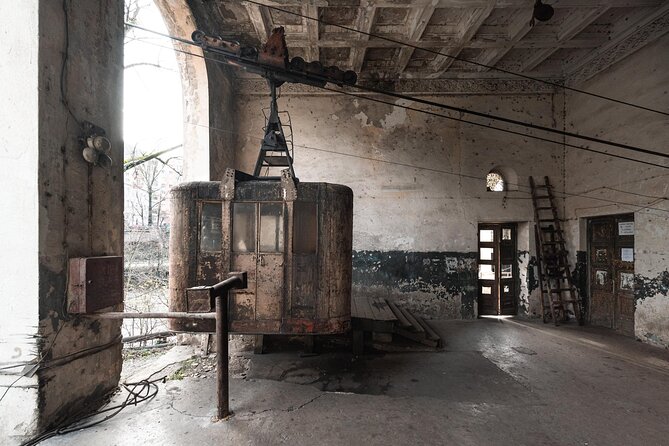
- Old Soviet cable cars: Ride a working remnant of Chiatura’s mining past for about 5 lari, or roughly $2.
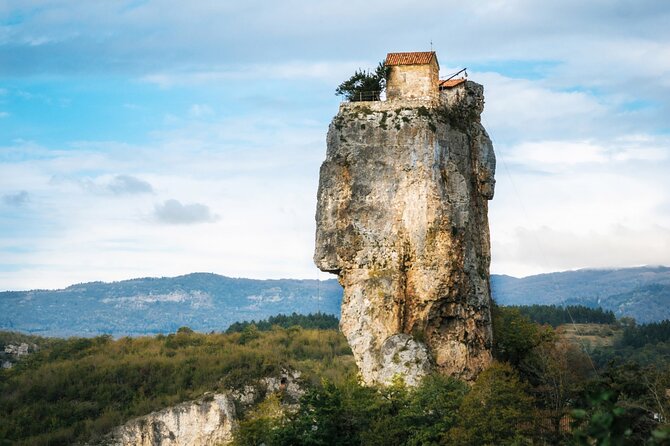
- Katskhi Pillar: See one of Georgia’s most unusual religious sites, a church on top of a tall natural rock column.
- Mghvimevi Cave Monastery: Walk through a historic church complex cut into rock near Chiatura.
- Local Chiatura guides: Guides such as Demo, Tengo, Tango, and Ana add personal stories and can point out places beyond the basic route.
- Industrial and Soviet-era sights: Expect railway tracks, old buildings, neighborhoods, and traces of the town’s mining history.
- Good low-cost format: The $35 price includes transport and guide service, while lunch and cable-car tickets are extra.
Why Chiatura feels unlike a standard Georgian day trip
Many day trips from Kutaisi focus on waterfalls, caves, or postcard views. This one takes you into a working town shaped by mining, Soviet engineering, Orthodox Christianity, and a difficult mountain setting.
Chiatura is not polished for tourism. That is part of its appeal. You may pass old industrial structures, worn apartment blocks, railway sites, and abandoned Soviet buildings. The town has a rough, lived-in character rather than a museum-like presentation.
I would choose this outing if you enjoy places with a strong sense of time and place. It is especially good for anyone interested in industrial architecture, Soviet history, unusual transport, and local life. It is less suitable if you want a relaxed resort day or a short list of perfect photo stops.
The tour runs for about seven and a half hours, though the stated schedule shows departure from Kutaisi at about 10:00 or 10:30 AM and return around 6:00 PM. Because the pickup information gives two start times, check your confirmation carefully. The meeting point is the McDonald’s at 1 Tbilisi Street, near Kutaisi Central Square.
More Chiatura and Katskhi trips:
- Kutaisi: Chiatura Cable Cars & Katskhi Pillar Guided Tour
★ 5.0 · 8 reviews - Day Tour to Georgian sky venice, Soviet city Chiatura
★ 5.0 · 5 reviews - Soviet past – Private day tour to Chiatura, Katskhi pillar and Chronicles
★ 5.0 · 29 reviews
The drive from Kutaisi to Chiatura
The road to Chiatura takes about one hour and 30 minutes each way. That is a sizeable part of the day, but it also gives you time to see the changing scenery around Kutaisi and reach a town that is not especially simple to visit independently in a short stay.
Transport is provided in a minivan. Several accounts describe the vehicle as comfortable and clean, and the driver received praise for handling difficult snowy conditions safely. Weather matters here. The tour requires good conditions, and snow or poor roads can affect the schedule.
Use the driving time to pace yourself. This is not a compact walking tour. You will be moving between several parts of Chiatura and nearby sights, with an additional stop at Katskhi Pillar. The reward is variety, but the day can feel full.
Meeting a guide who knows Chiatura personally
In Chiatura, you meet the local guide who leads the town portion of the day. Demo was described as a young local guide from Chiatura, while Tengo, Tango, and Ana have also led this experience. The exact guide depends on the departure date.
That local connection matters here. Chiatura is not a place where a few general facts explain everything. The guide can describe the mining town’s past, point out Soviet-era remains, explain the cable cars, and show parts of town that are easy to miss from a vehicle.
The best guides also seem willing to respond to the group. One guide changed part of the route to include urban exploration for a participant interested in abandoned places. That flexibility is useful, though it also means your exact sequence of stops may differ from the published order.
You should expect a social, conversational style rather than a formal lecture. Guides have been praised for humor, patience, and a friendly attitude. If you want detailed political or architectural scholarship, ask questions directly and make your interests clear.
Mghvimevi Cave Monastery and the rock churches
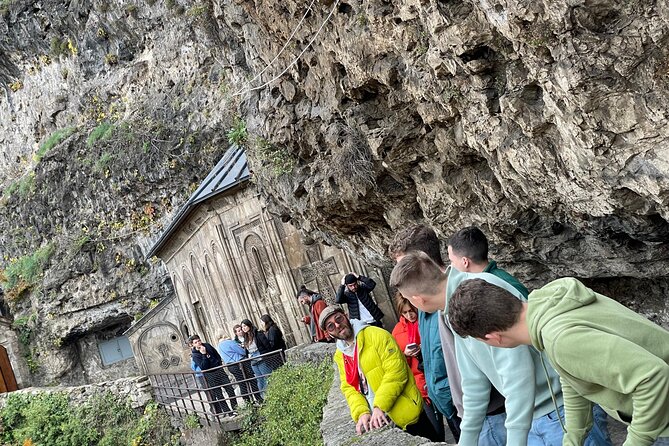
Mghvimevi Cave Monastery is one of the most memorable stops because it combines religion and geology. The church complex is set into caves and rock near Chiatura, creating a quiet contrast with the town’s industrial character.
Allow about 40 minutes here. You will have time to look at the rock-cut setting, take photographs, and appreciate how the buildings fit into the cliffs. The site also involves stairs, so wear shoes with a secure grip and be ready for uneven walking.
This stop may appeal even if you are not especially interested in religious buildings. The setting gives it a strong sense of place, and the contrast between the cave church and the mining town helps explain why this route feels more varied than a simple city tour.
Dress respectfully for the monastery. The supplied information does not list a formal dress code, but modest clothing is a sensible choice at Georgian religious sites.
More days out of Kutaisi:
- CANYONS & CAVE Tour from Kutaisi – Okatse, Martvili & Prometheus
★ 4.5 · 307 reviews - Kutaisi: Martvili Canyon & Prometheus Cave, Georgian Lunch
★ 5.0 · 80 reviews - BORJOMI, RABATI & VARDZIA – Group Tour from Kutaisi
★ 4.5 · 76 reviews - Kutaisi Walking Tour
★ 5.0 · 59 reviews
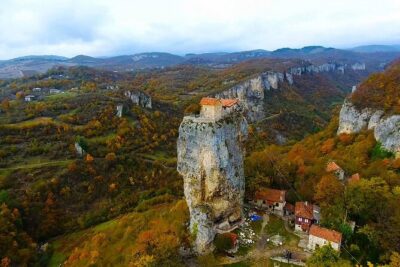
Katskhi Pillar, Georgia’s dramatic rock-top church
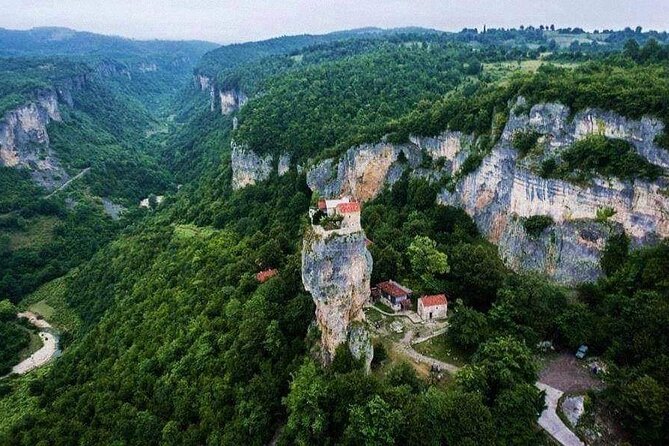
Katskhi Pillar is a tall natural rock column topped by a small church. It is associated with early Christian ascetic practice, when religious figures sought isolated places for prayer and solitude.
You do not climb the pillar. The point is to see it from below and take in the strange combination of geology and faith. One participant joked about wanting to climb it, but access is not allowed for obvious safety reasons.
The stop lasts about an hour and offers a quieter pause after the town’s busier mix of streets, cable cars, and buildings. The pillar is visually striking, but do not expect a large visitor complex or a long activity here. It is a focused stop built around one unusual sight.
The route information places Katskhi Pillar after the Chiatura portion, although the exact order can change. Keep your camera ready, but also look beyond the rock itself. The surrounding hills and rural setting help explain why this site was chosen for a solitary religious life.
Riding Chiatura’s old cable cars
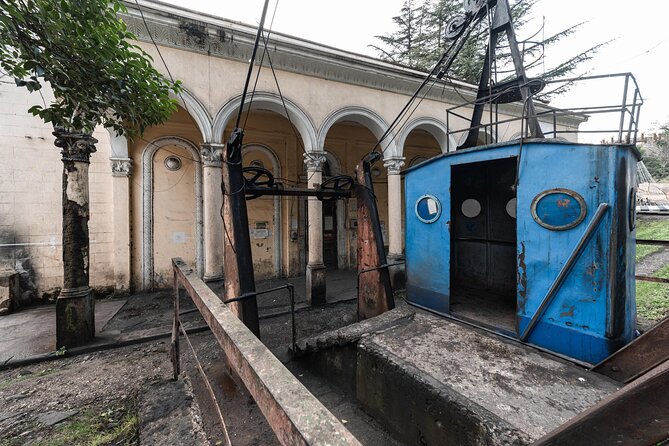
The cable cars are the signature experience in Chiatura. They were built to connect the steep town and mining areas, allowing workers to move above the river and valley rather than climb the hills on foot.
A ride is optional and costs about 5 lari, or $2. That small extra charge is easy to justify if the system is operating and you are comfortable with older public transport. It is not a modern scenic gondola built for visitors. Its appeal comes from the age, function, and connection to the town’s industrial past.
The ride itself may be brief, but the view changes quickly. From above, you can see the river, steep slopes, town buildings, and the mix of newer life with Soviet-era structures. The cable cars also give you a direct sense of how Chiatura adapted to its difficult terrain.
Conditions can change. A stop may be altered if a station is closed for repairs or if the cable cars are not running. One account specifically raised concerns about closed older stations and the theater during repairs. Ask your guide which routes are available that day rather than assuming every station will be open.
Chiatura from the viewpoint
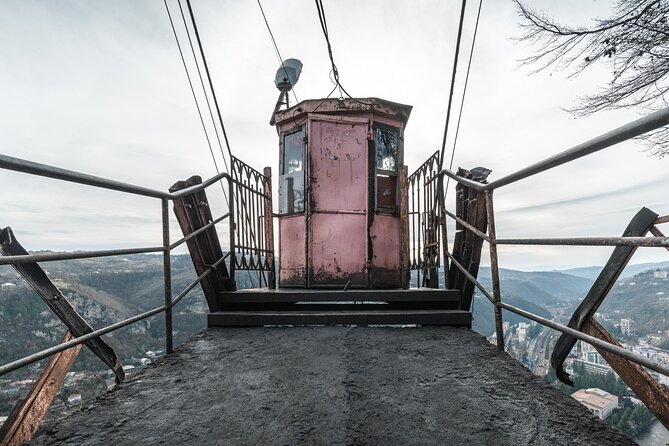
After the cable-car portion, the tour includes a viewpoint above town. This is where Chiatura’s setting becomes easiest to understand.
From above, you can see the winding river, steep rock formations, roads, and the town’s industrial framework. The view is not simply scenic. It shows why cable cars were needed and why mining shaped the town so strongly.
The viewpoint also gives you a chance to slow down. Much of the Chiatura section involves streets, buildings, railway sites, and short walks. Here, you can take photographs and see the town as a whole.
Weather can make a major difference. Snow may give the town a stark, memorable appearance, but wet or icy conditions can make paths and stairs harder to manage. Bring a warm layer even if Kutaisi feels mild at departure.
Railway station, theater, and Soviet traces
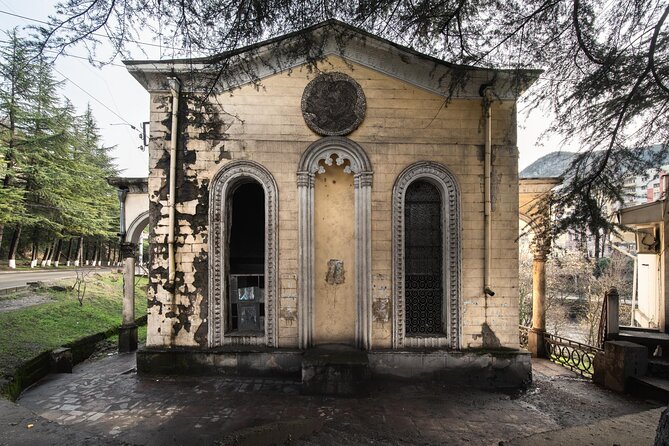
The railway station is a short stop of about 10 minutes. It is not a full museum visit, but it adds useful context. Rail transport helped connect this mining town to the wider region, and the station remains part of Chiatura’s working identity.
The Akaki Tsereteli Drama Theater is scheduled for about 30 minutes. It has more than a century of cultural history and offers a different view of Chiatura, one based on performance and community life rather than mining.
Access to these places can vary. Repairs or closures may prevent entry, so do not book this tour solely for the theater or a particular old cable-car station. Think of the route as a broader town experience, with several possible stops that together explain Chiatura.
The walking portion may include neighborhoods, train tracks, old buildings, and abandoned Soviet structures. This is the part most likely to appeal to people interested in urban exploration. It is also where you need to remain attentive to your guide and surroundings rather than wandering off alone.
Lunch and the real cost of the day
Lunch is not included. The expected cost is around 30 lari, or about $12, at a local restaurant. Cable-car tickets are also extra, at roughly 5 lari.
That puts the likely total at about $49 per person before any additional spending. For a full day with transport from Kutaisi, a local guide, several historic sites, a viewpoint, and a town tour, that remains a strong price.
The lunch stop lasts about an hour and is intended as a local tasting break rather than a rushed snack. The exact menu is not specified, so ask the guide what is available that day. Georgian food can be filling, and an hour gives you time to eat without turning the meal into the main event.
The $35 base price is especially useful if you are traveling without a car. A private taxi to several scattered sights would cost more and would not automatically provide the same local explanation.
Who will enjoy this tour most
I would recommend this experience to you if you like:
- Soviet-era buildings and industrial sites
- Unusual forms of transport
- Small towns with a strong local identity
- Cave churches and Orthodox history
- Scenic mountain valleys
- Flexible guiding and informal conversation
- Days that mix driving, walking, history, and food
It is also a good choice for repeat visitors to Georgia who have already seen Kutaisi’s major sights and want something less conventional.
I would think twice if you are traveling with very small children. Some stops involve many stairs, and the industrial history and older buildings may not hold a young child’s attention. The day also includes substantial driving.
People with limited mobility should ask for current details before booking. The tour includes stairs, cave access, viewpoints, and cable-car stations, while the supplied information does not promise step-free access.
Booking details and cancellation terms
The tour accepts mobile tickets and operates in English. It can accommodate service animals, is near public transport, and lists a maximum group size of 100, though the actual vehicle size may be smaller on a given day.
Confirmation is provided at booking. Free cancellation is available up to 24 hours before the start time. Changes or cancellations made within 24 hours are not refundable, and poor weather can lead to a different date or a full refund.
Because the meeting information lists both 10:00 and 10:30 AM, confirm the exact pickup time at McDonald’s on Tbilisi Street. The excursion ends back at the meeting point, with return to Kutaisi Central Square or Kutaisi International Airport listed as possible arrangements.
Should you book the Chiatura tour?
Book it if you want an affordable day focused on industrial Georgia, old cable cars, cave churches, and a local view of a town most short visits miss. The strongest part is the combination of places: Katskhi Pillar alone would make a short stop, but paired with Chiatura’s mining past and cable cars, it becomes a more complete day.
Go in with realistic expectations. This is not a polished attraction park, and some sites may be closed or changed because of repairs. You will spend several hours in a minivan, pay extra for lunch and the cable car, and walk on uneven ground.
For me, the best reason to choose it is the local perspective. A guide such as Demo, Tengo, Tango, or Ana can turn scattered buildings and old transport equipment into a story about work, faith, survival, and daily life. If that sounds more appealing than another tidy viewpoint, this is a very good use of a day from Kutaisi.
FAQ
Where does the tour start?
The meeting point is McDonald’s at 1 Tbilisi Street in Kutaisi, near Kutaisi Central Square.
What time does the tour start?
The information gives both 10:00 AM and 10:30 AM as start times. Check your booking confirmation for the exact pickup time.
How long does the tour last?
The tour is advertised as approximately seven and a half hours. The schedule shows departure from Kutaisi in the morning and return around 6:00 PM.
What is included in the price?
The $35 price includes transportation and guide service.
Is the cable-car ride included?
No. The cable-car ticket is optional and costs about 5 lari, or approximately $2.
Is lunch included?
No. Lunch costs around 30 lari, or approximately $12, and is paid separately at the restaurant.
Is the tour offered in English?
Yes. The experience is offered in English.
Will I be able to climb Katskhi Pillar?
No. The pillar is viewed from below, and climbing it is not allowed.
Can the itinerary change?
Yes. Stops may change because of weather, repairs, closures, or conditions at the cable-car stations. The guide may also adjust the route for the group.
Is free cancellation available?
Yes. You can cancel up to 24 hours before the start time for a full refund. Poor weather may also result in a different date or a full refund.
Just added around Kutaisi
- Day Tour to Georgian sky venice, Soviet city Chiatura★ 5.0 · 5 reviews
- Tskaltubo-Prometheus Cave-Geguti★ 5.0 · 6 reviews
- Tskhaltubo Old Soviet Spa Tour★ 4.5 · 12 reviews
- Ski & Snow Tour to Bakuriani from Kutaisi with Borjomi Stop★ 5.0 · 5 reviews
- Gelati, Prometheus, Sanatoriums and Wine tour★ 5.0 · 11 reviews
- Kutaisi Airport to Tbilisi Private Transfer★ 5.0 · 3 reviews
- Break Bread with Kutaisi Locals★ 5.0 · 4 reviews
- Prometheus Cave & Martvili Canyon Tour from Kutaisi★ 5.0 · 11 reviews
Chiatura & Katskhi Pillar Tours, compared.
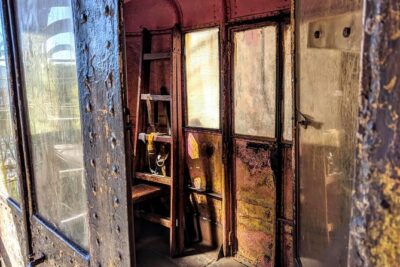
Soviet past – Private day tour to Chiatura, Katskhi pillar and Chronicles
Read our review →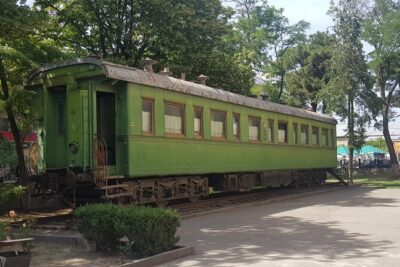
Soviet Story – Private day trip to Chiatura, Stalin’s museum and Katskhi pillar
Read our review →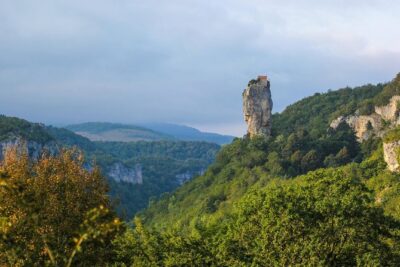
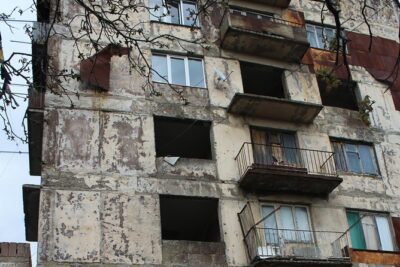
Chiatura. Soviet Past in the present. + Katskhi pillar
Read our review →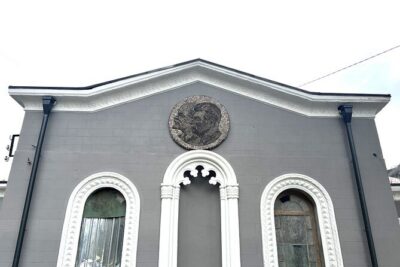
Day Tour to Georgian sky venice, Soviet city Chiatura
Read our review →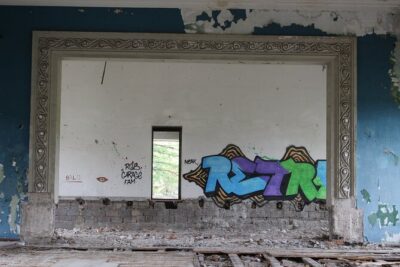
Soviet tour of Georgia – Gori, Tskaltubo, Chiatura, Enguri Dam.
Read our review →Browse the lists this tour appears in